Just under two years ago, in September 2022, the online British ‘gender critical’[1] community descended into a many-week conflagration following the presence of two people from a far-right organisation called Hearts of Oak, who turned up and livestreamed an event in Brighton. Hearts of Oak was founded in 2020 by Tommy Robinson, Carl ‘wouldn’t even rape Jess Phillips’ Benjamin, and some other former members of UKIP, and is based on advocating for “strong borders, immigration and national identity,” “freedom of speech” and opposing the “authorities privileging and protecting [of] Islam alone.”[2] As with Robinson’s wider activism, one of the groups central concerns is the grooming gang scandal which Robinson has very successfully exploited, laying down a false narrative that he was responsible for bringing the scandal to light after the authorities, overwhelmed by ‘woke’ concerns they would be viewed as racist, failed to intervene to protect young girls from grotesque sexual exploitation. The fact that the police have an appalling track record on taking sexual abuse seriously under any circumstances never enters this narrative, and nor does the fact that Robinson himself has an appalling track record on taking sexual abuse seriously when the perpetrators are white.
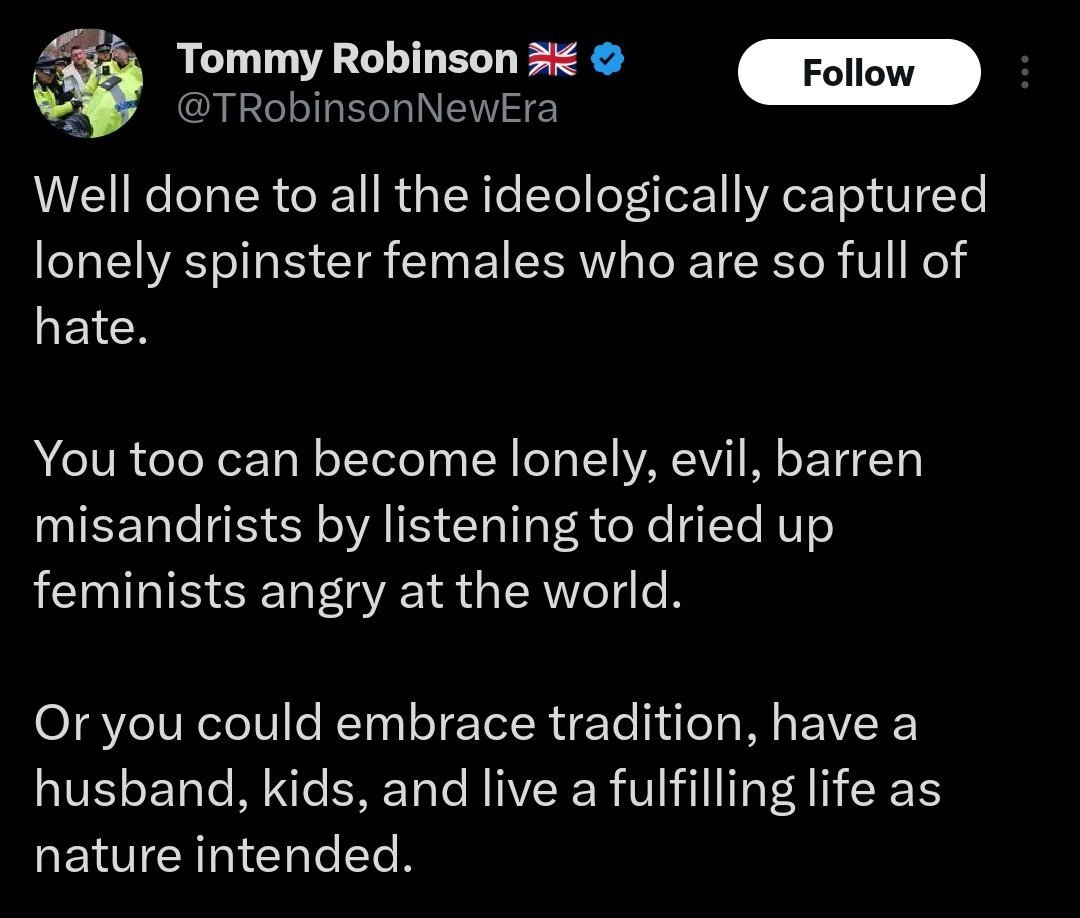
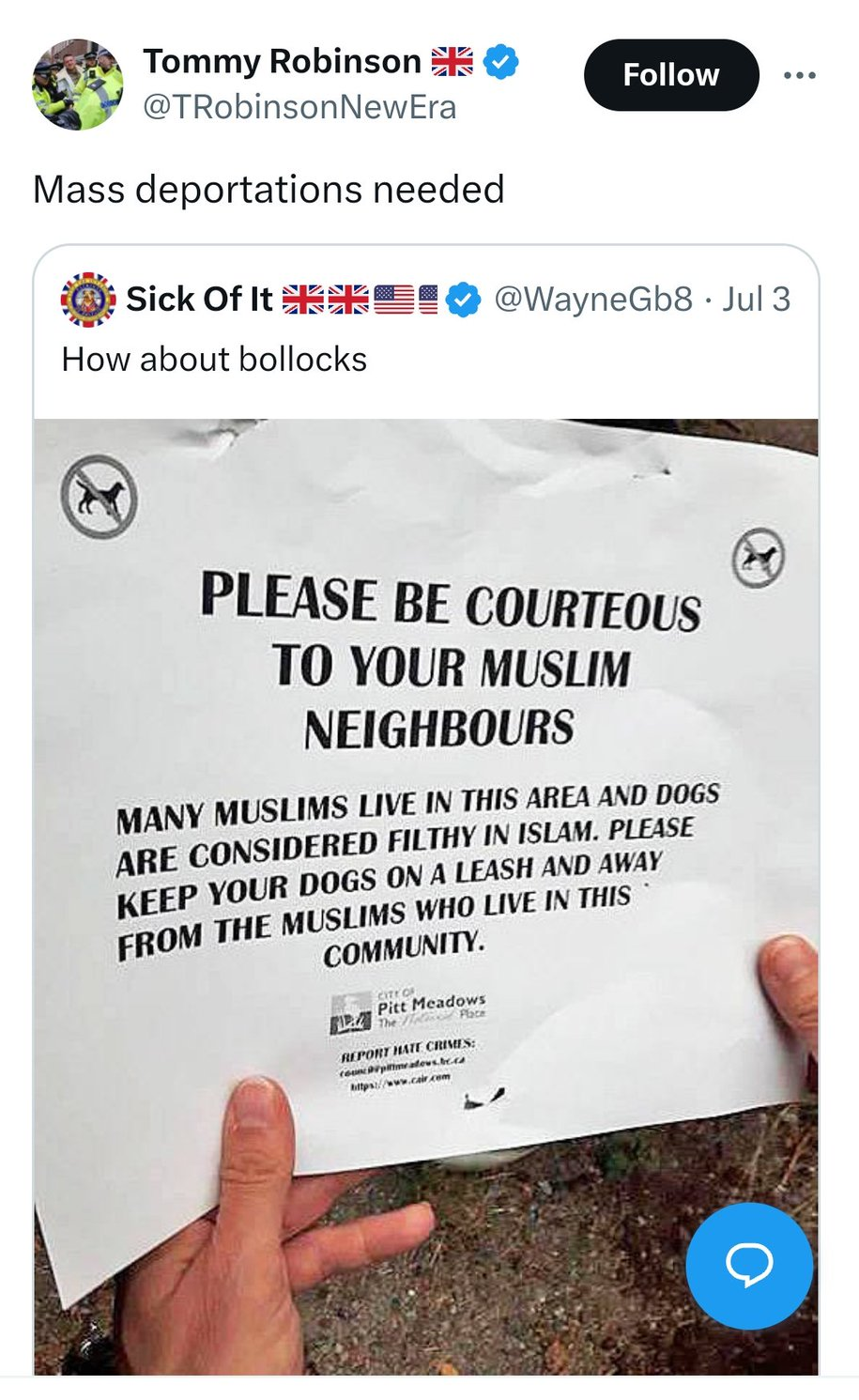
There are numerous instances of the sexual abuse of minors by Robinson’s far-right associates, some of which Robinson has explicitly handwaved or denied, which is frankly of little surprise. As I have previously written concerning the manifesto of the Norwegian mass murderer Anders Breivik, far-right thinking invariably involves a pungent mixture of racism and misogyny. Like Breivik, Robinson is in no way concerned with the harm to the humanity of women and girls caused by sexual violation, and far-right thinkers will often make statements that cover over the systemic male sexual abuse of women and girls in our culture. Breivik’s manifesto claimed that “European men have treated women with greater respect than the men of almost any other major civilization on earth,” while Richard Inman, a speaker at a rally by Hearts of Oak in London in 2020, has argued that “this rape epidemic” is “carried out by one section of the community,” and is the product of the “racist rape of children by Muslim Pakistani men.”[3] These claims are flat out denials of the fact that there has long been an ‘epidemic of rape’ in Western society, and that the vast majority of that rape is committed by white men. The kinds of men who make these claims have absolutely no track record of giving a damn about the hundreds of thousands of women whose lives are devastated by the sexual violence of white men, and indeed, they can generally be relied upon to think that women who dedicate their lives to combatting such violence are dried up misandrist feminist harpies who will rightly be punished by dying alone with their cats. What needs to be triply underlined here is this: Tommy Robinson doesn’t care about women and girls being raped. Tommy Robinson only cares about white women and girls being raped by brown Muslim men. And the only reason he cares about that is because of his anti-Muslim racist worldview.
To unpack the connections between far-right nationalism, racist anti-immigrant discourse, and the cynical instrumentalization of alleged concern for women, I’d like to look at a song that was played at the Tommy Robinson rally in London on June 1. It is a perfect example of the type of sovereign purity fantasy that lies at the heart of fascistic thinking. In this fantasy, the nation, protected by strong impenetrable borders, was once a halcyon idyll “where no dangers lie,” where ‘our’ women walked safe in the streets while children played happily in sun-drenched fields. But this was all before the tidal wave of strangers arrived, crashing over the peaceful landscape, bringing danger and destruction with them. Now, we are told, “fear is our shadow / Chaos banging at our door.”


Central to this fantasy is the opposition between ‘inside’ and ‘outside’ the nation, and between ‘our country’ or ‘the homeland’ and ‘the stranger’ or ‘the foreigner.’ The inside is safe and the outside is dangerous, and danger enters – or indeed, penetrates – the safety of the inside from outside, thereby destroying it. This is the profound emotional power of the ‘strong border.’ It promises a fantasy of complete safety as long as the border is secured. It promises that we can know, with certainty, where and who the danger is coming from, and that we can, if we will it, keep them out and in so doing, ensure our absolute safety. Within this imaginary structure, rape, as the supreme example of the violent penetration of the outside into the inside, holds a particular emotional and symbolic power. And its emotional and symbolic power also resides in the fact that, in the mind of patriarchal nationalists, the border marks the difference between women who belong to the men of the nation – ‘our women’ – and the women who belong to the foreigner – ‘their women.’ The crime committed by the ‘foreign’ man who rapes white British women or girls is not that he has committed a profound human rights violation against a female human being. It is that he has illegitimately helped himself to our women, who are there to be used by us, not them. In this act, the illegitimate penetration of our women by them, and the illegitimate penetration of our nation by them, becomes symbolically fused. Women’s bodies become, not a matter of their own personhood, but of men’s property and the symbolisation of their property and control through the figure of the nation. Importantly, as I discussed recently, this kind of territorial thinking, and the equation of women’s bodies with countries or ethnic groups, feeds directly into the use of rape as a weapon of war.
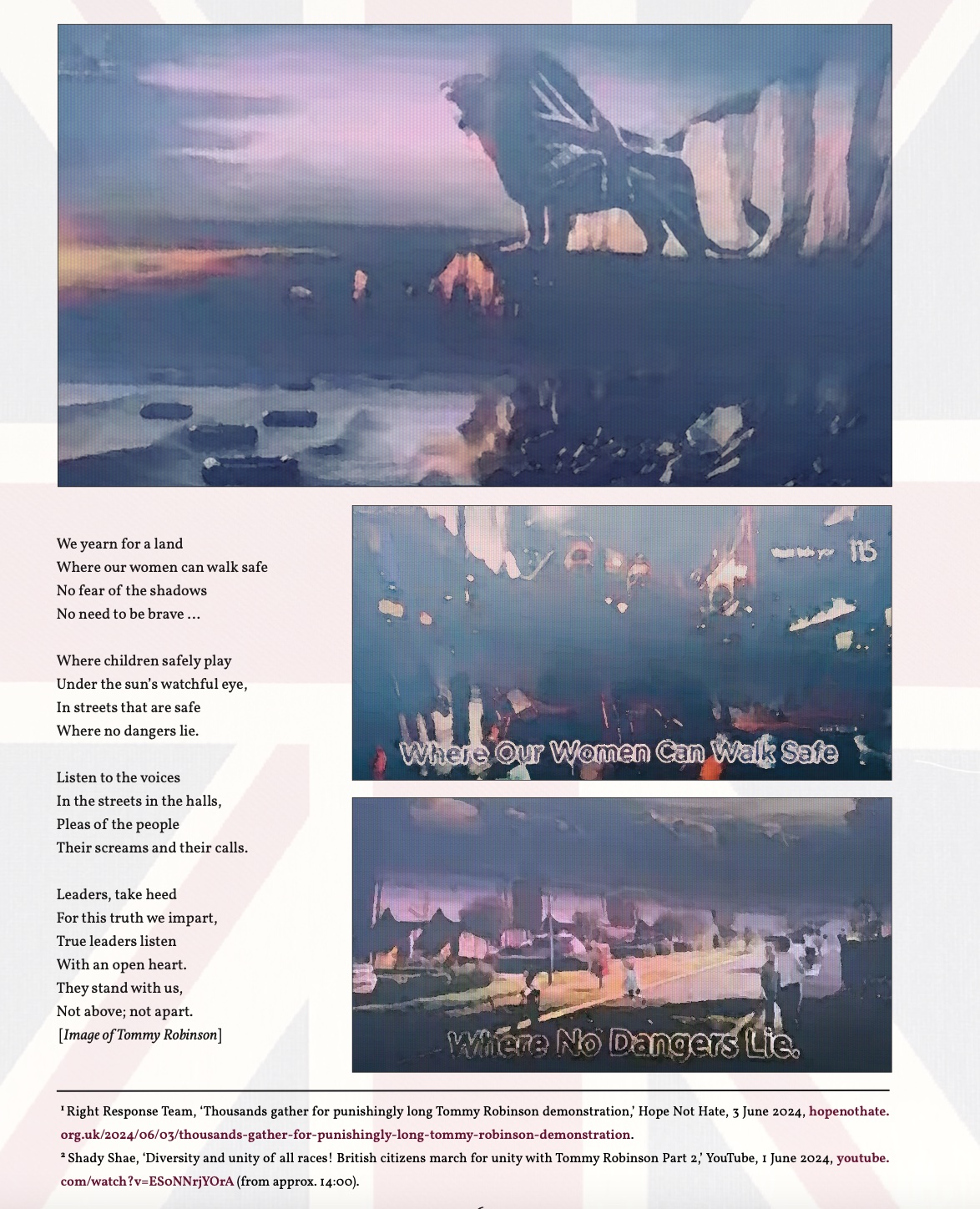
According to Robinson’s sovereigntist logic, if we can only defend the border – cue roaring British lion astride the white cliffs of Dover – then our women will be safe. Evidently, from a feminist perspective, this is simply bullshit. The greatest danger to women and girls has always been, and remains, the men inside their own houses. This is the nature, and the devastation, of endemic male sexual violence. It usually happens in the place, and with the people, who are supposed to be most safe. It would perhaps be comforting to imagine that we could easily identify the men who are dangerous – the Muslims, the brown ones, the ones in dresses – and then we could keep ourselves safe by keeping them out. But the argument materialist feminists made throughout the early years of the gender wars applies equally here: men are a statistical danger to women as a class and there is prima facie no way of working out which ones are dangerous and which ones are not. There is no class of men whose minority status should exempt them from being considered potential threats to women, and there is no class of men whose majority status should exempt them from being considered potential threats to women either. There is not a class of readily identifiable ‘bad’ men who women can be protected from by some putative class of ‘good’ men, and men who push these kinds of narratives have their own agenda: demonising certain other groups of men for their own political purposes, and ushering women into a patriarchal protection racket whose promise of protection is a con. As the list of Tommy Robinson’s associates evinces, the men who push these narratives are reliably exploitative and violent to women and girls. They just get fucking enraged when ‘other’ men do it to women they think are their ‘own.’
The materialist gender critical argument was that because men represent a statistical danger to women, all men, irrespective of how they identify, should be kept out of women’s single sex spaces. This is not necessarily a ‘bioessentialist’ (ugh) claim that all men are simply inherently dangerous to women. Even if, as many feminists would argue, the statistical threat posed by men is significantly a product of patriarchal socialisation and the cultural norms of masculinity, we are presently still living in that culture, and so women need spaces away from males. (For reasons of dignity and privacy, as well as political organisation and female bonding, I think women are always going to want spaces away from men, under any circumstances.) However, because much of the gender critical case concerned preserving single-sex space – that is, keeping men out – it always bore a certain structural resemblance to the type of sovereignty-thinking that, as we saw above, animates far-right populism. Indeed, as I explored in ‘Why Feminists are Not Nazis,’ a paper I gave at the University of Reading in 2019, that structural resemblance is precisely the basis on which TRAs always claimed that the gender critical position was fascist adjacent. That is, the TRA effort to shut down gender critical women by calling them fascists wasn’t just a random slur. It had a logic to it. As I lay out in ‘Why Feminists Are Not Nazis,’ that logic is grossly misapplied to the materialist feminist position for several reasons, and it is absolutely true that trying to censor women’s concerns by claiming they were motivated only by hatred and the specific demonisation of trans identified people was a coercive and democratically illegitimate silencing technique. However, as I discussed last year in ‘Feminism is Not Identity Politics,’ at the point of which a putative ‘gender critical’ discourse about keeping men out starts to slip towards thoughts of keeping those ‘bad/deviant/brown/Muslim men’ out, and enlisting the ‘good/white/heterosexual/Christian men’ to help you do it, things start to look rather different.
At the time Hearts of Oak turned up in Brighton, my concern was not only that the men behind this organisation were far-right populists, it was also that far-right populists are invariably patriarchs. There is no freedom for women, there is no substantive or meaningful idea of ‘women’s rights,’ in the hands of men who think about women in terms of which men they belong to. As I also discuss in ‘Why Feminist Are Not Nazis,’ there is a direct symbolic relationship between venerating the strong, impenetrable borders of the nation, and venerating the strong, impenetrable borders of the patriarchal male subject. For men like this, being penetrated is inherently degrading. And, in their sovereigntist imagination, it is conceived as an act of invasion, conquest, and possession. Like Breivik, they will talk of protecting women from deviant or racialised men one minute, and the next they’ll be calling women some variant of ‘whore.’ They are also, frequently, for the same reasons, homophobic. A gender critical project grounded on defending the interests of women, gay people, and gender non-conforming children cannot be coherently based in any kind of alliance with such men or in any kind of discourse that reproduces their talking points. A ‘gender critical’ project that reproduces key elements of a populist, racist, patriarchal worldview cannot, indeed, be called ‘gender critical’ at all. And when that happens, many of the TRA claims about the inherent conservatism or far-right nature of ‘gender critical’ politics, start to look substantially less insane.[4]
I’m not going to rehearse all the details of the many arguments that occupied the UK GC movement in the conflagration that followed Hearts of Oak’s appearance in Brighton. I wrote about why I think the ‘purity politics’ argument fails in June 2022, and I analysed the nature of the populist anti-elitist discourse that was weaponised against any woman calling out right-wing drift in ‘Feminism is Not Identity Politics.’ What I am going to underline here is this. In the subsequent two years, there has been a massive proliferation of far-right talking points circulating in the GC space, and a good deal of open support for far-right figures. It is not uncommon now to get into a conflictual exchange with someone over some contentious aspect of the pushback against trans ideology (voting for Labour, repealing the GRA, using wrong sex pronouns, making common cause with far right actors) and to then check their TL and find it full of tirades against the degeneracy of the left, cultural Marxism, critical theory and the ‘woke mind virus,’ anti-Muslim propaganda, covid conspiracy theory, and the most extreme and salacious formulations of concerns about the impacts of the trans rights/alphabet people project.
This direction of travel was already well underway when I wrote ‘Feminism Is Not Identity Politics’ in early 2023, but it has since gathered an enormous amount of steam. Back then, our concerns about the refusal by many people to draw a line between the GC project and the far and Christian right were batted away with claims of ‘guilt-by-association’ and ‘purity politics.’ Since then the ground has markedly shifted, with many women frequently RTing Robinson, Carl Benjamin, Turning Point UK etc., Twitter polls to demonstrate that Robinson has done more for women’s rights than those stupid elitist socfems, and arguments made in the election run-up that we should vote for Reform because they ‘know what a woman is.’ In the last six weeks, prominent GC women have attended or performed at Tommy Robinson marches in London, and many others have defended them doing so. The argument is no longer ‘guilt by association’ or ‘purity politics,’ it is now a) What even is the far right anyway?, b) The far right doesn’t mean anything because I was called far right for knowing men aren’t women, c) You people think anyone who disagrees with you is far right, and d) He is not far right anyway. That is, it has moved from claiming that association with the far right is either not happening or if it is happening has no impact on the substance of GC discourse, to people openly associating with the far right and recycling far right talking points while denying that the far right is the far right. For the feminist women who tried to raise the alarm two years ago, and in many instances were roundly and viciously bullied for doing so, this has been like watching a devastating, heartbreaking trainwreck unfold in not-so-slow motion. At this point it gives me no satisfaction that I was right to suspect that the cries of ‘purity spiral’ and ‘guilt-by-association’ were in some cases figleafs covering over the fact that the reason people were not bothered about the presence of the far right was that they were really not bothered about the far right at all.
But this is not all or even, one hopes, most of the story. There has also been an inexorable process of radicalisation. Part of this is down to political forces operating entirely beyond the control of any GC people. Over recent years there has been a massive growth in far-right populism across Europe and in the UK, as evidenced by both the performance of Reform at the recent election, and the numbers of people attending Tommy Robinson’s two recent rallies in London. This, in turn, is in many ways the product of the economic destruction that has been sown by neoliberalism in general, and by the 2008 financial crisis in particular. Populism directed at the figure of the threatening ‘other’ finds fertile soil in conditions of economic chaos, in which people’s living conditions markedly deteriorate, and this is as true now as it was following the Wall St Crash in the 1930s. The genius and power of populism is that it starts with something that is true and then radically misdirects people’s legitimate material grievances towards the wrong target, in order to bolster the populist’s power and prestige, and settle scores against his or her enemies. It is, for example, definitely true that the mainstream media is lying to you. It is true that many of the core institutions of our culture and politics are serving the interests of globalised neoliberal capitalism, and not the interests of the people. It is true that that the economic and political system sucked up the future, pocketed it, and then ran off with it while passing the debt onto ordinary people. And it is true that pretty much everyone in power colluded in a lie about what was actually happening and why.
What is not true is that the World Economic Forum are critical theorists, cultural Marxists or any kind of Marxists, that Covid was an authoritarian hoax concocted by Bill Gates or George Soros, that Hillary Clinton is running a paedophile ring or that there are tunnels under New York in which children are terrorised in order to extract the elixir of youth at the behest of Hollywood-stars-cum-the-Illuminati. What is not true is that the brokenness of this country and the lack of housing and public services, the fact that children are going hungry and people can’t pay their energy bills, is all being caused by mass immigration. What is not true is that only brown men rape women and girls and white men never do. And what is also not true is that the people pushing these narratives are the champions of the working classes and the true voice of ‘ordinary people.’ Nigel Farage is a Dulwich educated ex-commodities trader who spends his time hobnobbing with Russian oligarchs (as do many of the Vote Leave contingent, who are also connected with the Cambridge Analytica scandal). Trump is a property tycoon (a bad one tbf), while J.D. Vance’s political career is funded by Peter Thiel [5], a mysterious silicon valley billionaire who advances a form of technofuturist reactionary libertarianism (basically autocratic social conservatism animated by a hatred of ‘liberal elites,’ extreme economic libertarianism, and a belief in the untrammelled supremacy of technology that shades into transhumanism). Douglas Murray – who is presently the most vociferous anti-Muslim voice in this country – went to Eton and is associate editor of The Spectator, which is not and has never been the voice of the working man. And a good chunk of the media ecosystem that has played host to central GC figures over recent years – notably GB News and Unherd – is funded by Paul Marshall, a hedge fund multi-millionaire whose private Twitter account was unveiled earlier this year to have been RTing anti-Muslim propaganda.
What, however, was not out of the hands of GC people was the ability to hold a line between themselves and the kinds of people and platforms that deal in right-wing-cum-far-right populist discourse. This was always the fatal flaw in the ‘guilt-by-association-no-purity-spirals’ gambit. Feminists never suggested people dealing in far right or populist discourses should be cancelled or not allowed to speak. We didn’t demand that that GC people shouldn’t sit on platforms and argue with them, as TRAs did with GC people during the long years of ‘No Debate.’ Feminists didn’t suggest that we should try to get them fired, or tell all their friends, family and professional contacts that they are terrible people who should be immediately disowned. What we did was try to draw attention to what some of these people believed, explain why it was bad for women, and suggest that we shouldn’t just sit on their platforms agreeing with them, attend their events, take any money from them, or make any kind of political common cause with them. And one of the many reasons we suggested that is because it quickly leads to people being marinated in a media and political ecosystem that is feeding them a steady drip of populist talking points, which they are primed to be more open to because these people ‘know what a woman is’ and are apparently taking ‘your side’ rather than calling you a nazi and trying to get you fired.
But what feminist women have tried, largely unsuccessfully, to get across, is that these kinds of men are not on ‘your side,’ if ‘your side’ is genuinely defending women’s rights. These men are on their side, and their side wants a largely white patriarchal nation, in which ‘their’ women know their place and are ‘protected’ only insofar as ‘protection’ means keeping them guarded from ‘other’ men. I have seen people out on the wires over the last day pushing the story that Robinson’s last march was a lovely, happy, diverse, multicultural event with people from all walks of life. For sure, there were some women there, and Robinson is very careful to ensure that he has just enough participation from not-white-men to shield him from accusations of patriarchal white supremacy (as well, of course, his cynical switch from antisemite to Israel supporter). But last night, when I watched the video Robinson had livestreamed from the front of the march, this is what I saw.



And that is not a world for women.
[1] I will place ‘gender critical’ in quotation marks throughout this piece because what I am discussing here is a movement towards a kind of activism that cannot properly be called ‘gender critical’ in its original sense. ‘Gender critical’ in its original sense referred to the feminist critique of gender understood a system of social norms and roles applied to people on the basis of sex and was grounded in the belief that it is harmful to women to define them by the norms of patriarchal gender in law. As the project has grown and gained traction, a large number of people, many of them not feminist and anti-feminist have turned up, and now the ‘gender’ in ‘gender critical’ is most usually taken by these people to simply mean ‘trans ideology’ or even ‘people being trans.’ That is, the term ‘gender critical’ is now widely synonymous with ‘anti-trans.’ The original formulation of the feminist critique of trans ideology was at great pains to distinguish itself from the gender conservative critique, which, in line with characteristic TRA claims, is grounded in the belief in the ‘naturalness’ of gender, and often, conversely, with the ‘unnaturalness,’ ‘deviance,’ or ‘degeneracy’ of trans identification. It was also at pains to emphasise that the project was ‘pro-woman’ and not ‘anti-trans.’ These important distinctions have been largely eroded, and the original feminist sense of ‘gender critical’ lost, in line with the progressive merging of the UK feminist and right wing populist online spheres, and the failure of the UK ‘gender critical’ movement to hold a clear boundary between itself and the far and Christian right.
[2] https://www.vice.com/en/article/qj4egp/far-right-hearts-of-oak-protest-london
[3] Nothing I say here should be taken to mean that I believe that people should not be able to criticise Islam, and feminists should not be able to criticise the patriarchal practices of Islam and the way they harm women. Islam is a patriarchal religion, and patriarchal religions are bad for women. Islamism, or political Islam, in its various forms, is also a form of extreme patriarchal fundamentalism, and all forms of fundamentalism are bad in general and bad for women. There are many feminist and non-feminist organisations that do excellent work critiquing and resisting Islamic fundamentalism and the harms of Islam to women, and they manage to do so without playing into the hands of far-right discourses that weaponize harms against women in order to serve a generically anti-Muslim racist agenda. These include @NatSecSoc @CEMB_forum @feministdissent @MaryamNamazie and @SBSisters, and the women involved in several of these organisations were also instrumental in the work undertaken by Women Against Fundamentalism, formed in 1989 in response to the fatwa issued against Salman Rushdie. It is simply untrue that it is impossible to articulate criticisms of Islam without the help of Tommy Robinson, and that feminists have never done so. Moreover, if your concern that it is impossible to articulate criticisms of Islam without being unfairly maligned as a racist, then it is probably a really good idea to keep well away from a man like Tommy Robinson.
That said, I want to strenuously note that many of the people who are recycling far-right populist talking points and justifying doing so on the basis of their concerns about Islam’s effects on women and girls, are often also the same group of people who have vociferously handwaved and decried all efforts by feminists to suggest that gender-critical women should also keep well away from the American Christian Right. These concerns have been dismissed with the usual barrage of claims of ‘guilt-by-association,’ ‘purity politics,’ ‘elitism,’ ‘ivory tower head-girlery,’ etc. Like our concerns about the far right, feminist concerns about the Christian right – now especially amplified by the contents of Project 2025 – are about threats to women’s rights, and especially reproductive rights. These concerns have often been dimissed using the claim that the ‘house is on fire,’ that only thing that matters is defeating trans ideology, and we must all keep our ‘eyes on the prize.’ That is, when it suits them, parts of the UK ‘GC’ movement will claim to be a single-issue campaign, and that they will ally with anyone who will help them, up to and including Christian right patriarchs who want to remove women’s access to abortion and contraception. And yet, when it comes to the threat posed by Islam to women and girls, and the issue of mass immigration causing a ‘rape epidemic,’ suddenly, it’s not so single issue anymore. This inconsistently is structurally analogous to that exhibited by Robinson & Co regarding which rapes they care about and which rapes they don’t: that is, they care about the things that harm women done by brown men and not the things that harm women done by white men (well, unless they’re wearing dresses). Given all the talk of Sharia law and the threat it poses to Western civilisation going around, at this juncture I feel compelled to underline that in present circumstances, the single greatest danger to the institutions we like to think central to ‘our culture’ is the threat to American democracy posed by Project 2025, and Heritage et al.’s ambition to establish a Christian theocracy in the US. Make no mistake, these people are the Gilead-train, and they’re not going to let you get off just after they get rid of gender identity and before they take your reproductive rights away.
[4] To be absolutely clear, I am, of course, not claiming that gender critical politics is necessarily or inherently right wing or far right. I am, however, pointing out that there are right wing and far right formulations of the opposition to trans ideology. As I discuss in Note 1, many feminist women in the earlier days of the movement rebutted these claims by TRAs by pointing to the three different positions on sex and gender held by TRAs, gender critical feminists, and gender conservatives. However, the success of the ‘eyes on the prize,’ ‘no infighting,’ ‘no purity politics,’ manoeuvre, has, in practice, successfully bulldozed the distinction between the gender critical position and the gender conservative position, and many talking points from the gender conservative position have been successfully disseminated into the hitherto ‘gender critical’ space. As I’m exploring here, the move to the gender conservative position and the move to a racialised discourse of protecting the inside from invasion by the dangerous other from the outside, are deeply conceptually intertwined. This is because sovereignty is the structure of patriarchal masculinity. The move from a discourse based on the assertion of endemic male violence to one centred on tropes about keeping the bad/deviant/racialised other out is, therefore, the move from a ‘gender critical’ feminist argument towards a far-right patriarchal argument. As that move happens, the traditional TRA characterisation of the ‘gender critical’ position as far-right adjacent and patriarchal stops being simply a slur and silencing technique and starts to have some substance. It shouldn’t need to be said, but apparently it is, that this is strategically stupid, as well as politically sketchy.
[5] Thiel has been linked to the alt-right, the neoreactionary thinker Curtis Yarvin, and to the Free Speech Union and scientific racism. One of his main companies, Palantir, was connected to the Cambridge Analytica scandal and provided software to support Trump’s war against immigrants on the US’s southern border, which led to people being detained in cages and many children being separated from their parents. The co-founder of Palantir, Joe Lonsdale, was also involved in the founding of the ‘anti-woke’ University of Austin. For a sober, factual recounting of Thiel’s biography, his extensive network of tech and political influence, and his political beliefs, I recommend The Contrarian: Peter Thiel and Silicon Valley’s Pursuit of Power by Max Chafkin. Thiel’s beliefs, as the book title’s suggest, are in some ways contradictory in their combination of libertarianism and reactionary conservativism. The only thing that links them together, as the subtitle also suggests, is his pursuit of power for himself and the people like him, his implacable opposition to liberal doctrines of equality, his belief in techno-domination, and his not-very-well-concealed white supremacy. That is, like Trump, whose candidacy he has supported, he is in the business of making sure that he, and white men like him, are the winners.
 Jane Clare Jones