So, this is a short post to let you know that I will mostly be retiring this blog, and from now on will be writing over at Substack. My new project is called Culture War Blues, and will be dedicated to analysing the culture war shitshow we find ourselves in from a feminist and materialist POV. Having spent most of the last decade pushing back against the excesses of left identitarian wokery, I have recently become more proccupied with the dangers of right identitarian anti-wokery, and the way the binary opposition between these two culture-war tribes is squeezing the space in the middle for materialist and feminist thinkers, or anyone capable of nuance really.
Critical of both traditional conservative ‘patriarchy 1.0’ and new-fangled ‘patriarchy 2.0,’ Culture War Blues will involve frequent short columns on political events and trends, as well as longer more philosophical essays on the scourge of identity politics, the strands feeding into right wing radicalisation, and the foundations of feminist resistance or ‘anti-domination politics.’ Hopefully, in a few months, there will also be a podcast discussing these issues with various other thinkers also ‘stuck in the middle’ between these binary warring tribes. Please subscribe at culturewarblues.substack.com, and consider supporting the political independence of Jane’s work which, as always, is entirely funded by the (mostly) women who find it useful. It would be wonderful to see some of you over there.
Lastly, as many of you know, The Radical Notion has come to the end of its twelve-issue cycle, and is shutting up shop, both figuratively and literally. We currently have a massive sale on back issues, so if you do want to get your hands on any physical copies you missed please do so before the shop closes down at the end of the month – it will be open until the end of this weekend I believe.
So, this is all getting rather tedious, and I’m sure a lot of people out there are getting bored to absolute fuck of having to answer the same bunch of questions over and over again any time they try to express the wildly controversial opinion that ‘I don’t much like the far right and would like to keep the fuck away from them if you don’t mind terribly.’
Apparently, some people do mind terribly. Cue onslaught of the same questions that have been answered innumerable times previously. So, I decided to write it all down and save ourselves the bother.
2. You just thinks everyone who disagrees with you is far right
Response: No, I think people whose behaviour and rhetoric conforms to the definitions given to question 1 are far right.
There’s a lot of ordinary people who ‘happen to disagree with me’ who I don’t call far-right.
Do you know why?
Because they’re not running about screaming THE BARBARIANS ARE AT THE GATES I WANT MY COUNTRY BACK or RTing videos by ‘European Invasion’ or saying ‘Enoch Powell was… https://t.co/tDDhSyGfEg
— Dr. Jane Cassandra Jones (@janeclarejones) August 30, 2024
3. Far right doesn’t mean anything anyway
It is true that TRAs and various left identitarians have misused the term ‘far right’ to describe anyone who disagrees with their political project, and especially with trans ideology.
Here is the text of a speech I have in 2019 which explains why materialist feminist responses to trans ideology are not aligned with fascism.
Note: The TRA claim that there was a relation between rejecting trans ideology and fascism is not a completely baseless slur. It is based on understanding the structure of fascism as centred, as answer 1 explains above, on ideas of the purity of the nation, and othering some kind of group of ‘foreigners’ and/or ‘deviants’ as a threat to the nation. The othering of ‘foreigners/deviants’ often goes together. This is relevant to the direction taken by many people who dislike trans ideology.
Anyway, the fact that TRAs described people who were engaged in a materialist feminist resistance to trans ideology as ‘fascists’ isn’t proof of anything other than their misuse of the term. It doesn’t mean the term is meaningless any more than the misuse of the term ‘woman’ means that ‘woman’ is meaningless.
It is also pretty hard to take this claim remotely seriously from people who are engaged in exactly the same identitarian behaviour as TRAs in reverse. That is, running around calling anyone who disagrees with them is a ‘woketard’ a ‘libtard’ the ‘far-left’ an ‘Islamo-leftist’ a ‘socfem’ or whatever othering labels you use attack everyone who thinks you too are talking nonsense.
Lastly, there is the small matter of the boy who cried wolf. You may remember that in that story wolves didn’t stop existing. And in the end the wolf ate everyone because people didn’t believe the boy when the wolf actually showed up. Yes, a good deal of the fault lay with the boy (the TRAs & Co), but when the people who are manifestly not TRAs are now also shouting ‘wolf, wolf, wolf’ and you are going ‘shut up wolves don’t exist you Islamo-leftist woketard’ then you are, I’m afraid to tell you, either an idiot or a wolf.
4. The far left is actually the problem what have you ever done about the far left eh eh?
Firstly, I want to ask (in a cunning reversal of question 1) what you actually mean by ‘far-left.’ And I want to ask this not because I am trying to avoid the issue, but because a whole load of people you are calling ‘far left’ aren’t ‘far left’ as you most likely mean it, which is what I would call ‘left or progressive identitarianism.’ There is a whole load of materialist leftists who think progressive identitarianism is a load of shit, and who also happen to really dislike the far right. It would be great if people could stop going up to people saying they don’t like the far right and asking them what a woman is like it’s some kind of amazing gotcha. We know what a woman is and we know what a fascist is too. Go figure.
Those of us on the materialist left who have been standing up against progressive identitarianism since most populists were still fast asleep on the trans issue are getting pretty bored of this nonsense. If you want the receipts, I invite you to look at most of the rest of this blog. There is a blog index here listing all my work critiquing trans ideology and progressive identitarianism. There is also this book. I also have two articles coming out soon that critique progressive identitarianism from a materialist left perspective and explain its culture war dynamic with far-right populism. For those of you who do really want to think about what you mean by ‘far left’ there is quite a bit of stuff in all of that explaining why materialist leftists don’t think progressive identitarians are the left at all, let alone ‘the far left.’ We think they are a mutant product of late neoliberal capitalism and are about as materialist and collectivist as Twitter is. Which is to say, not at all.
Lastly, the fact that we have idiot progressive identitarians on one side of us doesn’t mean it’s impossible for us to have idiot populist identitarians on the other side. And many of us simply decline to be members of either of your tribes.
From a feminist perspective Tommy Robinson’s alleged concern for women and girls, and exploitation of the grooming gang scandal, is motivated by a racist intention to whip up anti-Muslim sentiment, and not any genuine concern with MVAWG whatsoever.
Before you tell me I don’t care about women being raped or call me an Islamo-leftist, or accuse me of antisemitism, or whatever bullshit you make up to explain why feminist women are not okay with the kind of racist talking points and exploitation of MVAWG coming from the likes of Robinson, I would ask you to actually read the essay above and answer to the argument in it. I know, a fucking essay, who needs to read essays explaining why Robinson is a patriarchal piece of shit before spending all your time accusing women who have spent their lives fighting MVAWG of being paedophile and rape apologists because they have his number. You don’t have to read anything at all. No one is forcing you to consume words against your will. But we are under no obligation to listen to your name-calling or answer your questions if you refuse to try and understand the reasons why we want to steer very well clear of racist patriarchs. Selective concern about MVAWG when the perpetrators are not-white is racism, not feminism, or ‘women’s rights activism.’ (As is selective concern about the patriarchal harms of some religious fundamentalism and not other religious fundamentalism.) The men pushing anti-Muslim grooming gang talking points have form for handwaving male sexual violence when the perps are white. Tommy Robinson also has form for handwaving child sexual abuse among his associates (also here). The narratives being told by Robinson about his role in the grooming gang scandal are false. As is the claim that the only reason why nothing was done about it is because people being scared of being called racist, as Jo Phoenix explains in this essay on the background of the scandal.
However, if you do genuinely want to be able to discuss your concerns about Islam and its impact on women and girls without being called a racist or far right, then it’s probably a really good idea to stay the fuck away from far-right racists. There are plenty of people who are able to do this (see footnote 3 in above essay.) It is harmful to activism against VAWG and the damage Islamic patriarchal practices inflict on women to allow this conversation to be co-opted by racists. And no, I am not saying that women talking about their experiences of extreme violence and exploitation at the hands of grooming gangs are necessarily involved in the racist framing of this issue. They are only involved in a racist framing of this issue if they are propgating or defending narratives that focus exclusively on the violence of racialised men, often being peddled by white men who have form for not caring about MVAWG when the perpetrators of white, and which uses the kind of ‘barbarian invasion’ structure discussed in the answer to question 1.
Lastly, the connections between misogyny, racism and ethnonationalism are not in any way coincidental and it’s not an accident that Robinson and Benjamin et al. are raging misogynists and anti-feminists. This is discussed in the essay on Robinson, in this piece on sovereignty, territorial thinking and rape, and in this piece which looks at connections between the manosphere, incels, ethnonationalist violence, and femicide. The MRA-to-far-right pipeline is a thing for a reason. And as I laid out in ‘Why Feminists Are Not Nazis‘ that reason is because both ethnonationalism and patriarchal masculinity are structured by sovereignty-logic and the fanatasy of invulnerability (which is why the ethnonationalist Robinson is deadset on defending Tate and his trying-far-too-hard alpha tomfoolery and systemtic sexual abuse of women). These men don’t give a fuck about women. And women who really give a fuck about women and fighting male violence against women are doing women no favours by playing into the narratives of violent, racist, woman-hating men.
And that’s what I have to say on that. If you read all that and still have questions that enagage with what’s actually been said here and are not just warmed over versions of the same sealioning, then am very happy to hear them.
There seems to be quite some confusion about the purpose of an open letter or statement like the one made by GC Anti Far Right, so I wanted to lay out some thoughts on that.
First perhaps, it’s best to start with what the purpose is not. It’s not to convince people who are sympathetic to the talking points and beliefs of the populist and far right that they are wrong, or to shame them into saying they are wrong.[1] That’s not an end that can be achieved by means like this, and indeed, it’s not clear to me that such an end can be achieved at all, any more than that arguing with hardcore TRAs will convince them they are wrong. Providing it doesn’t lead to unlawful behaviour, I strongly believe that everyone is entitled to hold their own beliefs, just as everyone is entitled to criticise the beliefs of others. (It’s worth noting, given some of the insanity going on out there, that ‘incitement to violence’ has been a crime for a good while; it’s not just some new ‘woke’ thing made up by the government on the fly. And there is some added complications here because it’s pretty likely that some beliefs being expressed about Muslims right now aren’t WORIADS at all.)
When people criticise other people’s beliefs, they are not coercing them (unless they are actually coercing them as well). Free speech has to work both ways. It must protect both expression of a belief and the rejection of that belief. In the Forstater case, what ended up happening was the protection of both the belief in gender identity and the rejection of that belief. I thought that was right, even though I have spent many years campaigning against the political impacts of the belief in gender identity. I think I have every right to campaign against that when the political impacts negatively impact my rights, or when the silencing and bullying by TRAs prevented me from expressing my views. But in a democratic society grounded on free speech, believing in gender identity shouldn’t be unlawful even if we think it’s dangerous bullshit. As long as our right to say we think it is dangerous bullshit, and to campaign against the effects of that bullshit, is also protected. It’s not okay for people to try and stop us saying ‘we think humans are sexed and it matters’ by claiming we are harming them or committing genocide or making people suicidal just by saying it. It’s equally not okay to try and stop us saying ‘we would like to keep the fuck away from the far right’ by claiming we are shaming people or coercing them or bullying them just by saying it.
Just as in the gender war, the primary purpose of saying ‘we would like to keep the fuck away from the far right’ isn’t actually to do with the people whose views are being rejected. I didn’t go round saying ‘I think humans are sexed and it matters’ because I was trying to make people who believe in gender identity sad, anxious, angry, frightened, or ashamed. I said it because I think it is important and impacts the political interests of the people I am committed to defending, and doing the kind of political work I am committed to doing. And I have exactly the same reasons for saying ‘I want to keep the fuck away from the far right’. My belief is that I can’t defend the interests of women as a class unless I say it. I can’t edit a magazine, or run a school where women come to learn about feminist history and politics, and claim it’s about women’s class interests, unless those spaces are really for all women as a class. And ‘the interests of women as a class’ includes black and brown women, and what they have to say about their experiences of being female in a racially hierarchical society, and what solidarity and understanding they need from women who don’t share some aspects of their experiences. You cannot ‘defend women’s rights’ if you are in any way propagating discourses that end with racialised violence against certain communities of people. Those communities are half women. And many of those women are now fucking scared.
I’m not going to get into arguing the toss on Twitter regarding the many arguments or alleged arguments people are using to handwave, dismiss, or outright condemn those who wrote or signed the statement. Some of those gambits are addressed in the letter itself, which has not stopped many people knee-jerk repeating them in response. I wrote a reply yesterday on Twitter to a feminist woman I like and have always got on well with, regarding the concern that it is not possible to express legitimate concerns about Islam. There is a bunch to say about that, but here I’d just like to underline that several people who signed the statement are Muslims or ex-Muslims who have spent much of their adult political lives writing and campaigning against the patriarchal harms of Islam and the dangers of fundamentalist and political Islam. They are nonetheless perfectly able to spot anti-Muslim racism when they see it, and many of them, having supported the gender critical cause, would like some solidarity in return when their communities are under attack.
I’m also not also going to get into arguing about why everyone who signed that letter is not a socfem, head girl, handmaiden, member of the far left, living in an ivory tower etc., because anyone who looks at the signatures can see that is patently bollocks. (Indeed, many signatories can’t be ‘socfems’ or ‘handmaidens’ in principle because they are men, unless we have suddenly decided that some humans can change sex, and that being an antiracist miraculously turns men into women.) If anyone genuinely wants to understand why people are using the word ‘populist’, the fact that anyone who voices political criticism or dissent around the far or Christian right immediately gets told they are some version of ‘the elite’ who ‘hates the working class’ is pretty much the reason why. I am also going to note that it is somewhat inconsistent to dismiss the list of signatories because you don’t know who any of them are while at the same time leveraging a populist discourse about being the voices of ‘ordinary women’ standing up against the snooty out-of-touch elites. The fact that you don’t know who many of those people are is precisely because many of them are ‘ordinary’ women and men (whatever that actually means).
So then, if the purpose of the statement is not to persuade or appeal or coerce or shame people, what is the point?
1. The first reason always for drawing a line between any political movement, however loose, and the far right, is that the far right routinely attaches itself to any movement that is generating traction and tries to co-opt it and turn it into a vehicle for disseminating its rhetoric and talking points. It is as little-known fact that the far right generally has a recruitment problem, and if you walk straight up to most people and say, ‘Would you like to become a Nazi?’ they generally say ‘No’. The far right often works, then, by attaching itself to a political movement with energy and turning that momentum towards its own political objectives. The letter was pointing to the fact that this has indeed already happened to some parts of the ‘GC movement’, broadly understood, and pointing to that was one reason it was felt that such a letter was necessary. This has also happened with respect to the influence of the Christian Right[2] (and there is a massive overlap, especially in the US, between the Christian and populist right). Trying to stop that happening was why some people wanted a line drawn much much earlier. That didn’t happen, and, as the letter suggests, things are now where they are. But there is still a purpose in drawing such a line at this point.
2. One of the most important reasons for that is that many people who think racism is extremely harmful – and those that are also committed to feminism as a project for women as a class – feel deeply ethically and politically uncomfortable and compromised when political causes they are involved in become associated with racist rhetoric. Some people who think racism is extremely harmful don’t feel compromised, and think they are responsible only to themselves and not to any collective of people involved in their cause. I find it difficult to comprehend this view, as I think politics is collective action, and I don’t think human beings are atoms who are completely distinct from the people they relate to, interact with, and work with (I discussed this in the last essay of Gender Critical Disputes). However, I accept that that is their view and that they genuinely feel like that, so they don’t feel a need to make it publicly clear. There are, however, many other people who don’t feel like that at all, and they really do need to make it publicly clear. You can say that that is just pointless ‘virtue-signalling’ which serves no purpose other than making them feel all good and virtuous about themselves, but that’s a fairly dismissive and sneering spin to put on ‘some people have a deep and genuine sense of their own ethical and political integrity and it matters a great deal to them’.
And it’s also not just about them feeling their integrity is intact. This is a practical matter. Because people who feel that being involved in a certain political cause is ethically or politically compromising are sooner or later just going to walk away from it. Lots of people have already done so. Many others have told me they no longer feel comfortable arguing the GC cause in their workplaces and friendship groups because they have nothing to say when people throw the racism in their face. They’re not prepared to handwave and dismiss those concerns, because they know they have some substance and they are profoundly bothered by that. And if a movement gets partially co-opted by far-right political forces and rhetoric, and loads of people who are really uncomfortable with that just withdraw, what ends up happening is snowballing radicalisation and widespread tipping of the movement towards the hard right. And then at some point or other, the decent people still involved do end up being the polite veneer for something that doesn’t actually correspond to the reasonable things they are saying about why trans ideology is a harm to women and gay people and gender non-conforming young people.
Simon Edge and Darren Johnson wrote the letter, and the impetus for it came originally from them. My involvement has been some legwork (keyboard work?) to help them with gathering the signatures. And what has come over repeatedly from many of the people who agreed to sign was relief and gratitude. The signatures flooded in for the first few hours after it went live. People saying how uncomfortable they had been seeing the things some people are saying, how damaging they think it is to the cause, and how it meant a lot to them to have a chance to make that clear, as well as thanks for the organisation. It is not insignificant that in a ‘movement’ fighting for a cause which means many people have good reason to be anonymous, over 400 people were prepared to put their real name – in most instances – on a public document like this. Many who were very supportive also chose not to sign because they aren’t out as GC, as well as other good work-related concerns or restrictions. And some chose not to sign because they know what kind of shit comes down on the head of anyone who says ‘I don’t like the far or Christian right’ anywhere near the GC movement and have good reasons for not wanting to deal with that right now. Which is itself indicative of the problem.
So, in summary, by all means say you don’t understand why other people feel like they need to do this. But people are different, and you not understanding why is not the same as them not needing to do it, and for genuine reasons that matter to them.
3. Lastly, the strategic reasons. I know a lot of people out there think that everyone who believes trans ideology is a member of some cultural Marxist far-left cult and everything they believe about everything is crap that can just be dismissed. Those of us who came to this fight from the left and also from the centre don’t tend to believe that thinking some people are oppressed is a load of bollocks, or that liberal laws and social mores about not discriminating against people are just totalitarian ‘woke’ rubbish. We’re not generic right-wing culture warriors who think this whole thing went wrong when women and racialised people and homosexuals said, ‘We’d like you to treat us a complete human persons please.’ We think things went wrong when that discourse got distorted with a load of bullshit about ‘identity’. And we’re pretty damn sure that you are not going to win over the people who have been sucked into this distortion if the only other option you are giving them looks increasingly like ‘fuck those people, they’re degenerate primitive barbarians’. That’s going to look like bigotry to them because that’s what is it. And not everyone who thinks so is a lefty puritan who regards anyone disagreeing with them as a bigot. There is totally such a thing as, in old-skool parlance, ‘political correctness gone mad’. There are also a lot of people running around shouting ‘woke’ at pretty much everything[3] who are just really pissed off that other people, and our laws, don’t think it’s okay to say and do flagrantly sexist, racist and homophobic shit anymore.
It has been said that the fight against trans ideology can be won by just ‘going around the left’. I always thought this was nonsense, because I don’t think this battle can be won until we persuade a significant number of those people most inclined to believe it that it’s bullshit with some extremely harmful consequences. I think it is all the more nonsensical now that we have a Labour government with a huge majority. You are not going to be able to convince people inclined to believe trans ideology because they bought the trans activist distortions about who was actually oppressing who, or who is vulnerable, or who is monstering and demonising who, if lots of people associated with your political cause are running around saying shit that sounds hateful because it basically is. The ‘we were called bigots for saying sex matters and therefore nothing is bigotry’ gambit doesn’t wash when a whole load of other people who are very familiar with left identitarians misusing charges of bigotry to control the expression of factual beliefs are also horrified by some of the things they are hearing from the GC side. ‘Mammals are sexed’ and ‘Muslims are medieval barbarians’ aren’t the same kind of claim. And only one of them can reasonably be construed as racist.
When you are trying to win over the people inclined to believe trans ideology, there is a very real and potentially extremely damaging political cost to having your political cause associated with some of this rhetoric. And it is not remotely plausible to keep going ‘we can’t be far right because people called us the far right when we weren’t’ when you are stanning for Tommy Robinson (or Carl Benjamin, and at this point frankly, Douglas Murray). That’s not going to wash with most people, and rightly so. The fact that people saying this kind of stuff are getting loads of likes and RTs on Twitter is not an accurate representation of reality. Because after years of Twitter being tilted in the favour of TRAs, Twitter is now heavily tilted in the favour of the populist right. Most people, and this is true of both Labour supporters and Tories, think Elmo Musk is a dangerous lunatic. The only people who don’t are those who support Reform. None of this is surprising, and it’s one of the reasons why a load of people screaming about this statement on Twitter and calling people names for having written or signed it no longer bothers me personally. That was always going to happen. It’s a demonstration of the landscape we are working in and the problem we are pointing at.
I do, however, still care a great deal about the gender critical cause as it was originally formulated. Women are oppressed on the basis of sex. Sex matters to the material political interests of women and gay people. Gender is a mechanism by which women are oppressed and it is harmful to define us by that in law. Women need spaces away from men. And medicalising gender non-conforming children on the basis of insufficient medical evidence, in the service of an ideology disconnected from material reality, is a really fucking bad idea. What I didn’t sign up for, among other things, is ‘they’re all degenerates and perverts who should have no rights at all’, ‘drag queens are a fundamental threat to family values’, ‘gay marriage was a slippery slope to TWAW’, ‘Muslims are dangerous barbarians so deport them all’ and ‘we want laws against cross-dressing’. And there are quite a lot of people knocking around who didn’t sign up for that either.
People who signed up for the original formulation of the UK GC project, and are not at all comfortable with right-wing culture war formulations of all this – or the Covid conspiracy, or the climate change denial, or the threat to democracy, or the whole removing-women’s-reproductive-right-Project 2025-techbro-Gilead-train – now find themselves in a difficult position. It’s difficult morally and ethically, and for some of them it’s potentially difficult with respect to carrying on doing their work. It is very possible that some people’s work will start being seriously harmed by this, and one of the major reasons for wanting to create a public statement is to give their work some protection should this stuff really start to blow up in people’s faces. This matters to me personally, mostly because of the hundreds and hundreds of women who did thousands of hours of unpaid work on this when we were so far on the backfoot and so deep in the wilderness that it all felt like a Hail Mary pass. For myself, active involvement in all of this is pretty much done. I’ve made my contribution, and it no longer feels politically, ethically, intellectually, or indeed, spiritually, a good idea to sink my energy into it. Women are still oppressed, the world is basically going to hell in a handcart along multiple axes, and there is no shortage of fuckery to be worried about and think about. But the task the gender critical project set out with isn’t finished by a long way, and it matters to me and to many other people, still actively involved or not, that the important work yet to be done can carry on as effectively as possible. It matters to me that if, or rather when, people we are trying to persuade gesture at some of the nonsense going around, those still fighting to stop sex being overwritten in law have something to point to that allows them to convincingly say ‘yeah, a lot of us are not okay with that.’
For me personally, given how the last two years of my life went down, this also has felt like unfinished business. This statement does the work it needed to do for those people who strongly believe it was necessary. I don’t think its value or necessity is a function of Twitter likes, or how many TRAs or populist GCs say stupid shit about it. Along with many of us at this stage of the rodeo, I am entirely unmoved by accusations of elitism, snobbery, headgirlery, handmaidenry, meangirlness, wordiness, jealousy, comfortable armchairs, sipping lattes, eating sourdough, using WhatsApp, working for the WEF agenda, hating the working class, being okay with women being raped, looking down my nose at ordinary women, overcomplicating things that are totally simple for my own nefarious ends, being controlled opposition, keeping pet troons, committing tax fraud, being a paedophile apologist, fucking an AGP, or whatever insane, often misogynist, ad hominem nonsense people want to throw around in place of an argument. To all the women who have only just stuck their head above the parapet (and anyone who has recently got it in the neck for doing heinous things like, I dunno, explaining how UK equality law works): solidarity, it can be a deeply grim experience. When it was happening to me, I got pretty distressed by people saying ‘just block them’ because it was invariably a way of handwaving the fact that people are blatantly being mob-bullied and it is distorting the political discourse. (Just as it distorted the political discourse when TRAs did it.) But at the same time, seriously, just block them. Nobody is obliged to try and engage reasonably with people who are basically only interested in calling them names. Especially when the people calling you names are trying to bully you into compliance by claiming you are coercing them simply by expressing an opinion and chanting about ‘free speech’ and how everyone but them is a totalitarian.
I have no idea what will happen now with regard to the fight against trans ideology, and how this will all play out. That is in thousands of people’s hands now, relatively few of them coming from the feminist ground that first informed much of the original UK gender critical project, and a lot with motives and political objectives I am extremely sceptical about. In some ways, that is simply a consequence of how successfully the issue has been pushed into the mainstream. Although it is also a consequence of the fact that, at the time that was happening, there was a massive explosion of populism all round, and as the statement suggests, the populist and far right have seized on the open goal handed to them by left identitiarians. I can’t take responsibility for all of that, or for what happens next, but given how all this went down, helping Simon and Darren to get this letter together felt like it was my job. Like many of the people who signed it, what I now feel is overwhelming relief. What could be done to protect that cause, as I understand it, has been done. You may strongly disagree with that assessment, but it is what I and many others believe, and protecting all that work and its success matters a lot to me. While some people clearly want everyone to pretend the issue isn’t there[4] because the TRAs will disingenuously exploit it (obvs), what the statement actually demonstrates is that when we originally set out on this journey, and TRAs argued that thinking sex matters makes you fash-adjacent, they were, indeed, talking absolute shite.
With all of that I finally feel a sense of being able to let this go and move on to what’s next. And what’s next right now is going out in the garden, knocking some things down, and then rebuilding them.
[1] There is a really weird thing going on with the conflation between ‘being racist’ and ‘being called racist’. People seem to think the principal purpose is to shame and feel superior to other people saying things that are perceived as racist, rather than not liking racism and believing it causes people harm, particularly at the precise moment that people are trying to attack mosques and set fire to buildings with asylum seekers inside them. There seems to be a widely held belief that people are only bothered about ‘being called a racist’ and not bothered about ‘actually not being racist’. I think that tells us quite a lot about the lens through which some people are looking at this and I am totally getting why black feminists have been banging their head against a wall for the last 50 years now. The left identitarians completely overplayed their hand here. No, using a motif from a Greek vase that might look a bit like a swastika if you look at it from a funny angle is not evidence of latent white supremacy, and subjecting people to public struggle sessions in which they are not allowed to speak in their defence for making a decorative border to a poster is abusive. But srsly people: when women of colour, or feminist women in general, are trying to point out why framing things in certain ways, or hanging around with Tommy Robinson, might be a problem with regards to actually making space in the women’s movement for all women, and the only response is all about how other people are just trying to make you feel bad, I really completely get how ‘White Women Tears’ and ‘#SolidarityIsForWhiteWomen’ became a thing.
[2] One of the reasons I have some scepticism around the ‘legitimate criticisms of Islam’ claim, which often shades into ‘clash of civilisations’ rhetoric, is that, as far as I can see, the biggest actual threat to so-called Western values from religious fundamentalism is presently coming from the Christian Right. The people who are decrying the threat of Islam to the West are also often the people decrying anyone pointing out the threat of Christian fundamentalism to the values of democracy, equality and pluralism, as well as women’s and racialised minorities’ fundamental rights. To return to the question of racism, this ends up looking very much like ‘white man fundamentalism good/brown man fundamentalism bad’. The feminist position is ‘all forms of fundamentalism bad’ and ‘while we’re here can you all stop trying to make us cape for one form of your bullshit patriarchal ethnonationalism against another’.
[4] At this point I always get the mental image of genteel ladies serving tea in bone china cups in the middle of a large marquee while people try to shove some nazis behind a nearby aspidistra.
Final Addendum. There is a great deal of disingenous handwaving and deflection going on on Twitter following the anonymous GC letter about how nobody could possibly know what the letter writers or signatories are referring to. As I discuss if you follow this thread, there are strategic reasons for not providing all the reciepts, both in terms of giving ammunition to the TRAs – which is not, as explained above, the purpose of this letter – and because, from bitter experience, I know that the GC populist side will immediately seize on the provision of receipts and spin it as ‘doxing,’ ‘bullying,’ ‘putting targets on women’s backs,’ ‘almost getting women killed,’ or some such evidence of being vile and despicable. I provided one example in this thread of what we are talking about, and it was, as predicated, immediately respun as intolerable aggression. Do not get distracted by the handwaving. The people who can see the problem and are not okay with it can see it clearly, and a vast number of the people pretending they can’t see the problem have some motive for that pretence (which is why I used an example from the TL of the person handwaving and demanding evidence in that thread.) The statement stands as it is. No argument or evidence given will ever be deemed satisfactory. And all that is happening here is the effort to produce a lot of smoke (and mirrors) and (hand)wave it around to try and obscure what has been said and why.
Just under two years ago, in September 2022, the online British ‘gender critical’[1] community descended into a many-week conflagration following the presence of two people from a far-right organisation called Hearts of Oak, who turned up and livestreamed an event in Brighton. Hearts of Oak was founded in 2020 by Tommy Robinson, Carl ‘wouldn’t even rape Jess Phillips’ Benjamin, and some other former members of UKIP, and is based on advocating for “strong borders, immigration and national identity,” “freedom of speech” and opposing the “authorities privileging and protecting [of] Islam alone.”[2] As with Robinson’s wider activism, one of the groups central concerns is the grooming gang scandal which Robinson has very successfully exploited, laying down a false narrative that he was responsible for bringing the scandal to light after the authorities, overwhelmed by ‘woke’ concerns they would be viewed as racist, failed to intervene to protect young girls from grotesque sexual exploitation. The fact that the police have an appalling track record on taking sexual abuse seriously under any circumstances never enters this narrative, and nor does the fact that Robinson himself has an appalling track record on taking sexual abuse seriously when the perpetrators are white.
There are numerous instances of the sexual abuse of minors by Robinson’s far-right associates, some of which Robinson has explicitly handwaved or denied, which is frankly of little surprise. As I have previously written concerning the manifesto of the Norwegian mass murderer Anders Breivik, far-right thinking invariably involves a pungent mixture of racism and misogyny. Like Breivik, Robinson is in no way concerned with the harm to the humanity of women and girls caused by sexual violation, and far-right thinkers will often make statements that cover over the systemic male sexual abuse of women and girls in our culture. Breivik’s manifesto claimed that “European men have treated women with greater respect than the men of almost any other major civilization on earth,” while Richard Inman, a speaker at a rally by Hearts of Oak in London in 2020, has argued that “this rape epidemic” is “carried out by one section of the community,” and is the product of the “racist rape of children by Muslim Pakistani men.”[3] These claims are flat out denials of the fact that there has long been an ‘epidemic of rape’ in Western society, and that the vast majority of that rape is committed by white men. The kinds of men who make these claims have absolutely no track record of giving a damn about the hundreds of thousands of women whose lives are devastated by the sexual violence of white men, and indeed, they can generally be relied upon to think that women who dedicate their lives to combatting such violence are dried up misandrist feminist harpies who will rightly be punished by dying alone with their cats. What needs to be triply underlined here is this: Tommy Robinson doesn’t care about women and girls being raped. Tommy Robinson only cares about white women and girls being raped by brown Muslim men. And the only reason he cares about that is because of his anti-Muslim racist worldview.
To unpack the connections between far-right nationalism, racist anti-immigrant discourse, and the cynical instrumentalization of alleged concern for women, I’d like to look at a song that was played at the Tommy Robinson rally in London on June 1. It is a perfect example of the type of sovereign purity fantasy that lies at the heart of fascistic thinking. In this fantasy, the nation, protected by strong impenetrable borders, was once a halcyon idyll “where no dangers lie,” where ‘our’ women walked safe in the streets while children played happily in sun-drenched fields. But this was all before the tidal wave of strangers arrived, crashing over the peaceful landscape, bringing danger and destruction with them. Now, we are told, “fear is our shadow / Chaos banging at our door.”
Central to this fantasy is the opposition between ‘inside’ and ‘outside’ the nation, and between ‘our country’ or ‘the homeland’ and ‘the stranger’ or ‘the foreigner.’ The inside is safe and the outside is dangerous, and danger enters – or indeed, penetrates – the safety of the inside from outside, thereby destroying it. This is the profound emotional power of the ‘strong border.’ It promises a fantasy of complete safety as long as the border is secured. It promises that we can know, with certainty, where and who the danger is coming from, and that we can, if we will it, keep them out and in so doing, ensure our absolute safety. Within this imaginary structure, rape, as the supreme example of the violent penetration of the outside into the inside, holds a particular emotional and symbolic power. And its emotional and symbolic power also resides in the fact that, in the mind of patriarchal nationalists, the border marks the difference between women who belong to the men of the nation – ‘our women’ – and the women who belong to the foreigner – ‘their women.’ The crime committed by the ‘foreign’ man who rapes white British women or girls is not that he has committed a profound human rights violation against a female human being. It is that he has illegitimately helped himself to our women, who are there to be used by us, not them. In this act, the illegitimate penetration of our women by them, and the illegitimate penetration of our nation by them, becomes symbolically fused. Women’s bodies become, not a matter of their own personhood, but of men’s property and the symbolisation of their property and control through the figure of the nation. Importantly, as I discussed recently, this kind of territorial thinking, and the equation of women’s bodies with countries or ethnic groups, feeds directly into the use of rape as a weapon of war.
According to Robinson’s sovereigntist logic, if we can only defend the border – cue roaring British lion astride the white cliffs of Dover – then our women will be safe. Evidently, from a feminist perspective, this is simply bullshit. The greatest danger to women and girls has always been, and remains, the men inside their own houses. This is the nature, and the devastation, of endemic male sexual violence. It usually happens in the place, and with the people, who are supposed to be most safe. It would perhaps be comforting to imagine that we could easily identify the men who are dangerous – the Muslims, the brown ones, the ones in dresses – and then we could keep ourselves safe by keeping them out. But the argument materialist feminists made throughout the early years of the gender wars applies equally here: men are a statistical danger to women as a class and there is prima facie no way of working out which ones are dangerous and which ones are not. There is no class of men whose minority status should exempt them from being considered potential threats to women, and there is no class of men whose majority status should exempt them from being considered potential threats to women either. There is not a class of readily identifiable ‘bad’ men who women can be protected from by some putative class of ‘good’ men, and men who push these kinds of narratives have their own agenda: demonising certain other groups of men for their own political purposes, and ushering women into a patriarchal protection racket whose promise of protection is a con. As the list of Tommy Robinson’s associates evinces, the men who push these narratives are reliably exploitative and violent to women and girls. They just get fucking enraged when ‘other’ men do it to women they think are their ‘own.’
The materialist gender critical argument was that because men represent a statistical danger to women, all men, irrespective of how they identify, should be kept out of women’s single sex spaces. This is not necessarily a ‘bioessentialist’ (ugh) claim that all men are simply inherently dangerous to women. Even if, as many feminists would argue, the statistical threat posed by men is significantly a product of patriarchal socialisation and the cultural norms of masculinity, we are presently still living in that culture, and so women need spaces away from males. (For reasons of dignity and privacy, as well as political organisation and female bonding, I think women are always going to want spaces away from men, under any circumstances.) However, because much of the gender critical case concerned preserving single-sex space – that is, keeping men out – it always bore a certain structural resemblance to the type of sovereignty-thinking that, as we saw above, animates far-right populism. Indeed, as I explored in ‘Why Feminists are Not Nazis,’ a paper I gave at the University of Reading in 2019, that structural resemblance is precisely the basis on which TRAs always claimed that the gender critical position was fascist adjacent. That is, the TRA effort to shut down gender critical women by calling them fascists wasn’t just a random slur. It had a logic to it. As I lay out in ‘Why Feminists Are Not Nazis,’ that logic is grossly misapplied to the materialist feminist position for several reasons, and it is absolutely true that trying to censor women’s concerns by claiming they were motivated only by hatred and the specific demonisation of trans identified people was a coercive and democratically illegitimate silencing technique. However, as I discussed last year in ‘Feminism is Not Identity Politics,’ at the point of which a putative ‘gender critical’ discourse about keeping men out starts to slip towards thoughts of keeping those ‘bad/deviant/brown/Muslim men’ out, and enlisting the ‘good/white/heterosexual/Christian men’ to help you do it, things start to look rather different.
At the time Hearts of Oak turned up in Brighton, my concern was not only that the men behind this organisation were far-right populists, it was also that far-right populists are invariably patriarchs. There is no freedom for women, there is no substantive or meaningful idea of ‘women’s rights,’ in the hands of men who think about women in terms of which men they belong to. As I also discuss in ‘Why Feminist Are Not Nazis,’ there is a direct symbolic relationship between venerating the strong, impenetrable borders of the nation, and venerating the strong, impenetrable borders of the patriarchal male subject. For men like this, being penetrated is inherently degrading. And, in their sovereigntist imagination, it is conceived as an act of invasion, conquest, and possession. Like Breivik, they will talk of protecting women from deviant or racialised men one minute, and the next they’ll be calling women some variant of ‘whore.’ They are also, frequently, for the same reasons, homophobic. A gender critical project grounded on defending the interests of women, gay people, and gender non-conforming children cannot be coherently based in any kind of alliance with such men or in any kind of discourse that reproduces their talking points. A ‘gender critical’ project that reproduces key elements of a populist, racist, patriarchal worldview cannot, indeed, be called ‘gender critical’ at all. And when that happens, many of the TRA claims about the inherent conservatism or far-right nature of ‘gender critical’ politics, start to look substantially less insane.[4]
I’m not going to rehearse all the details of the many arguments that occupied the UK GC movement in the conflagration that followed Hearts of Oak’s appearance in Brighton. I wrote about why I think the ‘purity politics’ argument fails in June 2022, and I analysed the nature of the populist anti-elitist discourse that was weaponised against any woman calling out right-wing drift in ‘Feminism is Not Identity Politics.’ What I am going to underline here is this. In the subsequent two years, there has been a massive proliferation of far-right talking points circulating in the GC space, and a good deal of open support for far-right figures. It is not uncommon now to get into a conflictual exchange with someone over some contentious aspect of the pushback against trans ideology (voting for Labour, repealing the GRA, using wrong sex pronouns, making common cause with far right actors) and to then check their TL and find it full of tirades against the degeneracy of the left, cultural Marxism, critical theory and the ‘woke mind virus,’ anti-Muslim propaganda, covid conspiracy theory, and the most extreme and salacious formulations of concerns about the impacts of the trans rights/alphabet people project.
This direction of travel was already well underway when I wrote ‘Feminism Is Not Identity Politics’ in early 2023, but it has since gathered an enormous amount of steam. Back then, our concerns about the refusal by many people to draw a line between the GC project and the far and Christian right were batted away with claims of ‘guilt-by-association’ and ‘purity politics.’ Since then the ground has markedly shifted, with many women frequently RTing Robinson, Carl Benjamin, Turning Point UK etc., Twitter polls to demonstrate that Robinson has done more for women’s rights than those stupid elitist socfems, and arguments made in the election run-up that we should vote for Reform because they ‘know what a woman is.’ In the last six weeks, prominent GC women have attended or performed at Tommy Robinson marches in London, and many others have defended them doing so. The argument is no longer ‘guilt by association’ or ‘purity politics,’ it is now a) What even is the far right anyway?, b) The far right doesn’t mean anything because I was called far right for knowing men aren’t women, c) You people think anyone who disagrees with you is far right, and d) He is not far right anyway. That is, it has moved from claiming that association with the far right is either not happening or if it is happening has no impact on the substance of GC discourse, to people openly associating with the far right and recycling far right talking points while denying that the far right is the far right. For the feminist women who tried to raise the alarm two years ago, and in many instances were roundly and viciously bullied for doing so, this has been like watching a devastating, heartbreaking trainwreck unfold in not-so-slow motion. At this point it gives me no satisfaction that I was right to suspect that the cries of ‘purity spiral’ and ‘guilt-by-association’ were in some cases figleafs covering over the fact that the reason people were not bothered about the presence of the far right was that they were really not bothered about the far right at all.
But this is not all or even, one hopes, most of the story. There has also been an inexorable process of radicalisation. Part of this is down to political forces operating entirely beyond the control of any GC people. Over recent years there has been a massive growth in far-right populism across Europe and in the UK, as evidenced by both the performance of Reform at the recent election, and the numbers of people attending Tommy Robinson’s two recent rallies in London. This, in turn, is in many ways the product of the economic destruction that has been sown by neoliberalism in general, and by the 2008 financial crisis in particular. Populism directed at the figure of the threatening ‘other’ finds fertile soil in conditions of economic chaos, in which people’s living conditions markedly deteriorate, and this is as true now as it was following the Wall St Crash in the 1930s. The genius and power of populism is that it starts with something that is true and then radically misdirects people’s legitimate material grievances towards the wrong target, in order to bolster the populist’s power and prestige, and settle scores against his or her enemies. It is, for example, definitely true that the mainstream media is lying to you. It is true that many of the core institutions of our culture and politics are serving the interests of globalised neoliberal capitalism, and not the interests of the people. It is true that that the economic and political system sucked up the future, pocketed it, and then ran off with it while passing the debt onto ordinary people. And it is true that pretty much everyone in power colluded in a lie about what was actually happening and why.
What is not true is that the World Economic Forum are critical theorists, cultural Marxists or any kind of Marxists, that Covid was an authoritarian hoax concocted by Bill Gates or George Soros, that Hillary Clinton is running a paedophile ring or that there are tunnels under New York in which children are terrorised in order to extract the elixir of youth at the behest of Hollywood-stars-cum-the-Illuminati. What is not true is that the brokenness of this country and the lack of housing and public services, the fact that children are going hungry and people can’t pay their energy bills, is all being caused by mass immigration. What is not true is that only brown men rape women and girls and white men never do. And what is also not true is that the people pushing these narratives are the champions of the working classes and the true voice of ‘ordinary people.’ Nigel Farage is a Dulwich educated ex-commodities trader who spends his time hobnobbing with Russian oligarchs (as do many of the Vote Leave contingent, who are also connected with the Cambridge Analytica scandal). Trump is a property tycoon (a bad one tbf), while J.D. Vance’s political career is funded by Peter Thiel[5], a mysterious silicon valley billionaire who advances a form of technofuturist reactionary libertarianism (basically autocratic social conservatism animated by a hatred of ‘liberal elites,’ extreme economic libertarianism, and a belief in the untrammelled supremacy of technology that shades into transhumanism). Douglas Murray – who is presently the most vociferous anti-Muslim voice in this country – went to Eton and is associate editor of The Spectator, which is not and has never been the voice of the working man. And a good chunk of the media ecosystem that has played host to central GC figures over recent years – notably GB News and Unherd – is funded by Paul Marshall, a hedge fund multi-millionaire whose private Twitter account was unveiled earlier this year to have been RTing anti-Muslim propaganda.
What, however, was not out of the hands of GC people was the ability to hold a line between themselves and the kinds of people and platforms that deal in right-wing-cum-far-right populist discourse. This was always the fatal flaw in the ‘guilt-by-association-no-purity-spirals’ gambit. Feminists never suggested people dealing in far right or populist discourses should be cancelled or not allowed to speak. We didn’t demand that that GC people shouldn’t sit on platforms and argue with them, as TRAs did with GC people during the long years of ‘No Debate.’ Feminists didn’t suggest that we should try to get them fired, or tell all their friends, family and professional contacts that they are terrible people who should be immediately disowned. What we did was try to draw attention to what some of these people believed, explain why it was bad for women, and suggest that we shouldn’t just sit on their platforms agreeing with them, attend their events, take any money from them, or make any kind of political common cause with them. And one of the many reasons we suggested that is because it quickly leads to people being marinated in a media and political ecosystem that is feeding them a steady drip of populist talking points, which they are primed to be more open to because these people ‘know what a woman is’ and are apparently taking ‘your side’ rather than calling you a nazi and trying to get you fired.
But what feminist women have tried, largely unsuccessfully, to get across, is that these kinds of men are not on ‘your side,’ if ‘your side’ is genuinely defending women’s rights. These men are on their side, and their side wants a largely white patriarchal nation, in which ‘their’ women know their place and are ‘protected’ only insofar as ‘protection’ means keeping them guarded from ‘other’ men. I have seen people out on the wires over the last day pushing the story that Robinson’s last march was a lovely, happy, diverse, multicultural event with people from all walks of life. For sure, there were some women there, and Robinson is very careful to ensure that he has just enough participation from not-white-men to shield him from accusations of patriarchal white supremacy (as well, of course, his cynical switch from antisemite to Israel supporter). But last night, when I watched the video Robinson had livestreamed from the front of the march, this is what I saw.
And that is not a world for women.
[1] I will place ‘gender critical’ in quotation marks throughout this piece because what I am discussing here is a movement towards a kind of activism that cannot properly be called ‘gender critical’ in its original sense. ‘Gender critical’ in its original sense referred to the feminist critique of gender understood a system of social norms and roles applied to people on the basis of sex and was grounded in the belief that it is harmful to women to define them by the norms of patriarchal gender in law. As the project has grown and gained traction, a large number of people, many of them not feminist and anti-feminist have turned up, and now the ‘gender’ in ‘gender critical’ is most usually taken by these people to simply mean ‘trans ideology’ or even ‘people being trans.’ That is, the term ‘gender critical’ is now widely synonymous with ‘anti-trans.’ The original formulation of the feminist critique of trans ideology was at great pains to distinguish itself from the gender conservative critique, which, in line with characteristic TRA claims, is grounded in the belief in the ‘naturalness’ of gender, and often, conversely, with the ‘unnaturalness,’ ‘deviance,’ or ‘degeneracy’ of trans identification. It was also at pains to emphasise that the project was ‘pro-woman’ and not ‘anti-trans.’ These important distinctions have been largely eroded, and the original feminist sense of ‘gender critical’ lost, in line with the progressive merging of the UK feminist and right wing populist online spheres, and the failure of the UK ‘gender critical’ movement to hold a clear boundary between itself and the far and Christian right.
[3] Nothing I say here should be taken to mean that I believe that people should not be able to criticise Islam, and feminists should not be able to criticise the patriarchal practices of Islam and the way they harm women. Islam is a patriarchal religion, and patriarchal religions are bad for women. Islamism, or political Islam, in its various forms, is also a form of extreme patriarchal fundamentalism, and all forms of fundamentalism are bad in general and bad for women. There are many feminist and non-feminist organisations that do excellent work critiquing and resisting Islamic fundamentalism and the harms of Islam to women, and they manage to do so without playing into the hands of far-right discourses that weaponize harms against women in order to serve a generically anti-Muslim racist agenda. These include @NatSecSoc @CEMB_forum @feministdissent @MaryamNamazie and @SBSisters, and the women involved in several of these organisations were also instrumental in the work undertaken by Women Against Fundamentalism, formed in 1989 in response to the fatwa issued against Salman Rushdie. It is simply untrue that it is impossible to articulate criticisms of Islam without the help of Tommy Robinson, and that feminists have never done so. Moreover, if your concern that it is impossible to articulate criticisms of Islam without being unfairly maligned as a racist, then it is probably a really good idea to keep well away from a man like Tommy Robinson.
That said, I want to strenuously note that many of the people who are recycling far-right populist talking points and justifying doing so on the basis of their concerns about Islam’s effects on women and girls, are often also the same group of people who have vociferously handwaved and decried all efforts by feminists to suggest that gender-critical women should also keep well away from the American Christian Right. These concerns have been dismissed with the usual barrage of claims of ‘guilt-by-association,’ ‘purity politics,’ ‘elitism,’ ‘ivory tower head-girlery,’ etc. Like our concerns about the far right, feminist concerns about the Christian right – now especially amplified by the contents of Project 2025 – are about threats to women’s rights, and especially reproductive rights. These concerns have often been dimissed using the claim that the ‘house is on fire,’ that only thing that matters is defeating trans ideology, and we must all keep our ‘eyes on the prize.’ That is, when it suits them, parts of the UK ‘GC’ movement will claim to be a single-issue campaign, and that they will ally with anyone who will help them, up to and including Christian right patriarchs who want to remove women’s access to abortion and contraception. And yet, when it comes to the threat posed by Islam to women and girls, and the issue of mass immigration causing a ‘rape epidemic,’ suddenly, it’s not so single issue anymore. This inconsistently is structurally analogous to that exhibited by Robinson & Co regarding which rapes they care about and which rapes they don’t: that is, they care about the things that harm women done by brown men and not the things that harm women done by white men (well, unless they’re wearing dresses). Given all the talk of Sharia law and the threat it poses to Western civilisation going around, at this juncture I feel compelled to underline that in present circumstances, the single greatest danger to the institutions we like to think central to ‘our culture’ is the threat to American democracy posed by Project 2025, and Heritage et al.’s ambition to establish a Christian theocracy in the US. Make no mistake, these people are the Gilead-train, and they’re not going to let you get off just after they get rid of gender identity and before they take your reproductive rights away.
[4] To be absolutely clear, I am, of course, not claiming that gender critical politics is necessarily or inherently right wing or far right. I am, however, pointing out that there are right wing and far right formulations of the opposition to trans ideology. As I discuss in Note 1, many feminist women in the earlier days of the movement rebutted these claims by TRAs by pointing to the three different positions on sex and gender held by TRAs, gender critical feminists, and gender conservatives. However, the success of the ‘eyes on the prize,’ ‘no infighting,’ ‘no purity politics,’ manoeuvre, has, in practice, successfully bulldozed the distinction between the gender critical position and the gender conservative position, and many talking points from the gender conservative position have been successfully disseminated into the hitherto ‘gender critical’ space. As I’m exploring here, the move to the gender conservative position and the move to a racialised discourse of protecting the inside from invasion by the dangerous other from the outside, are deeply conceptually intertwined. This is because sovereignty is the structure of patriarchal masculinity. The move from a discourse based on the assertion of endemic male violence to one centred on tropes about keeping the bad/deviant/racialised other out is, therefore, the move from a ‘gender critical’ feminist argument towards a far-right patriarchal argument. As that move happens, the traditional TRA characterisation of the ‘gender critical’ position as far-right adjacent and patriarchal stops being simply a slur and silencing technique and starts to have some substance. It shouldn’t need to be said, but apparently it is, that this is strategically stupid, as well as politically sketchy.
[5] Thiel has been linked to the alt-right, the neoreactionary thinker Curtis Yarvin, and to the Free Speech Union and scientific racism. One of his main companies, Palantir, was connected to the Cambridge Analytica scandal and provided software to support Trump’s war against immigrants on the US’s southern border, which led to people being detained in cages and many children being separated from their parents. The co-founder of Palantir, Joe Lonsdale, was also involved in the founding of the ‘anti-woke’ University of Austin. For a sober, factual recounting of Thiel’s biography, his extensive network of tech and political influence, and his political beliefs, I recommend The Contrarian: Peter Thiel and Silicon Valley’s Pursuit of Power by Max Chafkin. Thiel’s beliefs, as the book title’s suggest, are in some ways contradictory in their combination of libertarianism and reactionary conservativism. The only thing that links them together, as the subtitle also suggests, is his pursuit of power for himself and the people like him, his implacable opposition to liberal doctrines of equality, his belief in techno-domination, and his not-very-well-concealed white supremacy. That is, like Trump, whose candidacy he has supported, he is in the business of making sure that he, and white men like him, are the winners.
Labour grandee Ben Bradshaw characterised Badenoch’s proposals as a “nasty little transphobic crusade,” while Ian Dunt described Badenoch as “dismal…spiteful” and “toxic” and her proposals as “ghastly.” He has now written a fullfat Substack on her “Carnival of Poison and Hate,” in which he describes her motivations for the policy as a “tiny infinite abyss” of “proud, unashamed, toxicity.”
Obviously, I’m going to be one of the first people to say that, politically, Badenoch is not my cup of tea. Indeed, a government that has spent the last months randomly picking its policies out of a tombola marked ‘How to Appeal to Populists’ is very far from my cup of tea. But Badenoch has consistently done an extremely well-briefed and diligent job of addressing the issue of the conflict between the trans rights movement and women’s sex-based rights, and whatever ‘progressive’ men who don’t GAF about women think, the question of the clarification of sex in law is not just a culture war nothingburger whipped up by a dying government in its last desperate days.
There’s a lot we can say about why, after nearly ten years, leftish and liberal men can’t seem to get their heads around the idea of why women’s protected characteristic and definition in law might actually matter to women. It was said by Jeni Harvey in 2017, it was said by me this morning, and it has been said over and over again by women up and down this country all the way through this fight. Women are not just the walk-on parts and support humans in the drama of men’s lives. You don’t get to just decide that ‘womanhood’ (whatever the hell that means) is a country you can give away to male people to reward them at the end of their heroic quests. Women are whole human people with our own needs and interests, and in order to protect our own needs and interests we need to have our own definition in law. The fact that we are still having to explain why we have a legitimate political interest in our own legal definition, that you don’t just get to give it away to other ‘more important’ people because they want it, and that we have every right to defend our own political interests without being called mean witches, is, I will always maintain, one of the greatest demonstrations of sexism I have ever witnessed in my life.
It’s not wrong to think that the Tories are going into this election waving a culture-war hand. But that is not the same as thinking the meaning of sex in law is nothing but a meaningless culture war issue. It seems entirely appropriate to be cynical about why the Tories didn’t get it together to clarify the Equality Act while in office and have now dangled this promise under women’s noses going into an election they will almost certainly lose. But this precisely leads us to ask what the hell the Labour front bench and their advisers think they are doing???? After the exchange between Badenoch and the EHRC early last year, Labour welcomed plans to review clarifying the EA2010, and Starmer affirmed commitment to protecting women’s single sex spaces in April this year. Which then makes it rather baffling/infuriating/spectacularly enraging, that yesterday, instead of taking the opportunity to underline these commitments – while also making political hay out of the fact that the Tories now look like cynical opportunists – they decided to troop out and inform us this was a load of fuss about nothing.
John Healy, the shadow defence secretary, told us that whether female people exist as a distinct class in law with access to their own spaces was just a “distraction” from real issues that really matter. He suggested there is no need to clarify the Equality Act because there isn’t really any confusion, despite the fact that a veritable binfire of legal confusion has been raging for years, and legal experts in the area are quite unconfused about the fact that the law isn’t clear. Indeed, as Lisa Mackenzie has pointed out, why would the Supreme Court decide to hear a case if there is no legal matter to consider? Meanwhile, shadow Scottish secretary Ian Murray managed to be only somewhat less flat-footed, murmuring about Labour’s commitment to “respecting women’s rights and women’s single-sex spaces,” whilst, when it comes to clarifying the Equality Act, merely suggesting that no legislation is “perfect.” (Thanks. Reassuring)
This is a load of wanton fudging. This battle has been going on for over a decade now. It has been going on because the trans rights movement has deliberately tried to obfuscate and redefine the meaning of sex in law, and to arrogate rights to women’s single sex spaces women have never been consulted about, and many are not prepared to hand over. Women across the country have put their lives on hold and risked their jobs to clean up an almighty mess (familiar eh) that was made because our political class was asleep at the wheel. Almost everyone, of all political stripes, who has thought long and hard about this issue has come to the conclusion that the best way to sort this mess out is to clarify that when the EA2010 says a woman is a ‘female of any age,’ that definition is biological. It’s not even like the Labour Party has the excuse of not knowing which way the political wind is now blowing. They’ve done the polling. They know where the public is on this issue and where the members of their party are as well. They know that the British public is basically ‘soft GC.’ They are ‘live and let live’ about how people present themselves, but not okay with women’s single-sex spaces and sports being ridden roughshod over. And yet, when given a chance to score obvious stonking political points off the Tories, and reassure women that they have our backs, they backslide to the knee-jerk lefty men response of ‘this is all a distraction from actual real issues that matter to actual real people,’ or ‘this woman has no business talking about this and is just weaponizing trans rights,’ supported by a chorus of the usual suspects telling us what spiteful cows we are.
None of this is good enough. This is sexism with red flashing lights and bells on. It’s the kind of unthinking ‘oops-did-we-forget-you-were-people-who-might-matter’ sexism that men (and sometimes women) don’t even notice they’re doing and that really pisses a lot of women off. And it is politically idiotic along more axes than I can count. Yes, the Tories want to use this issue as a culture war football, and the best thing to do with that is to confidently walk out and take the frickin ball off the pitch. The very last thing you should be doing is telling whole-ass human beings who make up half the electorate – many of whom care a great deal about this issue, some of whom have worked insanely hard and paid a very high price to get it on the political agenda – that this is all a distraction and they are getting their silly little knickers in a twist over nothing. The longer Labour ‘ums’ and ‘ahhs’ and hedges and handwaves, the more dismissive and downright sneery they are about women’s legitimate interest in their own definition in law, the more they fuel the culture war, and the more ammunition they provide for the resurgent and increasingly scary populist right. And I, for one, will not forgive them for that.
This is an excerpt from my PhD thesis, which develops a feminist analysis of rape as a product of the interaction between human sexual desire and the the norms of patriarchal masculinity, understood as being based on an ideal of invulnerability and self-sufficiency. My basic claim is that an ideal of patriarchal masculinity-qua-invulnerability makes it hard for males who identify with it to get their sexual (and other) needs met in an ethical way, and promotes patterns of entitlement and dominance. This is because dependence on others is, de facto, a form of vulnerability, and sexual desire for other humans is a particularly heightened from of vulnerability, given how intense our desires can be, and the extent to which their satisfaction is tied up with our self-esteem and sense of acceptance or rejection. Appropriative relations, entitlement, and efforts to ‘take what you want’ can be understood then as an unethical and harmful strategy for ameliorating the tension between ones fundamental vulnerability and dependence on others, and ones ideals of invulnerability. This model was developed initially in response to the accounts given by incel and MRA young males inhabiting the manosphere, and listening to the fairly transparently expressed anger they feel about desiring women they may not be able to ‘have.’ This type of anger has been explained by Michael Kimmel as a product of ‘aggrieved entitlement’ (2008) and the social psychology literature on sexual aggression has found that entitlement is indeed, a predictor of rape supportive attitudes and behaviours in males. This led me to an exploration of how entitlement and narcissistic sexual aggression can be understood as a product of the tension between the vulnerability of desire and ideals of patriarchal invulnerability. The complete thesis is available to download here: https://ir.stonybrook.edu/xmlui/handle/11401/76602
In order to develop this argument it was necessary for me to engage with the evolutionary psychology literature which posits that rape in humans is in some sense straightforwardly a product of evolution, and in particular Thornhill and Palmer’s A Natural History of Rape (2001). There are two claims made by this literature, and the argument conforms to the type often described as ‘motte and bailey’. That is, it switches between a strong contentious claim that is hard to defend, and much weaker general claims that are easily defensible because they are evident or trivially true. The strong claim is that rape is a specific behavioural adaptation which constitutes a successful reproductive strategy and has, therefore, been genetically passed down. There are a number of disputations of this claim by evolutionary biologists such are Jerry Coyne, and philosophers of biology such as Elisabeth Lloyd. The summary these disputations as laid out in the collection Evolution, Gender and Rape (2003) are presented in the table below. One of the most significant of these, as also discussed recently by Marina Strinkovsky, is that there is no scientifically demonstrated mechanism by which specific social behaviours could be directly genetically inheritable (such an idea depends on the thought that the human psyche is modular, and specific social behaviours could be genetically encoded in the way material organs or processes are….a slightly more crass way of expressing this is that there is no ‘rape gene’ anymore than there is a ‘writing poetry’ gene). The weaker defensible claims are that rape is a byproduct of other more general evolutionary adaptations, such as males being more aggressive or stronger than females. The feminist account I give in my thesis, and which I think most feminists would agree with, is that such features are definitely implicated in the commission of male sexual violence, but they are by no means sufficient explanations. All human social behaviour is an interaction of nature and culture, biology and history, and pointing out that such behaviour has something to do with nature or biology only invalidates feminist analysis if you caricature feminist analysis as being dependent on denying any role to nature or biology. It is the centrality of this move to evopsych dismissals of feminism that I discuss in the excerpt below.
Rape Culture: A ‘Natural’ History of Rape
At the turn of the millennium, evolutionary psychologists Randy Thornhill and Craig T. Palmer’s A Natural History of Rape: Biological Bases of Sexual Coercion was published to considerable fanfare. In order to promote their purportedly heretical notion that rape is “a natural biological phenomenon that is a product of the human evolutionary heritage,” (Thornhill and Palmer 2000a:30) Thornhill and Palmer toured the media circuit – appearing on Dateline, The Today Show, CNN, and debating Susan Brownmiller on National Public Radio. (NPR 2000) The book also received widespread, and often sympathetic, global newspaper coverage, generating a degree of excitement that Cheryl Brown Travis, in her edited volume Evolution, Gender and Rape (2003), has attributed to a wider “cultural predilection” for stories which claim to demonstrate the biological bases of stereotypical gender differences. (Travis 2003a:4)[1]
The crux of Thornhill and Palmer’s theory consists of the suggestion that rape is either “a result of rape-specific adaptation or a by-product of other adaptations.” (2000a:12) Thornhill’s expertise is in the study of scorpion flies, and it was, apparently, their possession of an organ specialized for forced copulation that provided the impetus for the pair’s proposal of the existence of a psychological rape adaptation in human males. The scientific community’s response to this proposal – and the evidence Thornhill and Palmer claimed in its support – was merciless. Jerry Coyne, writing in The New Republic (republished in Travis’ volume), noted that the pair’s tendency to style themselves as latter-day Galileos – “dispassionate scientists” beset by repressive ideological detractors – was a “grotesque misrepresentation of the book’s science.” The “scientific errors in this book,” he dryly noted, “are far more inflammatory than its ideological implications.” (Coyne 2003:173)
The scientific disputations of Thornhill and Palmer’s thesis are summarized in Appendix II, but my concern here is precisely with the ideological implications, or rather, impetus, of the way the book frames that thesis. Thornhill and Palmer’s media performance may have been dedicated to hammering home that when “addressing the question of rape, the choice between the politically constructed answers of social science and the evidentiary answers of evolutionary biology is essentially a choice between ideology and knowledge.” (Thornhill and Palmer 2000c:36) Nonetheless, the work they presented contains little substantive science, and is, instead, largely devoted to an attempt to elide the role of culture in the production of human behavior in general, and the role of cultural systems of male dominance in the production of rape in particular. The fact that this effort involves not only misrepresenting empirical data but also a great deal of syllogistic sleight-of-hand,[2] belies their claim to be nothing but evangelists for scientific objectivity.
Thornhill and Palmer’s ‘Galileo defense’ depends, in the first instance, on an untenable positing of science as an activity purified of all cultural influence – a claim we will have reason to question when examining the history of sociobiology. In the role of oppressive inquisitors it casts a social science establishment dominated by a feminist political agenda and riddled with superstitious beliefs about an “almost metaphysical” cultural process called ‘learning.’ (2000a:124) According to Thornhill and Palmer, social science – they do not specify which social science – is founded on an unsupportable conviction that culture exists entirely outside the real or the natural. Social scientists, they argue “treat learning as a distinctive – indeed, even a non-biological phenomenon,” (22) and are committed to the view that “an individual’s culturally influenced behavior is due entirely to environmental causes and hence is not biological.” (25) Social science has, they comically claim, “many similarities to a religion” insofar as it considers ‘culture’ to be the “supernatural (or at least a ‘superorganic’)…creator of all human behaviour.” (124)
Having produced a preposterous caricature of ‘social science’ as necessarily grounded in the binary opposition of nature and culture, Thornhill and Palmer consider an adequate refutation to consist in pointing out that “we know that we are dealing with culture only when we observe certain kinds of behavior or their consequences,” and that because “culture is behavior” it therefore falls “clearly within the realm of biology, and hence within the explanatory realm of natural selection.” (25)[3] This argument depends on an appeal to the priority of fundamental levels of explanation, presented in their distinction between proximate and ultimate causes. Proximate causes, with which “most social scientists are exclusively concerned,” are short term or immediate, whereas “ultimate explanations have to do with why particular proximate mechanisms exist,” (4) and thus require us to “understand how natural selection leads to adaptations. (5)
While Thornhill and Palmer are careful not to make the evidently ridiculous claim that culture has no influence on human behavior, what is articulated by this distinction is the reductive view that adaptation by natural selection is the ‘ultimate explanation’ of why proximate – i.e. cultural – causes exist. The “ultimate explanation of a biological phenomenon can,” therefore, they assert, “account for all proximate causes influencing the phenomenon, whether the phenomenon is an adaptation or an incidental effect of an adaptation.” (12; my emphasis) The absurdity of this argument is demonstrated by their discussion of language, which is “clearly,” they concede, “a cultural behavior” in that “environmental influences leading to its occurrence include social learning.” (25) On the basis, however, that culture is not a ‘sufficient’ condition of language acquisition they then proceed to argue that “although language is cultural, it is still just as biological and just as subject to evolutionary influences, as the human eye.” (25; my emphasis)
Notwithstanding exactly what ‘just as biological’ might mean when comparing a material organ with a cultural-inflected behavior, we could admit this as trivially true, insofar as all human activity is undertaken by beings with bodies. What is patently not true, however, is that adaptation by natural selection – explanatory of the development of human articulatory organs, or neural centers of language processing – can account for ‘all proximate causes influencing the phenomenon’ of any given language. This is an issue of salient levels of explanation. And when it comes to accounting for the difference between, say, Mandarin and Magyar, biological natural selection isn’t it. This passion for reductively prioritizing fundamental levels of knowledge is not entirely uncommon in scientific communities – and is at least partly responsible for the persistent animosity of some physicists towards philosophy. What is, however, especially egregious about Thornhill and Palmer’s particular gambit is that, if one were to follow their logic, it could easily be argued that natural selection – particularly in its tendentious psychological form – is far from fundamental enough. Indeed, if such reductiveness were a wise approach to human knowledge, no academic discipline beside particle physics would exist, and the most explanatory account of the events of the French Revolution could be given in terms of the behaviour of quarks.
Thornhill and Palmer’s real intent, however, is not simply to elide culture in general. This is a book about the ‘biological bases’ of rape, and their target is the alleged ‘ideological’ conviction of feminists that rape is informed by cultures of male dominance. The “dominant explanation of rape in the social sciences in the past 25 years” – something they call “feminist psychosocial analysis” – is a theory that developed “after certain feminist assertions were added to the ‘learning theory’ that has been the bedrock of social science for much of the last 100 years.” (123) Following the same strategy used in their discussion of learning, Thornhill and Palmer then dedicate several pages of their text to establishing that the feminist view of rape consists of – and implicitly depends on – the denial that rape has any biological basis, which they term the “‘not-sex’ explanation.” (126) “The most fundamental premise of the social science theory of rape,” they argue, is the “false assumption that aspects of living organisms can be divided into biological and non-biological categories” and “implies something close to the classic tabula rasa view of human nature.” (129) Steven Pinker, discussing Thornhill and Palmer in The Blank Slate, repeats the same refrain; “the modern catechism: rape is not about sex…comes right out of the gender-feminist theory of human nature: people are blank slates.” (Pinker 2002:361) Rather than being vilified by the scientific community, he suggested, Thornhill and Palmer were to be commended for challenging “a consensus that had held firm in intellectual life for a quarter of a century,” (359) namely, that “the overriding moral imperative in analyzing rape is to proclaim that rape has nothing to do with sex.” (360)
Susan Brownmiller’s reasonable response to being portrayed as the poster-child of a ‘not-sex’ feminist establishment, was to point out she had never denied that rape was sex, and underline her aim had been to establish – against the romanticization of ravishment as a “Robin Hood act of machismo” – that rape was, for women, “not sexy” but “pure humiliation and degradation.” (Cited Ochert 2000) The justness of Thornhill and Palmer’s characterization of the ‘not-sex’ school of feminist thought is open to question – it is certainly true that the second wave placed great emphasis on situating rape as an act of domination rather than eroticism. Nonetheless, Thornhill and Palmer’s reduction of swathes of work on cultural masculinity and sexual aggression to the proposition that feminists think “rape occurs only when men learn to rape” (2000a:123) is facile in the extreme. Moreover, irrespective of whether some – or even many – feminists have subscribed to the not-sex ‘catechism,’ the fact remains that analyzing rape as an act of domination does not logically depend on denying any role to sexual desire, and conversely, suggesting that sexual desire plays some part in rape does not imply that the exercise of power, control, or narcissistic rage, do not. Indeed, the account I will propose turns precisely on the interaction between desire and the cultural imperative of masculine invulnerability.
To justify their sweeping dismissal of feminist accounts of rape as “indifferent to scientific standards” and “clearly political,” (148) Thornhill and Palmer would need something far more substantial than the claim that feminism’s “assertion that rape is not sexually motivated” cannot “withstand skeptical analysis,” or that its “assumptions …about human nature are not compatible with…evolution.” (128) They would, in fact, have to demonstrate that culture doesn’t play a role in the expression of sexual violence. The means to do this is cross-cultural analysis, and it is to this that Thornhill and Palmer turn to support their claim that rape “occurs in all the environments in which human societies have been known to exist.” The “real lesson to be drawn from cross-cultural studies” they continue, “is not that rape will vanish with the end of patriarchy.” (171) The problem with their recourse to this method is, however, that human societies exhibit wide variability in how ‘rape-prone’ they are. Peggy Reeves Sanday, in her study of 95 band and tribal societies, concluded that in 47% of cultures rape was rare or absent, and that in only 18% of cases was it an accepted practice, or of moderately high frequency. (Sanday 2003:340) Moreover, the two variables most strongly correlated with high incidence of rape were the degree of generalized interpersonal violence, and an ideology of male toughness, findings that led Sunday to conclude that “violence against women is an expression of a social ideology of male dominance.” (Cited Sanday 2000:341)
Faced with such variation, Thornhill and Palmer elision of the explanatory power of culture comes to focus on the fact that the “social science model” allegedly “holds that experiencing other individuals’ explicit or implicit encouragement of raping behavior is a necessary precursor to rape.” (2000:142) They support this characterization with reference to one article, by Susan Griffin, who in 1971 argued that cross-cultural comparison leads “one to suspect, that in our society, it is rape itself that is learned.” (Cited:140) Thornhill and Palmer would only, however, have to turn to Sanday’s ethnography to be disabused of this reductive caricature. Her extensive work among the Minangkabu of Western Sumatra links their extremely low incidence of rape to a variety of social customs that derive, she suggests, from their prioritization of the mother-child bond. Not unlike Thornhill and Palmer, the Minangkabu also have a reading of nature, and – as with the mirroring of sociobiology and capitalist economy – it informs their social organization. The Minangkabu consider that “[g]rowth in nature is our teacher,” and that “all that is born into the world is born from the mother, not the father.” Their social customs are therefore designed, in the words of one Minangkabu leader, “in accordance with…nature in which it can be seen that it is the mother who bears the next generation and…who sucks the young and raises the child.” (Sanday 2003:153)
In order to afford the highest protection to mothers and children, the Minangkabu practice matrilineal inheritance. They understand biological paternity, but because it may raise “extraneous social issues inimical to the child’s welfare” (354), choose not to make it a principal of social organization. Women are not exchanged between men, and it is a mother’s role to choose a husband for her daughter, who then comes to live in the wife’s household. Social relations place emphasis on harmony and consensus, men who beat their wives are sent back to their families, and the one known incident of rape was dealt with by immediately turning the perpetrators over to the authorities. Social discourse among women about sex is common, and involves the public singing of songs, many of which, Sanday notes, concern bawdy stories about both men and women in various stages of desire – a fact which notably challenges Thornhill and Palmer’s claim that “people everywhere understand sex to be something that women have and that men want.” (160) Most importantly, with regard to Thornhill and Palmer’s caricature of feminist analysis, the Minangkabu, Sanday argues, believe that “whatever the natural basis of rape might be, culture exists to override these tendencies.” (343) The force of nature as a principal of growth is conceived as having worked through the will of the ancestors, the body of custom gradually developing by “choosing the good and rejecting the bad of nature for the benefit and reproductive success of each generation.” (352) The Minangkabu, Sanday concludes, are an example of “how social assumptions regarding human nature inhibits violence against women.” (351)
The Investor Gene: Sociobiology, Capitalist Economy and Reification of Dominance
Determined to head-off the charge that their work is flagrant rape apologism, Thornhill and Palmer make a frequent, and somewhat unconventional, appeal to the naturalistic fallacy. There is, they note, “no connection between what is biological or naturally selected and what is morally right or wrong,” (2000: 5-6) and it is, therefore, logically indefensible to “assume that the statements made by evolutionists about how the world is are intended to imply a position about how the world ought to be.” (109) While this is strictly correct from the perspective of logic, it betrays a willful misunderstanding of the critique of reification – a cultural, rather than logical, process, which functions, in part, because the naturalistic fallacy is, as Thornhill and Palmer note, widespread, and hence, it is relatively easy to convince people that the way things are is the way they should be by invoking their naturalness. Pointing out that cultural domination has secured itself by appeal to the immovable forces of God or Nature is not an instance of the naturalistic fallacy. It is, rather, a simple descriptive fact – an observation about cultural process that has been documented innumerable times by literary, historical, and empirical analysis.
Observations about the tendency of rape-prone cultures to excuse sexual violence under the rubric of ‘boys will be boys,’ or by appealing to the peremptory nature of male sexual desire, are not then, as Thornhill and Palmer claim, testament to the “truly impressive role” played in “the social science study of rape” by the “naturalistic fallacy.” (124) Thornhill and Palmer may claim their motivation is to inform more effective Darwinist rape prevention strategies – apparently, telling young men their rapacious urges are mandated by natural selection would make them “better able to avoid behaving in an ‘adaptive’ fashion that is damaging to others.” (154) But this is laughable, and flies in the face of everything experts know about the power of reifying rape myths, and men’s hostility to being told they are all potential assailants. (Koss 2003:197) Their caricature of their detractors’ position, Galileo-esque posturing, sloppy science, and statistical and conceptual jiggery-pokery, all tell a different story. If the essence of ideology resides in the attempt to pass the cultural off as the natural, it is their work, and not that of feminist social scientists, that merits the label. No amount of pseudo-technical pointing at the ‘naturalistic fallacy’ could conceal their positing of rape as manifest biological destiny.
It should not be forgotten, moreover, that ‘evolutionary psychology’ is an exercise in rebranding sociobiology. As Elisabeth Lloyd notes, both of Thornhill and Palmer’s theses – that rape is a by-product of adaptation, or was specifically selected as an alternative mating strategy for sexually disenfranchised males – depend on a particular account of the difference in reproductive strategy between males and females. (E. A. Lloyd 2003:236) This account, known as ‘parental investment theory’ – developed by the sociobiologist Robert Trivers – extrapolates from “the initial difference in parental investment…the difference in size between the sperm and the egg” (Thornhill and Palmer 2000:35) to infer an evolutionary basis for male promiscuity and sexual competition, and female monogamy accompanied by rigorous mate selection. This positing of female bodies as a resource over which males compete then, in turn, leads to the supposition that male dominance hierarchies are an evolved feature of the natural world.
The striking resemblances between sociobiological accounts of reproductive strategy, and the social Darwinist imaginings of free-market capitalism have not gone unnoticed. Peter Koslowski, in his Ethics of Capitalism and Critique of Sociobiology (1996), observed that the “sociobiological program works out an evolutionary, materialistic monism,” a “theoretical synthesis based on Darwinian principles” (Koslowski 1996:78) in which “ecology is understood as an economy of nature.’ (85) Similarly, in her classic Simians, Cyborgs and Women (1991), Donna Haraway characterized sociobiology’s core concept of nature as a “genetic market place” in which “[b]odies and societies are only the replicators’ strategies for maximizing their own reproductive profit.” In this marketplace, genes are the only legal tender, and “reproduction or replication” the singular “natural imperative.” (Haraway 1991:60) Or, to imbue them with something approaching intentionality, genes should rather, as Richard Dawkins argued, be viewed as “portfolio investors on the stockmarket whose stocks or enterprises are the survival machines in which they invest.” (Cited Koslowski 1996: 89-90) Sociobiology is thus, Haraway suggests, best understood as “the science of capitalist reproduction,” (44) and, according to the natural economy it proposes, prospective sexual mates must, at the behest of their selfish genes, regard each other as nothing more than “means of capital accumulation not reliably under control.” (61)
Whether we are here encountering nature read through neoliberal political economy, or political economy read through a reductive Darwinian rendering of nature[4] is, however, a moot question. Sociobiology and neoliberal economics are locked in a specular embrace, and have been since their joint rise to intellectual prominence in the nineteen-seventies. What is clear, however, is that an account of natural mechanism with such an eminently political pedigree has little business styling itself as a paradigm of pure scientific disinterest. As the essays that comprise the early chapters of Simians, Cyborgs and Women testify, sociobiology descends from a tradition of animal sociology which has an even longer history of deploying animal studies “in the rationalization and naturalization of the oppressive orders of domination in the human body politic,” (Haraway 1991:11) especially with respect to “the origin and role of human forms of sex and the family.” (12) “We polish an animal mirror to look for ourselves,” (21) notes Haraway, and indeed, one of Thornhill and Palmer’s indictments of cultural analyses of rape is that they cannot “account for the occurrence of rape in other species,” (2000:128) a claim that depends, again, on construing cultural explanations as reliant on the absolute exclusion of a natural component of desire.
As with cross-cultural studies, however, what is most revealing about data from animal observation is its variability. Scorpion flies may exhibit a specialized rape adaptation, and rape has also been found, as Thornhill and Palmer are at pains to emphasize, in some species of “insects, birds, fishes, reptiles and amphibians, marine mammals and non-human primates.” (144) But while Thornhill and Palmer are keen to defend the importance of comparative analysis of “the behavior of non-human animals as a potential source of information about the causes of human rape,” (120) when it comes to our closest relatives, the chimps and bonobos, they suddenly decide that the “notion that the behaviors of non-human primates necessarily provide salient information about human psychological and behavioral adaptations” is “erroneous.” (56) For Michael Kimmel, this approach to the “use of evidence is so selective it may as well constitute scholarly fraud,” (Kimmel 2003:225) and it has, to his mind, everything to do with the fact that the sexual behaviour – or ‘reproductive strategies’ – of chimps and bonobos bear little resemblance to that predicted by parental investment theory. Female chimps (and baboons) are extremely promiscuous while it is the males who are choosy, and bonobo society, which is legendarily sexual, includes lots of masturbation, genital touching, and sex for social-bonding, most of which is initiated by the females. Perhaps most importantly, despite being highly sexual, the rates of rape in chimp society are very low. Among the much more egalitarian bonobos, it is non-existent. (226)
The only two substantive claims that Thornhill and Palmer level at ‘feminist psychosocial analysis’ – that its predictions are contradicted by cross-species and cross-cultural studies (2000: 128) – do not, therefore, stack up. This is less than surprising. Human beings – not entirely unlike our nearest primate relatives – are both biological and cultural creatures, and it is bordering on absurdity to think that all proximate cultural causes of any human behaviour can be reduced to an ultimate explanation grounded in natural selection. In reference to Maslow’s famous hierarchy, Koslowski notes that “upon increasing satisfaction of physiological needs the urge toward higher, spiritual and social needs grows” and human behavior becomes “increasingly distant from gene maximization,” a fact which “confirms,” he asserts, “that culture and its experience of meaning belong to the original needs of the human condition.” (Koslowski 1996:110-111) Indeed, it seems unfathomable that anyone who claimed empirical interest in ‘human nature’ would deny that being human is, in considerable part, about meaning-making, and that this necessarily entails the possibility of making meaning otherwise. Unless, of course, that somebody – or those somebodies – had reason to be concerned with “legitimating beliefs in the natural necessity of aggression, competition, and hierarchy.” (Haraway 1991:21)
[1] “In particular, significant media attention is paid to science stories that lend themselves to a discussion of brain differences between women and men.” (Travis 2003a: 12)
[2] The form of Thornhill and Palmer’s argument runs as follows: a) Social science claims rape is only a cultural phenomenon; b) All cultural phenomenon are ‘just as’ biological as natural phenomenon; c) Therefore, rape is a natural phenomenon and, hence d) Claims that rape is cultural are empirically false and e) Ideological. The fact that this argument is entirely fallacious conveniently escapes their disinterested analysis. The claim that rape is cultural in no way depends on the claim that it is only cultural. And if rape is both cultural and biological, it does not follow from the apparently stunning revelation that it is in some way biological that claims about its cultural determination are empirically false, and hence, ideological.
[3] “[S]ocial science theory posits that rape is caused primarily or only by “culture”, or social learning, which is presented as a quasi-metaphysical force that determines human behaviour. But, in fact, culture is totally biological – learning from members of one’s own species, like all learning, occurs within the living brains of living beings and is guided by learning adaptations. (Thornhill and Palmer 2000b; my emphasis)
[4] To be clear, I am not claiming that all Darwinian accounts are reductive, merely that sociobiology is.
References:
Coyne, Jerry A.
2003 ‘Of Vice and Men: A Case Study in Evolutionary Psychology’. In Evolution, Gender and Rape, edited by C. B. Travis, pp. 171-189. The MIT Press, Cambridge, MA.
Haraway, Donna
1991 Simians, Cyborgs and Women. 2nd ed. Free Association Books, London.
Kimmel, Michael
2003 ‘An Unnatural History of Rape’. In Evolution, Gender and Rape, edited by C. B. Travis, pp. 221-233. The MIT Press, Cambridge, MA.
2008 Guyland: The Perilous World Where Boys Become Men. Harper Collins, New York.
Koslowski, Peter
1996 Ethics of Capitalism and Critique of Sociobiology. Translated by D. Ambuel. Studies in Economic Ethics and Philosophy. Springer-Verlag, New York.
Koss, Mary P.
2003 ‘Evolutionary Models of Why Men Rape: Acknowledging the Complexities’. In Evolution, Gender and Rape, edited by C. B. Travis, pp. 191-205. The MIT Press, Cambridge, MA.
Lloyd, Elisabeth A.
2003 ‘Violence Against Science: Rape and Evolution’. In Evolution, Gender and Rape, edited by C. B. Travis, pp. 235-261. The MIT Press, Cambridge, MA.
Pinker, Steven
2002 The Blank Slate: The Modern Denial of Human Nature. Penguin, New York and London.
Thornhill, Randy and Craig T. Palmer
2000a A Natural History of Rape: Biological Bases of Sexual Coercion. The MIT Press, Cambridge, MA and London, England.
I know I said I was going for a while, and I will be going for a while, but I said that before the news broke from the US. And it is both horrifying, and horribly clarifying.
There has over the last week been another painful eruption of a rift that has been erupting intermittently for the last four years. This rift is not, for me, a personal or individual matter. My concerns are not about personalities or power or recognition, or trying to shore up the power of a group of ‘elite’ women against the voices of ‘ordinary’ women. It pains me enormously when women feel their contributions aren’t valued because it is not true that the only work that matters in this movement is the sort of stuff that gets you good marks at school.[1] I know many women feel wounded around that, and I understand that women do not get enough recognition in this world, and often have to struggle damn hard to even have a chance of becoming what they have the potential to become. Which is part of why I fight for us and why I have said, and mean it with every fibre of my body, that all the work is valuable. There is nobody in this movement who is nobody. We have created, together, the most living, breathing, vibrant, colourful, powerful, political force I could ever have hoped to be involved in. And every single thing that every woman does, matters.
For me, this rift is about politics not personalities. It is about building a political movement, and about whose political interests that movement represents.
Because when it comes down to it, that is what political movements are about.
The movement that I have been involved in – that I have tried to contribute to us building together – is, first and foremost, about representing the interests of women as a class. It is about defending the political existence of women as a sex class, the rights and resources that flow from that, and about resisting the harm destroying women as a political class will do to female people, especially the most vulnerable among us. It is, secondly, about defending the rights of gay men and lesbians to draw boundaries around their same sex attraction, and because we are a pro-women movement opposed to male dominance and male coercion, it is particularly about defending lesbian women’s sexual boundaries. Lastly, because we are women, and many women are mothers, it is also about defending children and the developmental process that enables them to reach mental and sexual maturity. Grounded on gender critical feminist principles, our concerns rest on critiquing the conservative imposition of patriarchal gender norms on children and preventing the medicalisation of gender non-conforming children, many of whom will become gay men and lesbian women. As a pro-woman movement, we have a particular interest in the staggering increase in young trans identifying females, and in drawing attention to the harm being done to GNC and lesbian girls, and all the young women traumatised by going through puberty in a violent patriarchal society that turns them into sexual objects when they are barely even pubescent.
I do not think there is anything ‘academic’ or ‘theoretical’ about this.
I think it is about defending women against manifest harms to them, and harms to their children.
I think it is about representing women’s political interests, and the political ground we are defending those interests on.
There is a lot of talk out there at the moment about purity spirals and purity politics. I understand why, and I agree with a lot of it. We are up against a political movement which is basically the incarnation of a medieval puritan witch hunt. We are dealing day-in day-out with a bunch of pious narcissistic assholes who are smashed out of their heads on self-righteousness and spend their time running around raising Twitchfork mobs because someone who claims to be ‘A Member of the Elect’ once sat in a pub next to someone who once liked a tweet by someone who follows J.K. Rowling. We are dealing with a totalitarian cult that demands complete and total compliance with every single one of their bullshit claims, bullshit analogies, and all their bullshit hyperbole and emotional blackmail. That mandates that none of the many staggeringly harmful implications of their reality denying batshittery is so much as mentioned, let alone interrogated, and accuses anyone who mentions it of being every kind of political monster in human history.
It is important to all of us, I think, that we are not a cult. It is important that we oppose the authoritarianism of contemporary trans rights politics, and the abject political intolerance and piety of the ‘social justice/wokeist’ left more generally. It is important that we allow people to express their political opinions freely, and to respect the fact that we don’t all have to agree about everything. It is important not to replicate the black and white ‘us’ vs ‘them,’ ‘goodies’ vs ‘baddies’ binary bullshit that is being constantly churned out by the people who are always piously lecturing us about smashing the fucking binary.
There is a type of negative politics that is about ‘us’ vs ‘them,’ and hatred, and projection, and ‘othering’ and intolerance. But there is also a form of positive politics that is about standing for certain groups of people’s actual material interests in the world. The trans rights movement has tried to silence and censure us by positioning us as all about hatred and othering, by claiming we are ‘anti-trans’ Nazi bigots. In response, we have consistently argued that we are not ‘anti-trans,’ but ‘pro-woman.’ That what we are doing is defending the political interests of women, and the analysis of the oppression of women as a sex class, and that if a bunch of people come along a start telling us that women’s political interests are a hate crime, they can kindly fuck the fuck off.
It is, of course, possible – and indeed, desirable – to talk to people who do not share your political opinions or political interests. It is possible to not think they are entirely bad people, and of course, there are very few people who are entirely bad. It is not necessary to piously sneer at people you have fundamental disagreements with, or completely rubbish them as humans, or paint them as monsters, or get your rocks off by posing around about how pure and good you are and how terrible and evil they are, as if that does anything to really improve how badly the world treats people anyway. And it is not acceptable to try and stop people expressing their political views, to try and get them fired from their jobs, or to manipulatively leverage a distorted discourse of safety and harm in order to enforce your political project on the rest of society without due democratic discussion and political scrutiny of its tenets or implications.
All of us should oppose a discourse of political purity that others and monsters people you do not politically agree with, and even those with diametrically opposing political interests. All of us should oppose a discourse that seeks to use that monstering to deny anyone political voice, the right to represent their own political interests, and to make their own arguments in those interests. And we should all oppose it because it is inimical to the very fabric and functioning of democracy.
But democracy also works best when there are different groups of people standing for the interests of different groups of people. The movement that I, and I believe many of us, have been so involved in building, is a pro-woman movement based on gender critical feminist principles. It is not political purity politics to assert that people who have just successfully enacted a political act that is manifestly hostile to the political interests of women – and will cause untold harm to women – cannot, by definition, be part of a movement that is about representing the interests of women as a class, and are not, in fact, allies of any movement that is genuinely grounded in representing women’s political interests. The interests of people who know what a woman is and will use that knowledge to take away women’s freedom are not the same as the interests of people who know what a woman is and understand that we need that knowledge in order to defend women’s rights from the kind of people who would take them away.
This is not a matter of just ‘talking to’ people you disagree with, or respecting their rights to speak, or not monstering them like a pious asshole. It is not about which newspaper you read, or write in, or even about what chat show host you speak to. It is about making concrete political cause, in the name of women’s rights, with people who are actively engaged in a successful program to dismantle women’s right to reproductive freedom, and, by the looks of things, will come for gay men and lesbians next. Our opposition to trans ideology is based on the critique of gender, and on understanding that patriarchy works as a system that controls women as a reproductive resource. The right to abortion, and the right to contraception – which is now also under threat in the States – is at the very heart of the political ground we are standing on. The people we have been saying we should not stand in material political alliance with have been engaged in a many decade long campaign to turn women back into male controlled reproductive units. Matt Walsh has ‘theocratic fascist’ on his Twitter bio, and he is not just having a laugh. It is not hyperbole to say that these people are fucking Gilead coming down the pipes.
The only sense in which we can be ‘allies’ with someone like Matt Walsh and his friends over at The Daily Wire, or the Alliance Defending Freedom (ADF), or the Heritage Foundation, is if our movement is not actually grounded in being ‘pro-woman,’ and is, rather, as the TRAs constantly tell us, only about being ‘anti-trans’ to the exclusion of women’s other core political interests. We argue constantly with the TRAs when they call us right-wing, Nazis, the alt-right, Christian fundamentalists. We point out correctly that knowing that male and female people exist is as much a sign of political alignment as knowing that the sea is wet. We point out that there are three political positions here, which they keep collapsing into a false binary, and that gender critical people do not object to trans ideology for the same conservative reasons that people like Matt Walsh do. We point out that we are not going to be emotionally blackmailed and gaslit and manipulated into subjugating women’s rights to the demands of the trans rights movement by them constantly calling us Nazis and telling us we are being used as stooges by the Christian right.
But if that is what we say, then it is a matter of political truth-telling that we walk the talk. It is a matter of actually representing the interests of who we say we are representing. The TRAs say we are in alliance with extremely right-wing patriarchal men who are hostile to women’s rights and gay rights and that this shows that our movement is a sham, that it is nothing but a front. We tell them, all the time, that that is a gratuitous smear and a lie they are using to politically coerce us. And it matters that when we tell them it’s a lie, we are telling the truth. It matters because the power and success of this movement, and everything we have won against the odds, has come from the fact that we are speaking truth to power. It matters because we are defending the very structure of reality and the political interests of women that follow directly from that reality. It matters because when we say that women are oppressed as a reproductive sex class, and we are standing against an ideology that will disappear and cover over the interests of women as a reproductive sex class, that is actually what we are doing. It matters that when we say we are pro-woman, that that is the truth.
If that is not the truth of who we are, then I do not believe we will win this political fight.
And if that is not the truth of who we are, then it may be the case that we should not win this political fight, because the harm to the people we claim to be fighting for will be astronomical.
I do not believe that this is purity politics.
I believe it is a matter of standing in truth for the political interests of who you say you are standing for.
This is also not about a tribal politics of left versus right, Tory bad/Labour good. It is not about supporting your political side with the blind devotion of your favourite football team. There are many of us who have come from the left who now feel politically homeless, who feel abandoned and betrayed by political forces that have so transparently and callously placed the interests of males above the interests of women, while constantly gaslighting us about ‘the right side of history.’ The women in the United States are now pincered between two powerful patriarchal forces. Between those who are enacting a foundational form of patriarchal oppression on women’s bodies, annihilating our humanity by reducing us to reproductive vessels, and those who would erase us in law, and will defend our reproductive rights but refuse to recognise our very existence and the fact that it is because of our bodies that we can be subjected to oppression and control in this most ancient and axiomatic of ways.
What it means to me, above all, to say that I come at this fight from the left, is that I come at it from understanding that we are fighting for the material interests of women as a class. That we are fighting against a system of male power that has dehumanised, exploited, and traumatised us, for thousands of years, by using us as a resource to meet male needs and male interests. There is, again, nothing ‘academic’ about this. This is force and violence that is enacted on women’s bodies, all across the planet, all the time, and that is now about to be enacted with blinding, horrifying transparency on the bodies of women who live in a place that pretends to be a paragon of freedom and democracy and progress.
This is, as we have always said, about sex-based power, and about male interests in women’s bodies, and women’s labour, and women’s attention, and women’s compliance. Those of us who have come at this fight from the ground of defending women’s political interests, and the analysis of sex-based oppression, have repeatedly pointed out that left wing men have just as much interest in exploiting our bodies and labour as do right wing men, and that this is not accidentally related to why they are so blatantly stoked about the fact that they now get to erase us and dump all their repressed misogynist resentment, while smugly polishing their woke halos. Women cannot trust, and have never been able to trust, any political movement dominated by men to represent women’s political interests. That is why – that has always been why – we need a women’s movement. That is why males – from both the left and the right – have an interest in colonising that movement and turning it against women’s interests. That is why women who want to court institutional male power are rewarded for colluding in turning our movement against us. That is why, over and over again, we must build and rebuild our movement, from the ground up, on the basis of what women need to lead flourishing human lives, and what women need to be free.
For all the horror and distress of the hard, grinding, traumatising battle we have found ourselves in, the beating, exhilarating heart of what has kept me going all through it, is the energy and rage and passion and joy of women uniting, talking about our lives and what they mean politically, finding ourselves, and standing up for our needs, together. Woman’s Place bringing 500 women together in a church in Bloomsbury in early 2019 was the most electric and electrifying political experience of my life. There were women who have been in the women’s movement since the 1980s who said they had never seen, or felt, anything like it. We blew the fucking roof off that place. And after the long, hard PUUUUUULLLLLLLLLL of 2018, when we were fighting so fiercely against such odds, it was at that moment that I knew in my guts and in my bones, from the shiver running right up my spine, that we could win this thing.
We will win because we are right. Because standing up for the political interests of female people, for our right to be recognised in law, for our need for spaces for our dignity and safety, and to recover from the violence done to us, is just. Because it is unjust for people to try and colonise our existence and subjugate our interests to their own. Because it is totalitarian and undemocratic for people to try and coerce and bully us into getting what they want at our expense. Because reality cannot be wished away with words, and because when people understand the coercion and reality denial and shitting on other people’s needs that are central to the realisation of the project of the current trans rights movement, they will not have it. Our job is to communicate that truth, and we are doing it, very very effectively.
We live in a system of male power, and we need male people to understand the justice of our cause, and to speak up in support. But we have not built this movement by courting the favour of men from the left or men from the right. We have built this movement on the graft and passion and smarts and creativity of women. We have built it with every banner, word, ribbon, costume, T-shirt, stich, sticker, speech, made by women, for women.
We have built it by standing up for the interests of women as a political sex class and defending women against the harm that is done to them, wherever and whenever their interests as a sex class are trampled.
And it matters very much that we are doing exactly what we say we are doing, and that we are exactly who we say that we are.
[1] I know I haven’t always responded well to questions which are framed around this dynamic of ‘academic’ vs ‘ordinary’ women, and I am sorry for it. That is a question of my own wounds.
So, I’ve been writing the material for the new course I’m teaching on Male Dominance over at the Centre for Feminist Thought. The Unit I’m working on right now is on Irigaray’s reading of Plato’s ‘Analogy of the Cave,’ and what that tells us about the mistakes made in Platonic/essentialist accounts of how words mean what they mean. As you are all painfully aware, we spend rather a lot of time right now arguing with people about how words mean what they mean, and whether the word ‘woman’ has any meaning at all, or whether we are in fact just some palimpsest-void-Frankenstein’s-Monster-type-creature who can be inhabited by anyone who feels like it. As you also probably know, I spend rather a lot of time on Twitter shouting at people about essentialism, and why it’s not a good enough account of how words mean what they mean, or whether things exist, and sometimes that seems to degenerate into days arguing about carrots. Anyway, this piece of writing started as an introduction to some rather dry exposition on Derrida’s critique of Plato, and well, then it got kind of fun. It touches on a lot of issues relevant to the present debate, so, I thought I’d share.
Introduction
This is a piece of exposition of Derrida’s analysis of ‘original repetition’ which I wrote as part of my PhD work. Deconstruction is fundamentally an ontological project, not a theory of language. Derrida started his career analysing meaning for very much the same reason as Irigaray’s corpus is based on her analysis of Plato’s ‘scene of representation,’ because Western philosophy’s essentialist story about ‘how words mean things’ tells us something very significant about our ontological assumptions. Specifically, it tells us something about the effort to construct meaning/Being/subjects/selves as self-identical or sovereign and to deny the fact that all entities exist only in relation and in networks of dependency.
Like Irigaray, Derrida’s project is based on critiquing Plato’s effort to construct what he calls the ‘ideality of meaning’ – which means ‘the idea(l) of meaning as represented by the Platonic Idea,’ and, more generally, philosophical idealism. (Note, following non-phallic both/and logic, the critique of idealism shouldn’t lead to a reductive materialism, but to the understanding that everything human comes into existence through the interaction of matter and idea). Derrida’s argument – which is actually a demonstration – is that the abstract concepts which identify what is ‘the same’ in every concrete instantiation of the concept depend on repetition, because you can only say two things are ‘the same’ if there are two things. What this means is that the concept of identity depends on difference, and every effort to remove difference from identity involves some act of erasure or repression. This ‘twoness’ of repetition which underpins the self-identity of the Idea is analogous to what Irigaray is pointing at as the mechanism of reflection or specularisation in the ‘scene of representation,’ and throughout the text she often specifically references the repression of ‘repetition’ and ‘semblance’ in the construction of the Platonic Idea as Sameness or Self-Identity. This is, I would argue, a direct allusion to Derrida’s argument, which made a big splash in French intellectual circles in 1967, six years before Speculum was published.
In its most basic terms, Irigaray’s argument about the necessity of reflection or mirroring come down to the fact that we can only ‘conceive’ (note the pregnancy association) an object, if there is both us and the object. Humans do not generate ideas straight out of the purity of our minds (like Athena from Zeus’s head), they do not have a single origin inside us. Rather, we generate concepts in dialectical interaction with the world, through the interaction of our minds (ideas) and the world (often matter, also, other subjects). To refer this to the present debate, this is why trans activist claims about the sovereignty of identities (‘I am what I say I am’ (which is pretty much what God says from Burning Bush)) are ontological bunk, and necessarily involve trying to dominate others as reflecting surfaces (which is what pronoun protocols are, see ‘Ontological Totalitarianism by Numbers’). You do not have an ‘identity’ independently of other human beings. Nor can you simply ‘socially construct’ concepts which name the material world in defiance of how the material world actually is. If your concept doesn’t actually work to allow you to ‘grasp’ the material world, the world will tell you about it pretty damn quick. *Thwack*
What this comes down to is the fact that concepts are not actually representations, that is, they are not immaterial pictures we just have in our minds. The deconstructive tradition, which Irigaray is placing herself in by using the phrase ‘scene of representation,’ is in this respect fundamentally a critique of the very idea that concepts should be understood as mental pictures (formed in the first instance on the back of our eyes, like a mirror – hence also why the critique of representation is a critique of the Western privileging of vision as the allegory of knowledge…See?). That type of representation of representation makes us think that concepts are just things we conceive – generate – with our minds (or our mind’s eye), while the object of our concept is out there, somewhere in the world. And then we spend an enormous amount of time trying to work out how to stick the concept and the object back together. (Here I always end up thinking of a not-very-co-ordinated toddler repeatedly failing to stick two bits of Lego together, although that’s not quite right, because it is us who broke the two pieces apart in the first place and then can’t work how they fit together. As Wittgenstein would have it, it is philosophising that is creating the problem it can’t solve).
If you start from the assumption of representation, from a subject-object dualism, it becomes very hard to explain how concepts relate to objects, and you then allow the possibility of all kinds of idiotic notions about how ideas for very basic material features of the world are just ‘socially constructed’ and you can just as well make them up any old way you like because ‘I WANT.’ (See, toddlers…who think they’re God). Here, both Derrida and Irigaray are working in the tradition articulated by Heidegger’ critique of essence in Being and Time (‘Existence precedes essence,’ why indeed, yes it does). Heidegger’s basic argument is that human being must be fundamentally understood as what he calls ‘In-der-Welt-sein’ (don’t you love a good German compound noun), which means, ‘Being-in-the-world.’ We are not sovereign identities, we are, rather, a type of ‘Mitsein,’ or ‘With-Being.’ Everything exists between. Or as Irigaray points out in ‘Plato’s Hystera,’ it all comes down to the passage.
In Heidegger’s model, concepts are not representations, they are tools – they are things which allow us to grasp, interact with, and manipulate the world. He famously illustrates this by talking about using a hammer. (Notably, Wittgenstein was also on a roof using a hammer when he realised his previous Platonic inspired treatise on how concepts work like pure abstract crystalline logic was a load of old tosh and went off to write the Philosophical Investigations). If we understand that we are beings-in-the-world, and that concepts are tools that interface between us and the world, as we materially interact with it, it suddenly becomes much easier to understand how concepts and the world relate to each other. (Part of the problem here is that philosophers tend to think about the world, not do stuff in it). This also usefully explains why the trans activist effort to efface sex and replace it with gender identity causes so many material fuck-ups. As I once said to Grace Lavery, what you are doing is taking my hammer, replacing it with a fish, and telling me I can still hit nails with it.
That Grace Lavery – alleged post-structuralist and friend of Judy – had no damn idea what I was talking about is also usefully illustrative of the fundamental intellectual mistakes at work here, and how the Platonic ‘scene of representation’ is implicated in all of this. As I try to explain in the ‘Butler and Bodies’ essay, the reception of deconstruction was utterly messed up by the fact that people’s Platonic assumptions run so deep. People simply assume that if meaning works, it must work in the way Plato said it did – concepts must be mental representations, or immaterial essences, that function by gathering together everything that is ‘the same’ in concrete particulars and abstracting from them (hence all the intersex and ‘some women are infertile’ arguments). Because they are still wedded to the belief that that is the only way meaning could possibly work, when that model is critiqued, what people then hear is ‘there is no meaning.’ This is the sense in which all allegedly post-structuralist thinking that propagates extreme social constructivism (hello Judy) are just reverse-Platonic exercises in massively missing the point. (And allegedly ‘deconstructing binaries’ by just reversing them and/or, erasing differences, doh).
Because the fact is that the human capacity for meaning-making transparently works; not perfectly, of course, but, within specific interactions – context, relation, time / web, matrix, text / body, voice, matter – meaning works with a remarkable degree of precision. (The determination of meaning will increase in direct relation to the specificity of its context. That’s why, for example, moral judgements must be made in relation to concrete instances, and we need human judgment to interpret the universality of law. It’s also why if you take signs out of their context and repeat them ad-infinitum and Tumblrise everything together it feels like meaning is degrading…. Ta-dah! Post-modernism. The next thing you know sociology professors will be writing peer-reviewed journal articles that consist of nothing but randomly arranged memes they nicked off Twitter. No, that could never happen). Anyway, the point is that it is not the job of thinking to tell people that a core feature of our being-in-the-world that transparently works to a high degree of reliability does not work because they’ve done some clever-ass theory or played Platonic jiggery-pokery with a bunch of definitions. It’s the job of thinking to explain how things work. And it’s the moral obligation of thinking to make pretty damn sure it understands how things work before making bonkers suggestions about how to fix things. (If your working model is made up wish fulfilment, you will break things, not fix them).
While we’re here we should add that despite the endless parade of edgy blue-hairs, extreme social constructivism is not ‘sophisticated,’ and nuanced, dialectical, forms of realism or materialism are not ‘naïve’ or ‘simplistic.’ Extreme social constructivism is like a stoned-17-year-old-who’s-just-discovered-solipsism’s idea of a sophisticated idea. And no one who espouses this nonsense lives in the world as if what they are saying is true. If they did, they wouldn’t be able to walk around without constantly banging into things. Anyway, the basic point is this: If your theory is telling you that an empirical phenomenon (like meaning, or the existence of human selves, or the capacity for moral judgement) doesn’t work when it evidently does, then your theory is either wrong, or is only part of the story. (I think the latter is true of Platonic essentialism… clearly pattern recognition, working out what is the same and what is different, is a part of the story, as long as we remember that what is different is as important as what is the same).
The conclusion that should be drawn from the deconstructive critique of the Platonic Idea is not that meaning doesn’t work (or that subjects don’t exist), but that it doesn’t work like that, or not only like that. This is precisely the conclusion drawn by the feminist strand of deconstructive thinking Irigaray is working in. What is notable – inevitable – here, is that it’s the reverse-Platonist, masculinist, strand of that tradition – the one that thinks if things don’t work as the Phallus says they should then they don’t work at all – that has come to stand for ‘post-structuralism’ in the intellectual landscape. Because who listens to women?? Or rather, who listens to women when they are challenging the entire phallic economy of Western thinking??? Of course, when they collude with it (hello again Judy), they will be paid double for their efforts, for helping the Father bury the body and cover up his material exploitation so he can carry on accumulating profit in the game of specul(aris)ation.
Irigaray’s insists that the phallic economy, the reduction of mother-matter to mirror, is a woman/earth-erasing exploitative racket that is held in place by the masculine insistence that this is how things must be, because otherwise there is no meaning, form, or order, and we will all be plunged into the dark earthy depths of feminine chaos and madness. (This is related to the dialectical reversal adopted by the masculinist social constructivist side and given a liberatory ‘queer’ spin. Because if putting solid impenetrable boundaries around things is identitarian, binary, black and white, ‘othering,’ and generally ‘bad,’ then we should obviously just smash everything up and turn the whole world into schizophrenic grey goop. Seriously people, you were supposed to have learned something about thinking in either/or terms about insides and outsides. I have three words for you: Semi. Permeable. Membrane. It’s what makes life go).
For Irigaray, the phallic insistence on the necessity of the Idea is erected over the fact of fundamental constitutive relation, multiply evidenced by the ‘aporia of original repetition,’ conceptualisation as being-in-the-world, and the coming into existence of all human life through sexual conjunction (let’s talk about gametes and men’s seed) and the two-in-one-being of material gestation. That is, the phallic economy is built on a massive conceptual lie – which corresponds to an act of repressed exploitation, a debt to the bodies of women and the earth that is never recognised, and allows the Father, the Phallus, and Capital, to merrily carry on with the business of rape, pillage and accumulation. It is here, however, that Irigaray finds hope. Because if the phallic economy is a lie based on denying the fundamental conditions of existence, it follows then that there must be another way. This is what we will explore more fully in the last Unit of the course, ‘Thinking Otherwise.’
So, that turned into a ramble twice as long as the exposition it is introducing. I hope it was useful. Now, on to the Derrida. As I said, this was written as part of my PhD work, so, like the parts of my dissertation we will look at in later units, it’s written in quite a technical philosophical register, with a sad lack of jokes and swears. Forgive me….
(Brighton, 2022)
————————
The fact that one of the earliest formulations of Derrida’s project was as a critique of the ‘metaphysics of presence’ indicates that exploring the ontological implications of time was central to his thought from its inception. Proceeding from this moment, the object of deconstructive critique remained – in significant respects – formally stable throughout its many iterations, the structure denoted as ‘presence’ in the early work – and principally excavated through interrogating the linguistic sign qua Idea – giving way, by the last stages of the project, to the intellectual conceit named as “ipseity in general.” (R: 11) The structure of the ipse is determined, Derrida’s tireless forensic repeatedly reveals, by two interlaced features, the pretense of temporal and spatial self-presence or self-identity, and its being is maintained, therefore, by a ruthless, persistent – and ultimately untenable – suppression of the reality of time and relation. The fact of the ontological reality of time and relation is not, however, simply asserted by Derrida, but systematically demonstrated through the activity of deconstructive analysis, which functions to reveal the way in which any entity posited as a temporal/spatial identity (the strategy hereafter referred to as ‘identitarianism’) is necessarily maintained by a nexus of disavowed temporal/spatial relation which brings it into contradiction with itself and undermines its claims to identity.
For expository purposes we will focus here on just one axiomatic example of deconstructive analysis, the undermining of the presence of the ideality of meaning (as the emissary of being in general) by the temporospatial relation Derrida names différance, spacing or iterability. According to the analysis proposed in the triumvirate of Speech and Phenomena (1967), Of Grammatology (1967) and ‘Plato’s Pharmacy’ (1967), the identitarian inclination of Western metaphysics has led to the consistent privileging of the ‘living sign’ of speech over the ‘dead sign’ of the written word. This is because, Derrida will suggest, the phoneme allows us to conceive the sign as nothing other than the expressive externalization of an ideal intelligible interior meaning, an emissary of, in effect, a pure noetic apprehension of essence. It thus functions to posits the self-present identity of meaning and sign, and to construe the sign as nothing other than the means of conveyance of the ideality of meaning which issues from a singular origin within the mind of the subject.
We have, however, no reason to consent to the empirical existence of ‘noesis,’ and, as Derrida’s textual excavations reveal, the attempts to construct meaning as a self-present identity invariably rely on a necessarily artificial exclusion of the ideal from any evidence of its imbrication with principles of temporal and spatial relation. The reason for the necessity of the exclusion stems, Derrida suggests, from the fact that the ideal exists only as an abstraction from the empirical fact of repetition. If we remember, the Divided Line gives us no explicit exemplar of the process of ‘noesis’ and can ask us to conceive it only as a reversal of ‘dianoia,’ the process by which the intellect abstracts to ideal entities on the basis of the perception of repetition (and illustrated by geometry). What this reveals is that the phenomena that we may denote as ‘the repetition of the same’ is the condition of possibility of ideality. In Speech and Phenomena, Derrida informs us that meaning does not arise as the consequence of a “pure and primordial presentation…in the original,” (SP: 45) but rather, “ideality is the very form in which the presence of an object in general may be indefinitely repeated as the same.” (SP: 9) Consequently, “ideality is not an existent that has fallen from the sky; its origin will always be the possible repetition of a productive act.” (SP: 6)
For Derrida, the fact of repetition is evinced by the grapheme, those multiple and material traces which stands in the same relation to ideal meaning as material particulars (or instantiations of a triangle) stand to the Platonic idea (or form of the triangle). The repression of writing by speech is thus a denial of the fact that meaning derives from abstraction from repetition, a denial which is impelled by the fact that repetition implies, necessarily, temporospatial relation and thus undermines the claim of ideal entities to absolute temporal and spatial self-presence. The fact that repetition necessarily implies relation in time and space derives from the fact that for something to repeat itself as the same, there must be, a priori, a minimum of two entities involved, entities which are neither temporally or spatially identical with themselves. The structure of this necessary two-ness which underpins the ideal one, will be named by Derrida ‘iterability,’ or ‘primordial repetition,’ and the fact that this structure implies variance between one mark and another in both temporal (deferral) and spatial (difference) registers will be captured by the neologism, différance. Thus, to Derrida’s mind, the very existence of an ideal entity – that which posits itself as a temporal and spatial identity – depends on the structure of repetition, a structure which necessarily implies temporal and spatial différance. This internal contradiction in any identitarian positing is what Derrida’s careful textual forensic intends to repeatedly reveal, and is expressed in the general formula of the one aporia “that infinitely distributes itself” (FL: 250), the ‘aporia of original repetition,’ viz:
The condition of possibility of x being an identity
Is the condition of impossibility of x being an identity
(Brooklyn, 2010)
References:
R Rogues: Two Essays on Reason, trans. Pascale-Anne Brault and Michael Naas (Stanford: Stanford University Press, 2005)
SP Speech and Phenomena, and Other Essays on Husserl’s Theory of Signs, trans. David B. Allison (Evanston: Northwestern University Press, 1973)
FL ‘Force of Law: The ‘Mystical Foundation of Authority’’ in Acts of Religion, Ed. Gil Anidjar(London, New York: Routledge, 2002)
So, in honour of the High Priestess of Genderology being dispatched to remind the great and the good that those uppity witches are all fascists and most definitely *should not be listened to* (nothing remotely normative or disciplinary going on here honest innit), here is the first draft of the piece I finished last week on why sex denial is a pile of conceptual bullshit. The argument works, in fact, by playing Butler at her own game, and demonstrating that actually, it is her who is committed to absolutist and determinist ideas about sex, which is what leads her to the catastrophic and idiotic conclusion we need to all play a massive international round of ‘let’s pretend’ enforced by women losing their jobs, being threatened and punched, and occasionally patronised by a famed ‘feminist’ academic who transparently hasn’t got a damn clue what is actually happening.
But of course, I have “never actually read any works in gender studies.” Indeed, I managed to write this 15,000 word take down of Butler based on the recipe I found on the back of a packet of Uncle Ben’s while snorting the hate being spread by those jihadists over at Mumsnet. “Quick and fearful conclusions take the place of considered judgments,” do they Judy? Well, let’s see shall we…




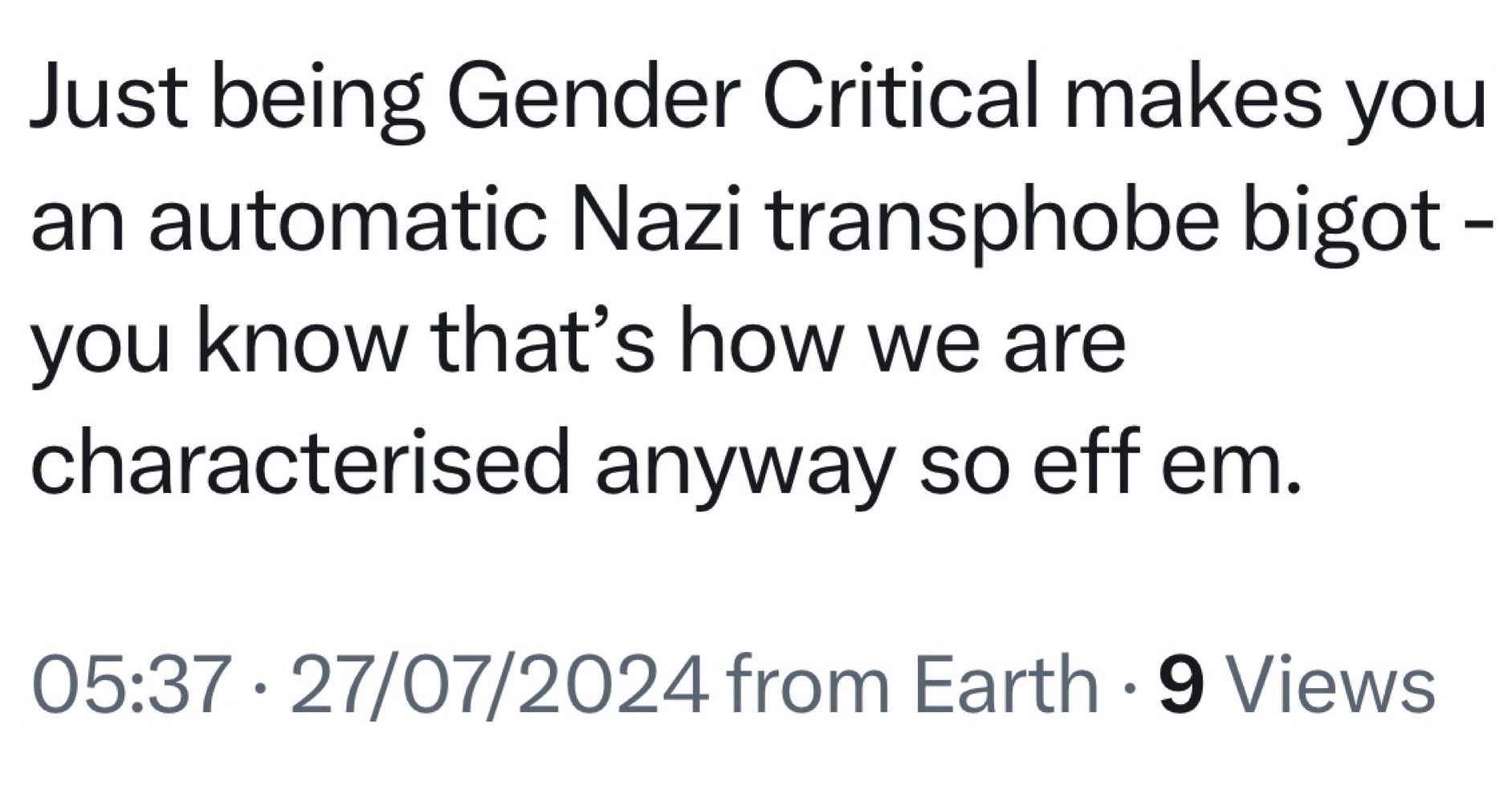

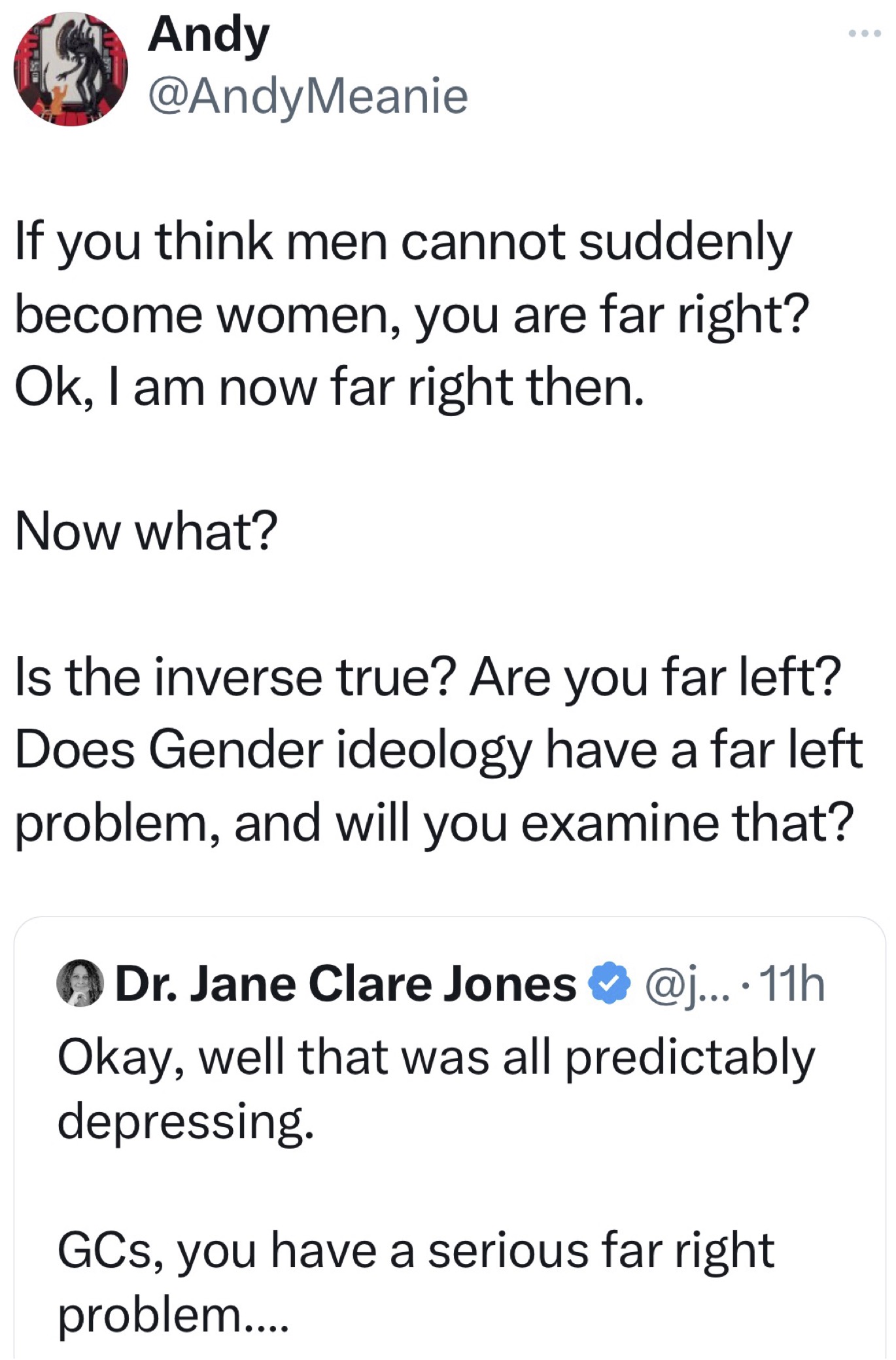


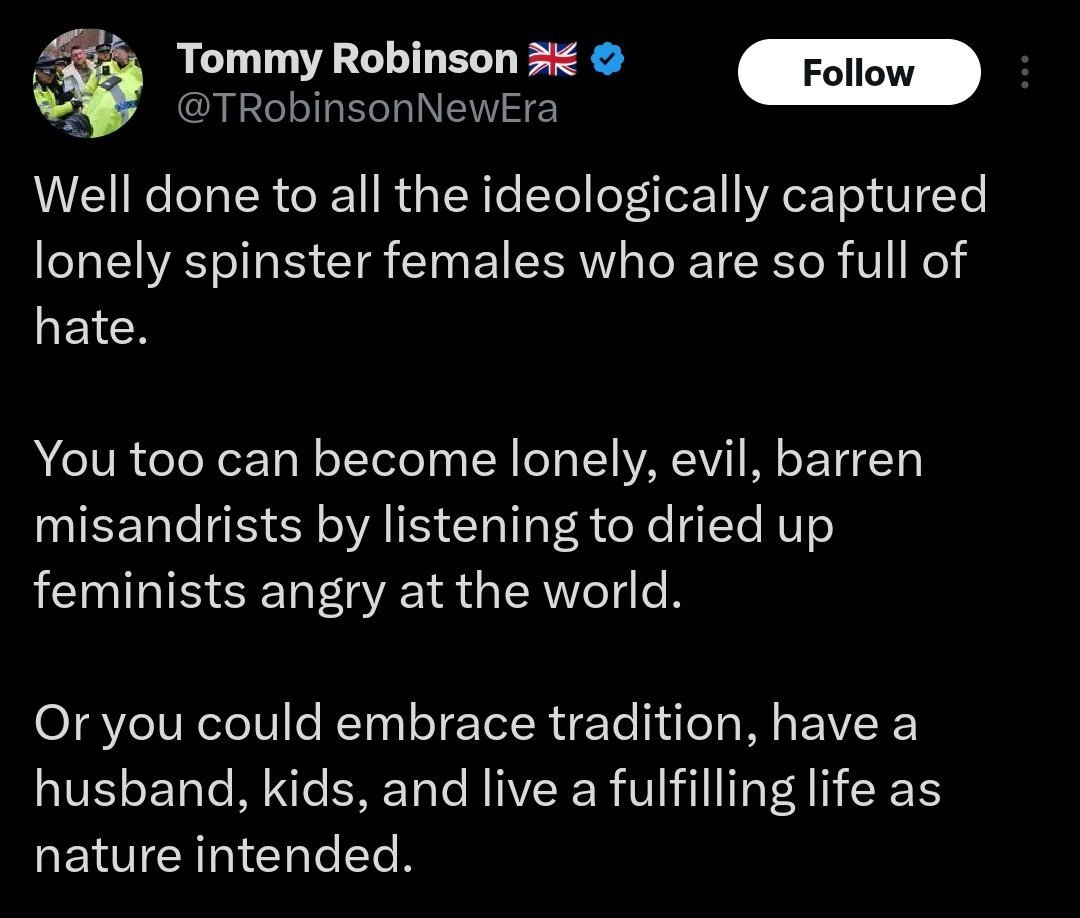
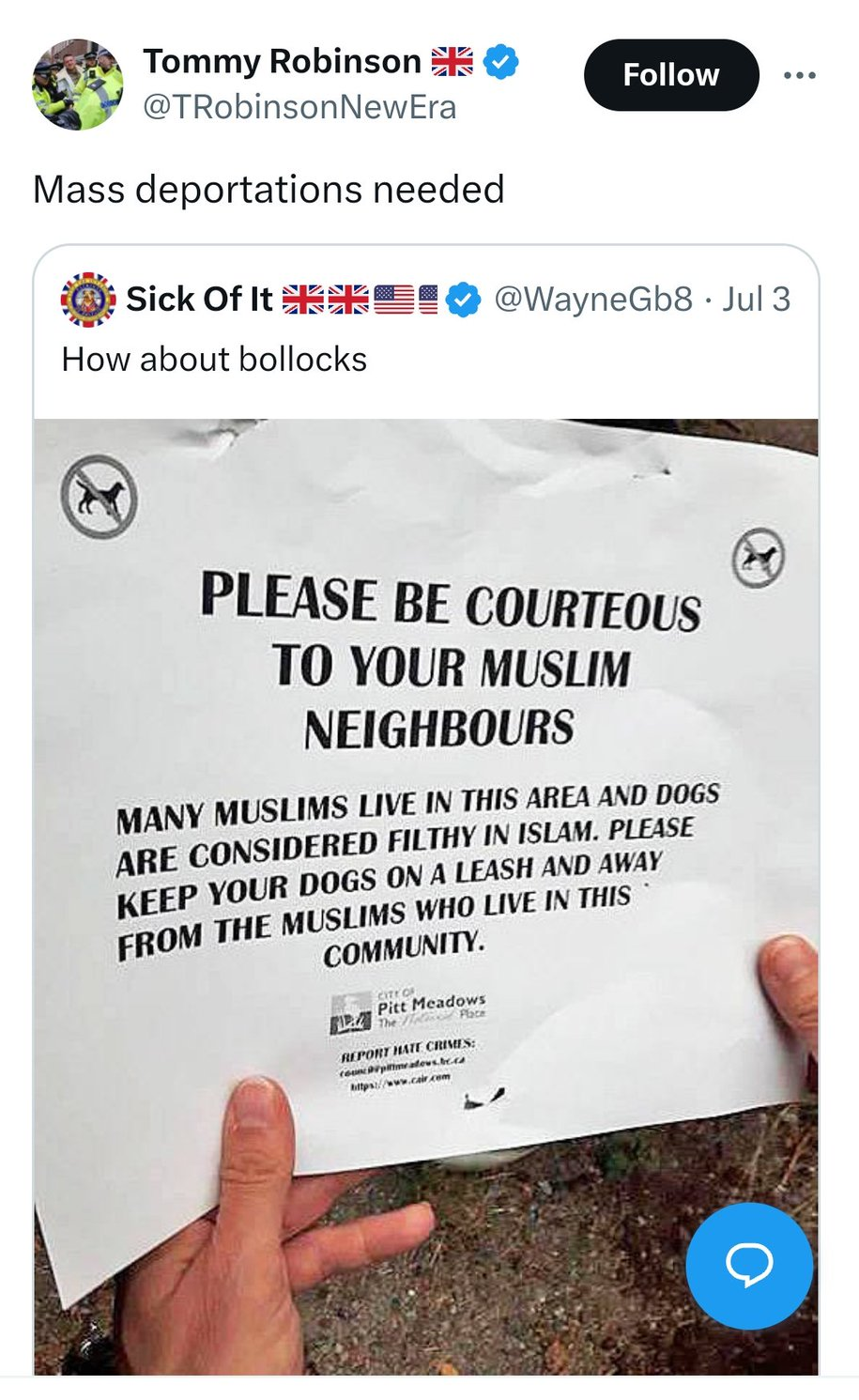


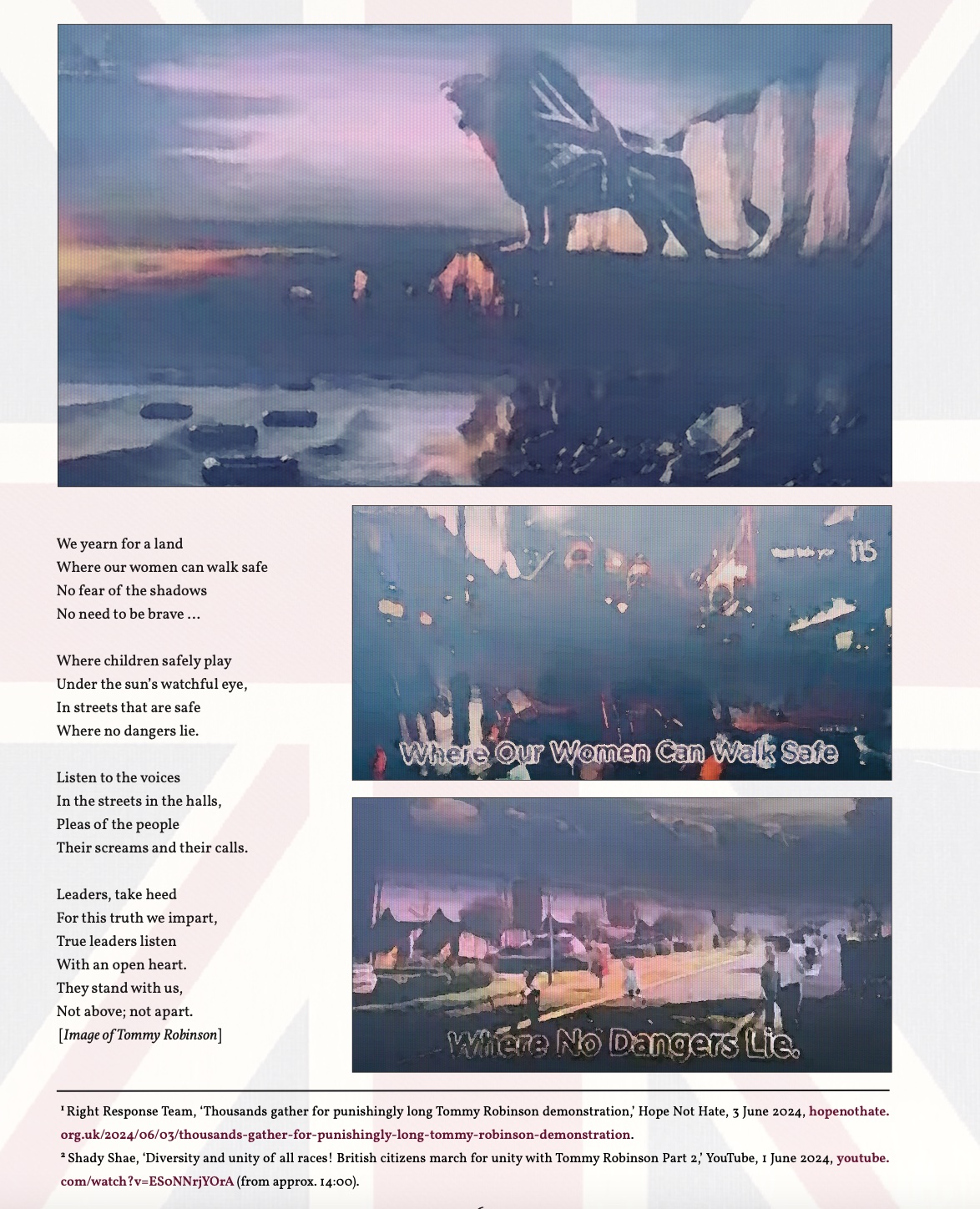




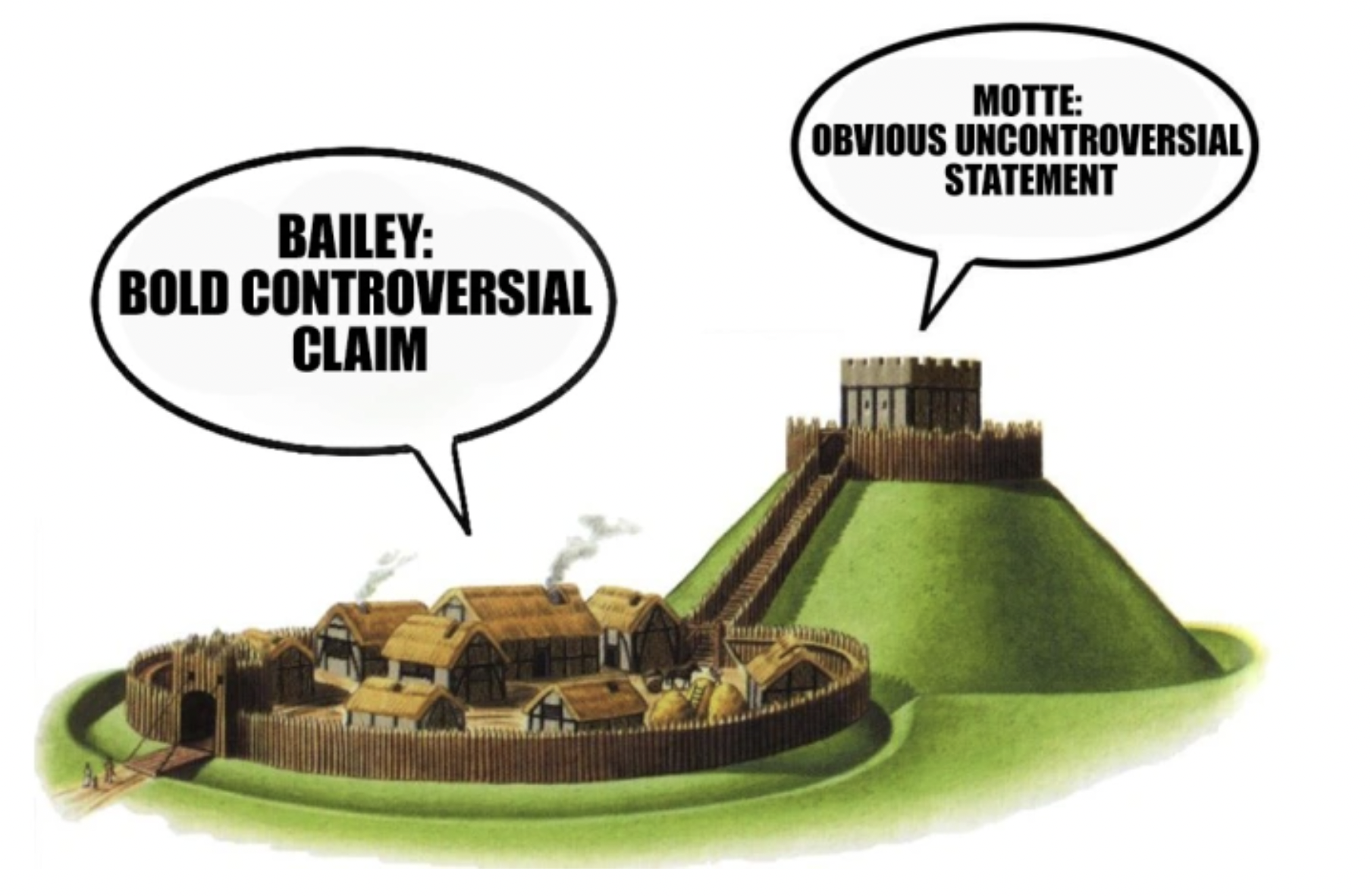
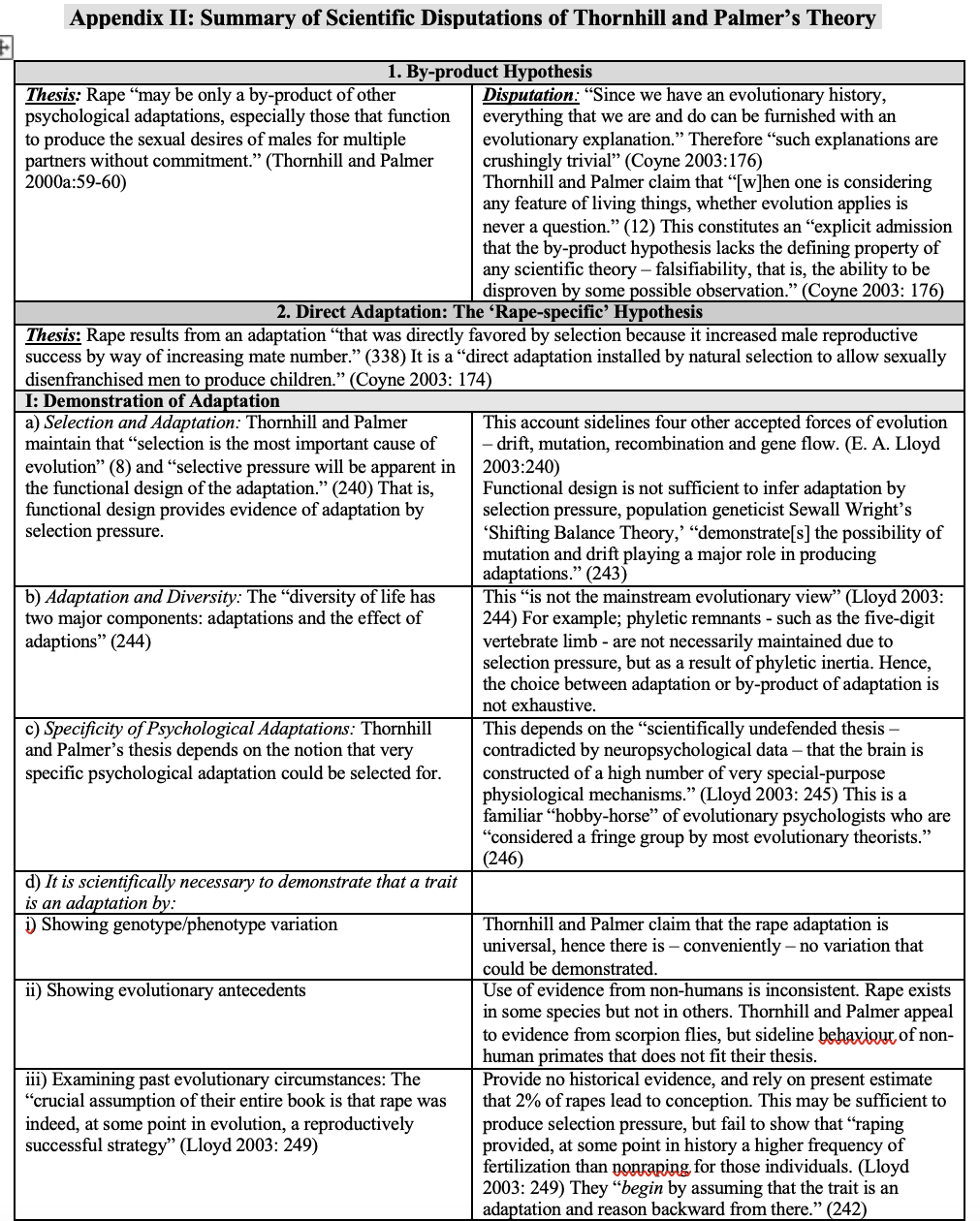
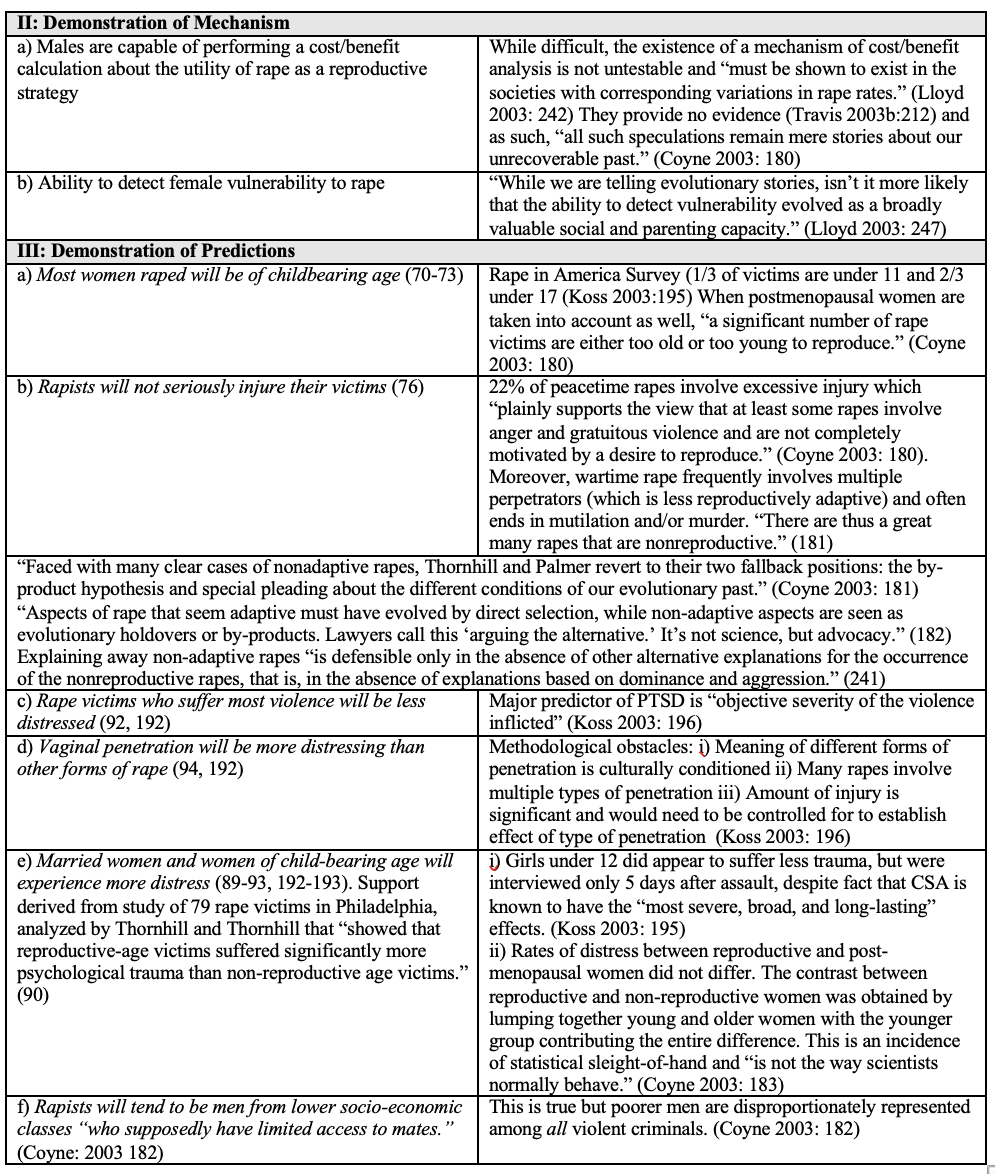


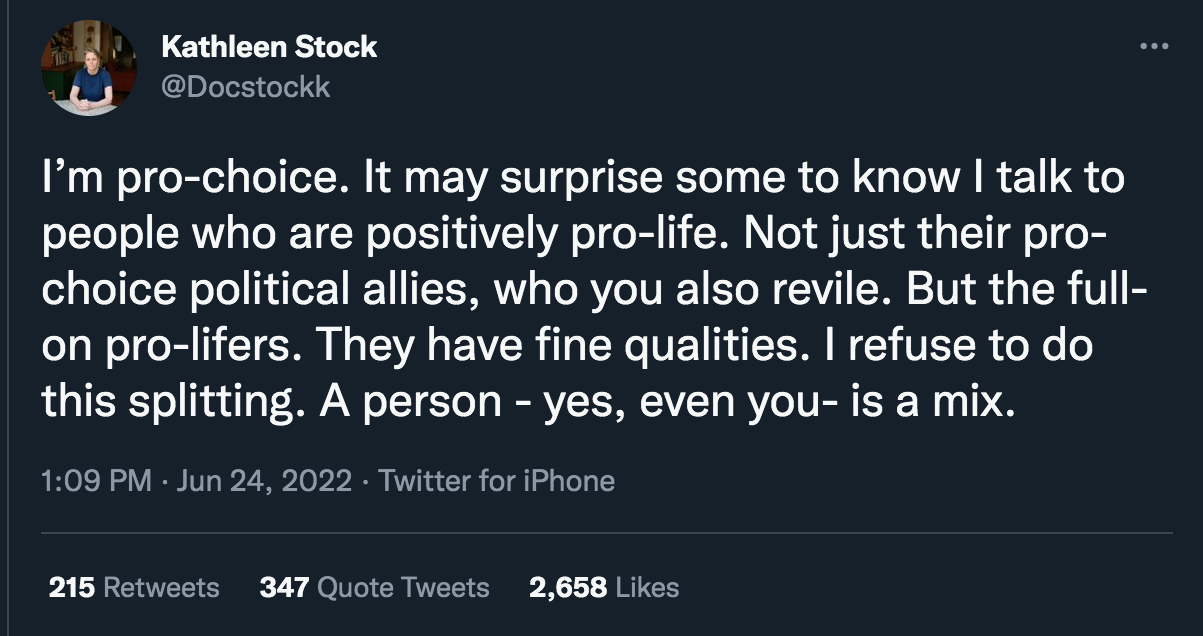
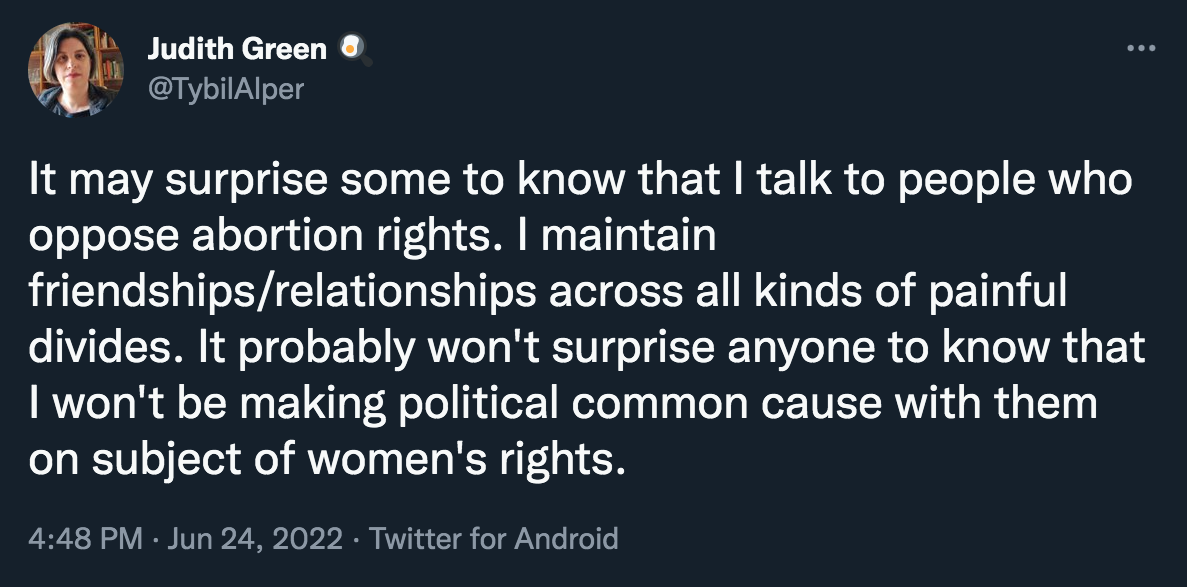


 Jane Clare Jones