This week Zach and I discuss Mayte Garcia’s beautiful memoir, our struggles with the power of posthumous Prince mind control, and start reflecting on how we have processed his death.
Available now here.

This week Zach and I discuss Mayte Garcia’s beautiful memoir, our struggles with the power of posthumous Prince mind control, and start reflecting on how we have processed his death.
Available now here.
Prince and Sex and God and Magic – in which Zach and I discuss Ben Greenman’s new book, how Prince’s capacity for flow was at the core of his genius, and why straight men often talk nonsense when discussing Prince and sex (Clue: ask women…maybe?).
Available now here
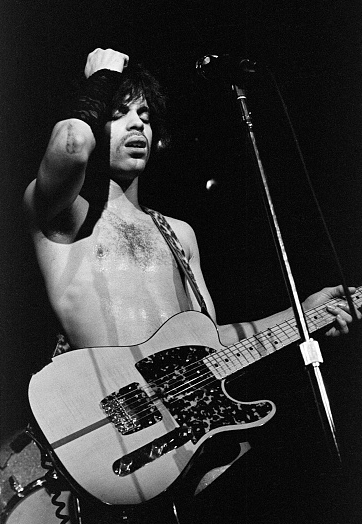
It’s been rather quiet about these parts over the last year. There was finishing my PhD, and then there was lying down and recovering from finishing my PhD, and while I was lying down, there was a good deal of watching, and listening to, and reading, and thinking about Prince.
One of the results of this will be a paper I’m giving at the ‘Purple Reign’ conference in Salford at the end of May, and another a series of podcasts I recorded with Zach Hoskins, who has undertaken the heroic mission of writing – comprehensively and perceptively – about everything Prince recorded in chronological order. (I get tired just thinking about that).
In this first episode we discuss why we think Prince mattered, both in a general sense and to us personally. In later episodes we will review recent books – which is where I get my feminist rant on about men writing about Prince and sexuality without even bothering to notice that women might have one or two pertinent things to say about that – and we will also consider what insights into his life and death we have gleaned from a year spent, as Zach would say, ‘paddling around in Prince’s psychic Lake Minnetonka.’
The first episode is available now here.

More regular feminist programming will be resumed in the not too distant future. In the meantime, enjoy hanging out with Prince. I do 🙂
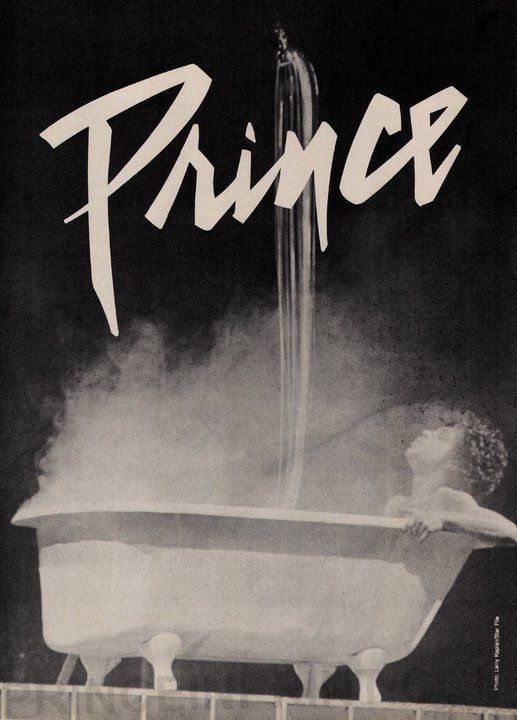
“When…working or thinking…your bloodstream beats differently.”
—Prince, Rolling Stone, 1985
Prince Rogers Nelson was never one to let anyone wrap him up in a pussycat bow. Pop-star. Rock-god. Funk-master. Preacher. Satyr. Dandy. Workhorse. Gender-bender. Monk. Magician. Philanthropist. Joker. Svengali. Recluse. Showman extraordinaire. He was a man of luminous, full-throated joy, and deep, shattering longing. Of indestructible groove laced with an abyssal ache that he was certain (and he was right) could be made to take flight through the transcendent, propulsive power of music. He played guitar like he was making love and talking in tongues. He sang like an angel and a man possessed. He was reverence and sin. Confusion and commitment. Artifice and naked emotional exposure. He hated being stared at but wanted everyone to look at him. And when we looked, we were as awed as he wanted and needed us to be, and we offered up the love that he asked for and that he made, and for a long time it was enough, it was everything, and at the same time it was not and could never be enough.
Rest of essay here.
Statement in response to London Young Labour Summer Conference Motion 8
1. This statement has been written by a group of feminist women – including academics, activists and practitioners working directly with women who experience male sexual violence. We share an understanding that inequality between men and women is more than a matter of women needing “choices” – a profoundly conservative approach – but is instead about power; specifically the deep and structural power imbalance women face in a society still dominated by regressive notions of gender. In other words, we believe feminism should be as radical as socialism in seeking to end this imbalance, instead of treating women’s inequality, and some men’s exploitation of it, as inevitable.
2. We support the decriminalisation of those who sell sex; we recognise the variety of reasons why people, overwhelmingly women, would do this. By contrast, however, we do not support the decriminalisation of those, overwhelmingly men, who buy. Their entirely different motivations and attitudes, and crucially the risk that they pose to the women, manifestly mean that their role in the sex industry must be treated separately. We consider moves to conflate the two and decriminalise both to be an effort to legitimise the sex industry, instead of acknowledging that it is both a cause and a symptom of deeply-rooted, systemic normalisation of men’s sexual entitlement.
3. For this reason, although we support the decriminalisation of women who sell sex, we do not support this motion. Despite the title’s claim to be about the decriminalisation of selling sex, in reality the focus is much more on opposing the criminalisation of buying (also known as the Nordic model). We believe that committing London Young Labour to oppose the Nordic model, and thus to support the legitimacy of men buying sex, is the true intent of the motion, and that it is misleading and disingenuous.
4. We further believe there are significant flaws in the logic and evidence used to support this end, and we draw attention to these below.
5. Clause 1: “Sex work refers to escorting, lap dancing, stripping, pole dancing, pornography, webcaming, adult modelling, phone sex, and selling sex (on and off the street).”
6. It should be noted that despite this opening, the rest of the resolution refers, and brings evidence that pertains only to, prostitution – i.e. the so called “full service”, or full access to women’s bodies for the purposes of men’s sexual gratification. Women who sell sex in person are also the group most at risk of men’s violence, and the documented physical and mental health risks that ensue. It is disingenuous to have such a wide definition yet in fact only discuss one aspect of it.
7. Clause 2: In Clause 2, the motion concedes that “Selling sex is not illegal in the UK”. However, it continues: “but it is criminalised. Almost everything that sex workers do to stay safe is illegal.”
8. Firstly, this is a hyperbolic and generalised statement. As in all other prostitution regimes, it is local implementation that matters, and this varies depending on the prostitution politics in cities and regions. Furthermore, there is no country where there is no regulation, nor where there are no local variations in practices of police and other agencies.
9. The footnote to this statement reads: “Similar laws operate in Scotland, Wales & England. Prostitution (the exchange of sexual services for money) is not illegal, but associated activities (soliciting in a public place, kerb crawling, operating a brothel) are. The main laws around sex work in the UK are: the Vagrancy Act of 1824; the Sexual Offences Act of 1956 and the Street Offences Act of 1959 (England and Wales); the Burgh Police (Scotland) Act of 1892 and the Sexual Offences (Scotland) Act of 1976, Sexual Offences Act 2003, Policing and Crime Act 2009, Crime and Disorder Act 1998, Anti Social Behaviour Act 2002, Proceeds of Crime Act 2002.”
10. It is unclear from the text of the motion which specific provisions of this long list of legislation are to be repealed in order to achieve decriminalisation. A brief review of some of these laws reveals that:
11. It is outside the scope of this document to conduct a thorough review of the law pertaining to prostitution; however even the partial examination above casts serious doubt on the idea that the effect of the legislation cited is to prevent activities designed to keep women “safe”. The only potential example that does emerge is brothel-keeping, but, as Bjørndahl’s research reveals, and as has been reported by exited campaigners such as Rachel Moran and Fiona Broadfoot from personal experience, brothels are not a reliable means of increasing women’s safety.
12. Clause 3: In Clause 3 the motion states that “Financial reasons, and any criminal record gain due to the criminalisation of sex work, are usually cited as the main reason for staying in sex work.”
13. This assertion is supported by a reference to research undertaken by the Department of Justice in Northern Ireland in 2014. However, careful review of the findings does not support the claim implicit in this clause: that acute financial necessity is what leads women to sell sex, and that they are devoid of other options. From the DOJ report: “The need to earn money to survive (22%), the need to support the family financially (18%), to finance their own education (14%), to pay off debt (10%) and having no other way to earn a living (7%) were stated reasons for respondents to engage in prostitution.” Only the last of these implies that selling sex is the only available option.
14. Financial reasons to engage in any form of paid work should be considered as normal; abolitionists fully support the self determination of all women and there is no reason to expect them to make their decisions in any other way than rationally. But from the evidence above, there is no reason to suppose that more undue hardship would come to them as a result of a reduction in trade than would from being made redundant from any other job in the course of normal capitalist dynamics.
15. Furthermore, the New Zealand based research additionally cited as support for this claim states only that: “around 93% of sex workers surveyed… cited money as a reason for both entering and staying in the sex industry.” No further detail was available and, despite what is implied by this clause, it is not possible to come to the conclusion that women in prostitution are experiencing unique financial hardship, from which selling sex is their only way out.
16. In addition to this inaccurate use of evidence, we suggest this clause lacks both logic and an alignment with Labour values. The mission of the Labour Party cannot and should not be only to keep people in jobs under any circumstance: zero hour contracts, and unsafe or degrading jobs, are rightly considered a focus for a labour movement with a conscience. Therefore it is surely not a sufficient or satisfying argument for the mainstreaming of the sex industry to say that some people might otherwise lose their jobs.
17. Clauses 4 and 5: The implicit appeal to the vulnerability of women is made more explicit in clause 4, which reads: “There are a disproportionate number of disabled people, migrants, especially undocumented or semi-documented migrants, LGBT people and single parents (the vast majority of whom are women) involved in sex work.”
18. Clause 5 elaborates: “The financial cost of being disabled, the cost of childcare, the cost of medical transition and hormones, racism in the workplace, the vulnerability of undocumented migrants to exploitation in other forms of work and the prejudice faced by LGBT and disabled people undoubtedly contribute to this overrepresentation.”
19. The footnote citation for Clause 4 is “Safety First Coalition” only, without any link or reference to any relevant research that would verify this claim. Clause 5 is not referenced and cannot be verified. However, the Northern Ireland (NI) research done by the DOJ, which the motion cites (and which it can therefore be assumed that those moving it consider reliable), found that only 4% of non-EU nationals had an illegal immigration status: the majority of those selling sex in NI were UK and Irish nationals, followed by Romanian and Hungarian nationals who are EU citizens, and of the remaining minority most were on legal visas.
20. Analysis of family status showed that 52% in the NI sample were in relationships and/or married; and 42% had children. No detail is provided as to the number in the sample who both have children and are not in a relationship (single mothers). Irish and UK nationals were more likely than foreign women to be in relationships and to have children.
21. Regarding the gender identity, disability and sexuality (except in respect to a very small minority of men who have sex with men), the research provides no information. The claims here cannot therefore be substantiated based on the sources provided. While there is a widespread belief among both the general public and advocates of decriminalisation that women engaged in prostitution substantially belong to marginalised groups, the DOJ report in fact reflects high levels of secondary and tertiary education among its respondents.
22. Clause 6: This gets to what we think is the real impetus behind the motion: protecting the rights of men who buy sex. It states: “The criminalisation of sex workers’ clients… was recently passed in the Northern Irish Assembly, despite government-commissioned research showing that 98% of sex workers working in Northern Ireland did not want this introduced.”
23. This is a misrepresentation. The research does state that only 2% of those currently selling sex who were surveyed thought the criminalisation of clients was a good idea. However, it does not give the number of undecided respondents or those who did not respond to the question, making this a poor and tendentious use of research. Additionally the wording of the question is misrepresented: whether or not criminalisation is a good idea is not the same as whether the respondents wanted it or not.
24. What’s more, when the scope of questioning is expanded to those who have sold sex in the past, the landscape of responses changes considerably. As was found in the consultation by Rhoda Grant MSP exploring the introduction of a “Nordic Model” style law in Scotland: “[it] was clear that the majority of those who have already exited prostitution were in favour of legislation, while those currently involved were fearful of the impact on them” (Grant, p. 51). In addition, only a small proportion of respondents to this consultation objected to the law, and the majority of those were organisations explicitly dedicated to legalisation. Supporters of the proposal included social and health services, women’s organisations, local councils, the White Ribbon campaign to end men’s violence against women and so on. The full list is available here.
25. This aspect of the motion, the silencing of exited women, is particularly disingenuous and disturbing. In considering the regulation and/or normalisation of any other industry, we would not dream of demanding that only those currently employed in it have a valid view on its management or social impact. It would have been unthinkable, for example to set the terms of the Leveson inquiry in such a way that only current tabloid journalists were seen to have a valid opinion on widespread culture and conduct. The focus on testimonies and perspectives of those currently involved in the sex industry only is unique to advocacy for the decriminalisation of the sex trade, and is ethically baffling.
26. Clause 7: “Organisations that support the decriminalisation of sex work include the World Health Organisation, UN Women, the Global Commission on HIV and the Law, the National Union of Students and NUS Women’s Campaign, and the Royal College of Nurses.”
27. This is in fact a list of organisations which support the full decriminalisation of both selling and buying sex, since they all oppose the Nordic model. Organisations which support the Nordic model by definition also support the decriminalisation of women, but oppose the decriminalisation of sex buying, as well as pimping and those who exploit the prostitution of others. As well as those listed above (paragraph 24) supporting the proposed criminalisation of demand in Scotland, these include:
TUC Women’s Committee, Scottish Trades Union Congress, the Northern Ireland Committee of the Irish Congress of Trade Unions, Unison, Ashiana, the Centre for Gender & Violence Research at the University of Bristol, Child and Woman Abuse Studies Unit at London Metropolitan University, Durham University Centre for Research into Violence and Abuse, Eaves, the End Violence Against Women Coalition, Equality Now, European Women’s Lobby, the Fawcett Society, National Alliance of Women’s Organisations, nia, Northern Refugee Centre, SafeLives, St Mungo’s Broadway, Welsh Women’s Aid, Women’s Aid Federation of England, and Women’s Aid Federation of Northern Ireland.
28. Clause 8: In Clause 8, the Motion attacks the efficacy of the Nordic model: “The Global Alliance Against Traffic in Women opposes introducing criminal penalties against the clients of sex workers. Their research found that criminalising clients does not reduce sex work or trafficking, but infringes on sex workers’ rights & obstructs anti-trafficking efforts.”
29. This is a claim which is contested by many others, and is not supported by actual data on the introduction and implementation of the law in Sweden and Norway. It has certainly decreased street prostitution – which few prostitution regimes do not regulate or even make illegal – in both countries, and the law is considered by police and prosecutors in Sweden as the most effective measure they have in their anti-trafficking efforts. This has been recognised by the Council of Europe (COE, 2014, p. 10).
30. Clause 10: “The criminalisation of sex workers’ clients has been proven to lead to further distrust of the police amongst sex workers, a willingness of sex workers to engage in more risky behaviour/safety procedures out of desperation, and does not reduce overall levels of prostitution.”
31. This is a contentious and contested claim, and none of the references provided are links to the three evaluations of the law in Sweden (see SOU, 2010 for the most recent). Those studies suggest that precisely because the law decriminalises those who sell sex different, more open relationships have been possible with police and social workers. There is also very little evidence supporting the claim that it has made selling sex more dangerous: the last woman to be killed in prostitution in Sweden was in 1986. Support for this claim also often cites a Norwegian study after their law reform in 2009, which did show those reporting having experienced violence in prostitution increased from 52% to 59% (Bjørndahl, 2012). However, closer examination of the data shows that the definition of violence in the post-2009 study was wider, including name calling, hair pulling and being spat at. It is these behaviours which account for the increase, whilst rape, physical assaults by regular customers/pimps and in a car with an unfamiliar customer actually decreased by half or more in the same period (Berg, 2013).
32. Those moving the motion now set out a number of beliefs to support the call for decriminalising sex work, or to put it more honestly, against the introduction of the Nordic model which decriminalises women and criminalises men who buy.
33. Belief 1: “Sex work is work. Sex work is the exchange of money for labour, like any other job. It is different because it is currently criminalised and stigmatised.”
34. We fundamentally disagree. Sex work is not identical to other forms of labour. Firstly, unlike other labour, sex is an activity which the majority of people engage in freely without remuneration. In this context, it is not labour, but an activity motivated by mutual desire. So, in the buying and selling of sex, what is effectively paid for is the waiving of this requirement of mutual desire. It is emphatically not the exchange of money for labour; it is the exchange of money for consent.
35. Framing the debate as an issue of labour rights thus rests on obscuring the fact that the sex industry involves financial coercion of consent, not an exchange of labour for money. And that, moreover, this takes place in the context of a society in which women have less social and economic power than men, and are hence particularly vulnerable to financial coercion. And as the legal strictures around paid organ donation indicate, there is significant potential harm to coercing an individual’s consent to transgressions of their bodily integrity. Since the sex industry relies on this coercion, it should therefore be seen in the same way.
36. Furthermore, there are practical barriers to treating the selling of sex (again, this motion seems to refer only to “full service” sex – i.e. intercourse, oral sex, anal sex and associated activities) as other jobs are treated under the law. One key difficulty is around health and safety (H&S) legislation. While abolitionists and supporters of decriminalisation both agree that the safety of the women engaging in sex work should be a paramount concern of any proposed policy, the latter have not been able to give an account of how, for example, bodily liquids would be treated under H&S law with regard to prostitution. In other professions when contact with potential body fluids such as saliva, blood, semen or urine is likely, protective equipment such as face masks, latex gloves (double latex gloves in the case of nurses working in the presence of blood or semen), plastic aprons etc. are recommended or in some cases mandated, for the protection of the workers. It is difficult to imagine how the provision of full intercourse could function while complying with such regulation, and we are left to imagine that supporters of this motion would in fact exclude women from being fully bound by such regulation, treating them very much as not professionals doing “any other job”, but as a special case, worthy of reduced protection.
37. Similar difficulties arise when looking at legislation touching on sexual harassment at work and other hard-won legislation which functions to protect workers and structures what is legally considered an appropriate work environment. It would be irresponsible in the extreme for people belonging to the Labour movement to hide behind a glib assertion of “sex work is work” while abandoning the workers in question to be excluded from the protections available to others.
38. Belief 3: “The right of consenting adults to engage in sexual relations is of no business to anyone but the people involved.”
39. Consent to sex and equality in sex are not the same, as students will know from the fact that sexual relationships between students and teaching staff are prohibited, even where they are consensual. This is a highly contestable statement of opinion which does not reflect society’s growing awareness of socialised male privilege and sexual entitlement.
40. As set out above, in selling sex, one person is in reality paid by the other to waive the usual expectation of mutual desire and equal power that applies in non-paid consensual sexual encounters. “Consent” in this context refers to the kind of temporary relinquishment of rights that happens when patients sign consent forms for medical procedures: “I grant you my consent to temporarily have the right to do something to me (for example cut me in a surgery, or have intercourse with me) which I would normally consider harmful and which it would be an offence for you to do to me without this form.” However the patient signing away bodily integrity is doing so out of a medical necessity, whereas the woman is doing so purely out of financial interest and not because of any reciprocity of benefit.
41. Belief 4: “The moral panic around sex work and prostitution echoes the moral panic that was present when homosexuality was in the process of being decriminalised. It is no coincidence that many who argue for harsh anti-prostitution laws under the guise of feminism also voted against equal marriage and similar civil rights measures.”
42. While some voices may oppose both the sex industry and equal marriage for religious reasons, it is profoundly misleading to ignore feminist organisations and individuals such as those listed above, who oppose the former and support the latter.
43. Belief 6: “Regardless of their reasons for entering into sex work, all sex workers deserve to have their rights protected and to be able to do their jobs safely. This includes sex workers who do not find their job ‘empowering’. Whether or not you enjoy a job should have no bearing on the rights you deserve while you do it.”
44. By definition, the Nordic model would not deny women this protection, since it too would decriminalise them. This being the case, it is not clear how this motion would better ensure that women can “do their jobs safely”, when its very distinguishing feature is that it protects the “rights” of those responsible for the threat to women’s safety in the first place: men who buy.
45. Belief 9: “Tim Barnett was correct in asserting that “prostitution is inevitable, and no country has succeeded in legislating it out of existence”. Sweden cannot show a reduction in the number of sex workers.”
46. In the DOJ research cited in the motion, it is estimated that only 3% of men currently regularly pay for sex. If the numbers did decrease in the wake of criminalising demand, then the proportion of men paying for sex would shrink to the point of being insignificant.
47. No undesirable social behaviour has yet been eradicated completely – which is why we have laws and courts punishing those who commit murder or theft, despite the fact that they are illegal. To argue that, because it is impossible to prevent 100% of offences, we should not have laws making them offences in the first place is a bizarre for a political organisation, and not particularly coherent in terms of the wellbeing of the women involved in the sex trade. Our concern, as a society, for their welfare should not be predicated on the willingness or otherwise of men to change their behaviour.
48. Conclusion: This motion is based on selective and tendentious readings of the research and on assumptions and myths about the nature of prostitution and those who engage in it. It also seems to set out actively to misrepresent the Nordic model and those who support it. It engages in the strange sophistry of defending women as fully self-determined agents operating from purely rational and free motives on the one hand – whilst simultaneously claiming that it is driven primarily by the needs of vulnerable people who have no alternative. And in both these arguments, the interests of the men who fuel the demand are completely absent, suggesting that the industry somehow operates solely to the benefit of the labour force- an odd position for a Labour movement to find itself in. Where it does make any fleeting reference to the role of buyers, it relies on the deeply ingrained belief that male sexual exploitation of women is immutable and can never be eradicated as an argument for normalising it.
49. By contrast, as feminists we believe that women who sell sex are fellow human beings who operate under the constraints and limitations of all human life. Most of them are neither superior, sexually liberated entrepreneurs, nor weak and defenceless victims. They are responding to the demand created by men and catered to by pimps and traffickers (among others), a demand which can and should be delegitimised through the introduction of legislation that signals that sexual exploitation is not an acceptable “service” to purchase, even if the money exchanging hands seems to make it a “free” transaction on behalf of the class of people thus being exploited. The protection of those who sell should not be conflated with the legitimisation of those who buy. Those within the Labour movement who fail to distinguish or even acknowledge these two very different constituent elements of the sex industry, and who do not identify which holds the power, should explain their position better and more honestly than they have done in this motion.
WAPOW (Women Assessing Policy on Women)
June 2015
References:
Berg, S. (2013) New research shows violence decreases under Nordic model: Why the radio silence? Feminist Current, January 22, available at: http://feministcurrent.com/7038/new-research-shows-violence-decreases-under-nordic-model-why-the-radio-silence/.
Bjørndahl, U. 2012 “Dangerous Liaisons: A report on the violence women in prostitution in Oslo are exposed to” Accessed at https://humboldt1982.files.wordpress.com/2012/12/dangerous-liaisons.pdf on June 2nd 2015
Council of Europe Parliamentary Assembly, 2014, “Prostitution, trafficking and modern slavery in Europe“. Accessed at http://assembly.coe.int/ASP/Doc/XrefViewPDF.asp?FileID=20559HYPERLINK “http://assembly.coe.int/ASP/Doc/XrefViewPDF.asp?FileID=20559&Language=en”&HYPERLINK “http://assembly.coe.int/ASP/Doc/XrefViewPDF.asp?FileID=20559&Language=en”Language=en on June 2nd 2015
Department of Justice, 2014, “Research into Prostitution in Northern Ireland”. Accessed at http://www.dojni.gov.uk/index/publications/publication-categories/pubs-criminaljustice/prostitution-report-nov-update.pdf HYPERLINK “http://www.dojni.gov.uk/index/publications/publication-categories/pubs-criminaljustice/prostitution-report-nov-update.pdf%20on%20June%202nd%202015″on June 2nd 2015
Grant, R., “Proposed Criminalisation of the Purchase of Sex: Summary of Consultation Responses”. Accessed at http://www.scottish.parliament.uk/S4_MembersBills/FINAL_consultation_summary_Criminalisation_of_Purchase_of_Sex.pdfHYPERLINK “http://www.scottish.parliament.uk/S4_MembersBills/FINAL_consultation_summary_Criminalisation_of_Purchase_of_Sex.pdf%20on%20June%202nd%202015” on June 2nd 2015
SOU (2010) Selected extracts of the Swedish Government report SOU 2010:49: Prohibition of the purchase of sexual services. An evaluation 1999-2008.
New post which, I’m pleased to say, is available at http://www.troubleandstrife.org/new-articles/you-are-killing-me/


Sara Ahmed, The Cultural Politics of Emotion

Judith Butler, The Future of Sexual Difference
I am trying to understand – I have been trying to understand – how, having steeped ourselves in a similar tradition, we could come to such different conclusions.
It is claimed that certain women should not say certain things. That a woman who finds healing from male violence in the company of other women should be silent about the power of that healing. That she should not try to protect that space (or even raise questions about protecting that space). That she is wrong to be concerned that it will no longer be there for the women who come after her. Because that healing comes at the expense of others. Because that healing, therefore, is violence.
I understand something of the logic. I have spent my life thinking the resistance to sovereign violence, unpicking the way the impossible conceit of safety is used to appropriate and exclude. We see it everywhere. Indeed, it is everywhere. But when I first read the demand of unconditional hospitality, and felt the ethical power of openness resonate, I also thought, a moment later, and what of a woman’s need to say no?
Unconditional hospitality is impossible. We know this. Without a home, without some degree of safety, there is no place from which to be hospitable. And more than that, people – women – in the grip of a profound trauma created and perpetuated by a system of power invested in the annihilation of their needs, are the very last people from whom it is appropriate to demand unconditional openness. They are the very last people who are capable – or should be capable – of answering this demand.
The system of power attributed to women is not theirs. Women are not guilty of exercising an excess of sovereign power. Sovereignty, in its fundamental denial of dependency and relation, in its incessant imperial expansion, is a structure of the patriarchal-colonial imaginary. Women suffer not from its excess, but from its deficiency. We are raised to say yes to the needs of more important others, are we not? And our political practice has been, and remains to be, about lending each other an affirmation, the affirmation of the necessity, and justice, of our need to say no.
You are arguing for the pre-eminent violence of women’s no. You do understand that. That in a society in which the emotional and physical and sexual and reproductive labour of women is appropriated day in day out, with more or less explicit violence, the violence you are most compelled to resist is that of a woman saying no. The people whose needs you prioritize are those who show not a single shred of empathy for why, in this world, a woman might need to say no. And what saddens you most, when a woman recounts how female space helped her recover from violence, is the abuse of the language of feminism to support this no.
But what is feminism without this no? What is a feminism that is concerned, above all, with the sovereign violence of women’s no, and with exerting pressure on women to surrender their no? What is a feminism which functions, therefore, by denying the reality of women’s lives in order to attribute to them a sovereignty which they do not possess? There is no way to read women’s no as an exercise in sovereign violence – analogous, as is so often claimed, to the exclusions performed by whiteness – without denying that the entire system of power bearing down on women is predicated on granting them no sovereignty at all. It makes sense only as a denial of the oppression of women as women, or as the denial of the existence of women at all. It makes sense, therefore, only as a form of anti-feminism.
This is what we are fighting about. We are fighting about who is the sovereign, and who is the appropriated. (And here we should note, if oppression is motivated by appropriation, then not all forms of exclusion are evidence of oppression). We are fighting against the (ab)use of the critique of metaphysics to erase the political category of woman (while being told, with slings and outrage, that to object to that erasure is an act of hatred, on par with, and indeed, responsible for, the patriarchal violence of men). We are fighting against the deployment of the discourse of intersectionality to deny that the oppression of women as women affects all women, and that all women exist under conditions of appropriation which render their no a resistance to, rather than a performance of, sovereign violence. We are arguing about whether the fact that other oppressions intersect with, amplify and modify certain women’s oppression, should be widely used in practice (often, we note, by left-wing men) to suggest that actually, women (if they exist) are not really that oppressed as women at all (convenient that).
We are fighting against a feminist discourse which positions women as the oppressor, and repeats the foundational patriarchal gesture of denying us the affirmation of our needs, and an explanation of why we are wounded by this world. Feminism – the practice of love and understanding, passed between women – has saved many of us from lives blighted by the violence drilled into our bodies and souls by the needs of men. And so, above all, we are fighting to ensure that this healing is not denied to the women that come after us. That when their youthful confidence in (neo)liberal empowerfulment and the shock of the new – their absurdly Platonic belief in the possibility of neatly dismantling an age-old structure of material appropriation with pronouns – runs headlong into the implacable violence of domination, we, the dried-up hate-spewing bigots they have been schooled to despise, will still be there for them. And for them, we will not give up.

Once upon a time there was a philosopher. He was a very good philosopher, and he had a lot of wonderful things to say about existence, and how it was impossible for a thing to exist entirely in itself without being connected to all the things around it. He was very worried because lots of powerful men thought it very important that things-be-only-exactly-what-they-are-and-not-at-all-dependent-on-the-things-on-which-they-are-actually-dependent. He was worried because these powerful men’s obsession was a denial of life and of death, of vulnerability and responsibility, and he thought it led to lots of violence. He thought these powerful men’s obsession made it impossible for them to care properly about other people (particularly women, and foreigners, and animals, and the planet).
Unfortunately, this philosopher – his name was Jackie – started his career by talking about words, and using words to show how things that we think have meaning in themselves only really have meaning because of the way they are connected to everything else. He called this web of connections ‘text,’ and one day he wrote a sentence in a famous book about how there was nothing outside of text. Because he thought everything existed in relation. People thought that when he said ‘text’ he meant words, and then decided that he didn’t believe in tables and chairs, and the idea that everything was made up of words got really popular and became a movement, and then it became bad to say that you thought tables and chairs were made out of wood.
Now this idea that the world is made out of words is so popular that anyone who thinks it might be more complicated is called very-old fashioned and conservative. Some new philosophers started talking about the stuff that things are made of, and some of the ones that are women about how that stuff connects with words to create meaning. But no-one is really listening to them. And a lot of people have decided that the violence that happens to people is mostly just because of the wrong words that we use to talk about them. So it has been made a kind of law that the best way to make things better is to pretend that it is already better and just change all the words so that they describe a world that we want to exist. And that people using the words to describe the world which still actually exists are doing so because secretly that is the world that they want to exist, and they are working to stop the better world from happening.
But what these people forgot was that the good philosopher never thought that tables and chairs don’t exist. He just thought that everything existed because of its connections, and he used words as kind of picture. And he also thought that all the oppositions that our minds make are impossible to escape in thought, and that words hide the connections between the both out of which the world is made. It would have been very silly of him to think that there was only words, and not the stuff of chairs and tables. Because he thought a lot about both, and how it is always both that makes the world, and about the dense connections that spin so fast our stupid little brains cannot follow them. And he thought that our job was to try as hard as we can to follow the spinning. Because it makes life. And otherwise some important part of the web of the world gets forgotten. And sometimes that is people, or women, or foreigners, or animals, or the planet. And that is bad.
We cannot get to where we want to go by just saying it so. That power is given only to God in another book of stories. We need to try to understand as best we can how where we are now arises out of the world we are in, and use the best words to describe it. Describing is not prescribing. It is the first and most important part of working out what is wrong. And what is wrong will not be made right by the might of The Word alone.

