Author: channellightvesselautomatic

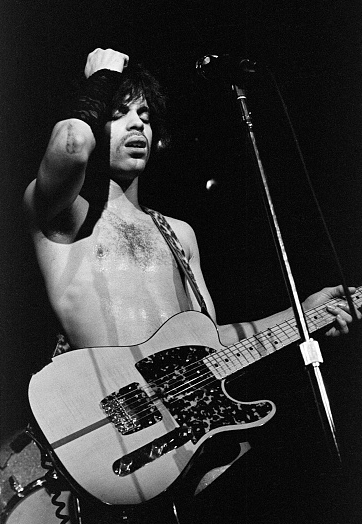
‘A Year Without Prince’ Podcast

It’s been rather quiet about these parts over the last year. There was finishing my PhD, and then there was lying down and recovering from finishing my PhD, and while I was lying down, there was a good deal of watching, and listening to, and reading, and thinking about Prince.

One of the results of this will be a paper I’m giving at the ‘Purple Reign’ conference in Salford at the end of May, and another a series of podcasts I recorded with Zach Hoskins, who has undertaken the heroic mission of writing – comprehensively and perceptively – about everything Prince recorded in chronological order. (I get tired just thinking about that).

In this first episode we discuss why we think Prince mattered, both in a general sense and to us personally. In later episodes we will review recent books – which is where I get my feminist rant on about men writing about Prince and sexuality without even bothering to notice that women might have one or two pertinent things to say about that – and we will also consider what insights into his life and death we have gleaned from a year spent, as Zach would say, ‘paddling around in Prince’s psychic Lake Minnetonka.’

The first episode is available now here.

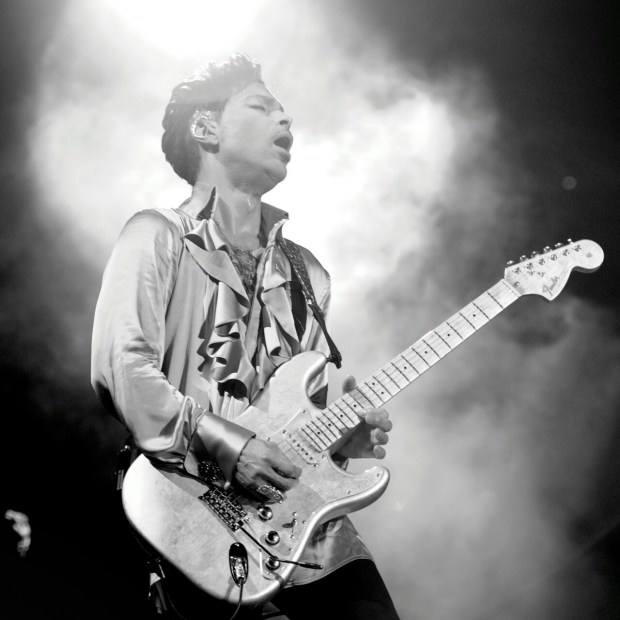
stage guitar face 3b

More regular feminist programming will be resumed in the not too distant future. In the meantime, enjoy hanging out with Prince. I do 🙂

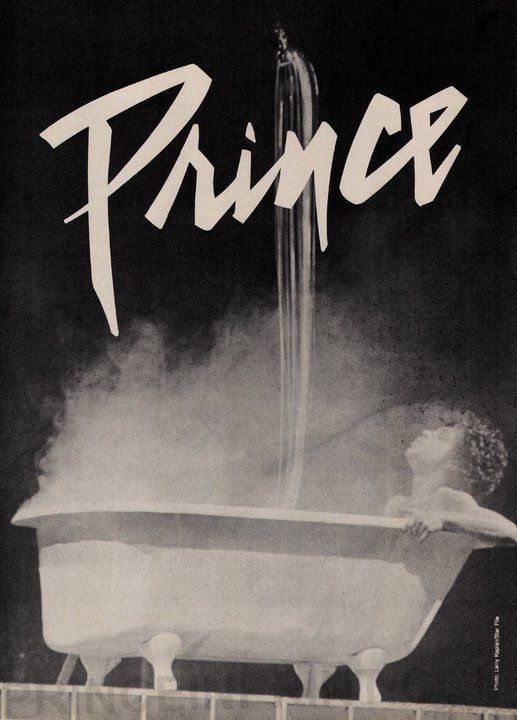
Water Baby: A Eulogy for Our Departed Prince


bathtub1

“When…working or thinking…your bloodstream beats differently.”
—Prince, Rolling Stone, 1985

Prince Rogers Nelson was never one to let anyone wrap him up in a pussycat bow. Pop-star. Rock-god. Funk-master. Preacher. Satyr. Dandy. Workhorse. Gender-bender. Monk. Magician. Philanthropist. Joker. Svengali. Recluse. Showman extraordinaire. He was a man of luminous, full-throated joy, and deep, shattering longing. Of indestructible groove laced with an abyssal ache that he was certain (and he was right) could be made to take flight through the transcendent, propulsive power of music. He played guitar like he was making love and talking in tongues. He sang like an angel and a man possessed. He was reverence and sin. Confusion and commitment. Artifice and naked emotional exposure. He hated being stared at but wanted everyone to look at him. And when we looked, we were as awed as he wanted and needed us to be, and we offered up the love that he asked for and that he made, and for a long time it was enough, it was everything, and at the same time it was not and could never be enough.

Rest of essay here.

Standing up for all women

Statement in response to London Young Labour Summer Conference Motion 8

1. This statement has been written by a group of feminist women – including academics, activists and practitioners working directly with women who experience male sexual violence. We share an understanding that inequality between men and women is more than a matter of women needing “choices” – a profoundly conservative approach – but is instead about power; specifically the deep and structural power imbalance women face in a society still dominated by regressive notions of gender. In other words, we believe feminism should be as radical as socialism in seeking to end this imbalance, instead of treating women’s inequality, and some men’s exploitation of it, as inevitable.

2. We support the decriminalisation of those who sell sex; we recognise the variety of reasons why people, overwhelmingly women, would do this. By contrast, however, we do not support the decriminalisation of those, overwhelmingly men, who buy. Their entirely different motivations and attitudes, and crucially the risk that they pose to the women, manifestly mean that their role in the sex industry must be treated separately. We consider moves to conflate the two and decriminalise both to be an effort to legitimise the sex industry, instead of acknowledging that it is both a cause and a symptom of deeply-rooted, systemic normalisation of men’s sexual entitlement.

3. For this reason, although we support the decriminalisation of women who sell sex, we do not support this motion. Despite the title’s claim to be about the decriminalisation of selling sex, in reality the focus is much more on opposing the criminalisation of buying (also known as the Nordic model). We believe that committing London Young Labour to oppose the Nordic model, and thus to support the legitimacy of men buying sex, is the true intent of the motion, and that it is misleading and disingenuous.

4. We further believe there are significant flaws in the logic and evidence used to support this end, and we draw attention to these below.

5. Clause 1: “Sex work refers to escorting, lap dancing, stripping, pole dancing, pornography, webcaming, adult modelling, phone sex, and selling sex (on and off the street).”

6. It should be noted that despite this opening, the rest of the resolution refers, and brings evidence that pertains only to, prostitution – i.e. the so called “full service”, or full access to women’s bodies for the purposes of men’s sexual gratification. Women who sell sex in person are also the group most at risk of men’s violence, and the documented physical and mental health risks that ensue. It is disingenuous to have such a wide definition yet in fact only discuss one aspect of it.

7.  Clause 2: In Clause 2, the motion concedes that “Selling sex is not illegal in the UK”. However, it continues: “but it is criminalised. Almost everything that sex workers do to stay safe is illegal.”

8. Firstly, this is a hyperbolic and generalised statement. As in all other prostitution regimes, it is local implementation that matters, and this varies depending on the prostitution politics in cities and regions. Furthermore, there is no country where there is no regulation, nor where there are no local variations in practices of police and other agencies.

9. The footnote to this statement reads: “Similar laws operate in Scotland, Wales & England. Prostitution (the exchange of sexual services for money) is not illegal, but associated activities (soliciting in a public place, kerb crawling, operating a brothel) are. The main laws around sex work in the UK are: the Vagrancy Act of 1824; the Sexual Offences Act of 1956 and the Street Offences Act of 1959 (England and Wales); the Burgh Police (Scotland) Act of 1892 and the Sexual Offences (Scotland) Act of 1976, Sexual Offences Act 2003, Policing and Crime Act 2009, Crime and Disorder Act 1998, Anti Social Behaviour Act 2002, Proceeds of Crime Act 2002.”

10. It is unclear from the text of the motion which specific provisions of this long list of legislation are to be repealed in order to achieve decriminalisation. A brief review of some of these laws reveals that:

  • The Vagrancy Act 1824 is almost entirely repealed and it is not clear which remaining clauses are meant.
  • The Sexual Offences Act 1956 criminalises abduction, incest, “unnatural acts” (repealed), living off the proceeds of prostitution and causing or encouraging prostitution of mentally disabled persons (in the language of the Act, “defectives”). One assumes that these are not things women do to “stay safe” in prostitution and therefore cannot be targeted by the motion.
  • The Act also criminalises the keeping of brothels and permitting premises to be used as brothels, which we infer is what the motion intends to criticise. It is however a debatable claim that indoor prostitution, or women working in parlours and brothels, is necessarily safer than outdoor or single-woman prostitution. Research conducted by Ulla Bjørndahl in Norway in 2012 has shown that women working indoors are seriously sexually assaulted and robbed by their clients more frequently than street workers (Bjørndahl, 2012, table 11). Indoor workers also reported higher incidence of abuse from a pimp (ibid, p. 15).
  • The Policing and Crime Act 2009 mostly deals with police procedure or co-operation, but among other things criminalises purchase of sex from persons subjected to force; again, this provision is surely not the target of repeal under decriminalisation, and more specific information is needed to support the assertion that “Almost everything that sex workers do to stay safe is illegal”.
  • The Sexual Offences Act 2003 mostly deals with sexual offences such as rape, incest and child abuse. There is a section criminalising trafficking and a section criminalising the solicitation by a person seeking to purchase sex from another in a public place. This provision does not criminalise women engaged in prostitution. The Act also elaborates in a minor way on the criminalisation of brothel keeping in the 1956 Act.

11. It is outside the scope of this document to conduct a thorough review of the law pertaining to prostitution; however even the partial examination above casts serious doubt on the idea that the effect of the legislation cited is to prevent activities designed to keep women “safe”. The only potential example that does emerge is brothel-keeping, but, as Bjørndahl’s research reveals, and as has been reported by exited campaigners such as Rachel Moran and Fiona Broadfoot from personal experience, brothels are not a reliable means of increasing women’s safety.

12. Clause 3: In Clause 3 the motion states that “Financial reasons, and any criminal record gain due to the criminalisation of sex work, are usually cited as the main reason for staying in sex work.”

13. This assertion is supported by a reference to research undertaken by the Department of Justice in Northern Ireland in 2014. However, careful review of the findings does not support the claim implicit in this clause: that acute financial necessity is what leads women to sell sex, and that they are devoid of other options. From the DOJ report: “The need to earn money to survive (22%), the need to support the family financially (18%), to finance their own education (14%), to pay off debt (10%) and having no other way to earn a living (7%) were stated reasons for respondents to engage in prostitution.” Only the last of these implies that selling sex is the only available option.

14. Financial reasons to engage in any form of paid work should be considered as normal; abolitionists fully support the self determination of all women and there is no reason to expect them to make their decisions in any other way than rationally. But from the evidence above, there is no reason to suppose that more undue hardship would come to them as a result of a reduction in trade than would from being made redundant from any other job in the course of normal capitalist dynamics.

15. Furthermore, the New Zealand based research additionally cited as support for this claim states only that: “around 93% of sex workers surveyed… cited money as a reason for both entering and staying in the sex industry.” No further detail was available and, despite what is implied by this clause, it is not possible to come to the conclusion that women in prostitution are experiencing unique financial hardship, from which selling sex is their only way out.

16. In addition to this inaccurate use of evidence, we suggest this clause lacks both logic and an alignment with Labour values. The mission of the Labour Party cannot and should not be only to keep people in jobs under any circumstance: zero hour contracts, and unsafe or degrading jobs, are rightly considered a focus for a labour movement with a conscience. Therefore it is surely not a sufficient or satisfying argument for the mainstreaming of the sex industry to say that some people might otherwise lose their jobs.

17. Clauses 4 and 5: The implicit appeal to the vulnerability of women is made more explicit in clause 4, which reads: “There are a disproportionate number of disabled people, migrants, especially undocumented or semi-documented migrants, LGBT people and single parents (the vast majority of whom are women) involved in sex work.”

18. Clause 5 elaborates: “The financial cost of being disabled, the cost of childcare, the cost of medical transition and hormones, racism in the workplace, the vulnerability of undocumented migrants to exploitation in other forms of work and the prejudice faced by LGBT and disabled people undoubtedly contribute to this overrepresentation.”

19. The footnote citation for Clause 4 is “Safety First Coalition” only, without any link or reference to any relevant research that would verify this claim. Clause 5 is not referenced and cannot be verified. However, the Northern Ireland (NI) research done by the DOJ, which the motion cites (and which it can therefore be assumed that those moving it consider reliable), found that only 4% of non-EU nationals had an illegal immigration status: the majority of those selling sex in NI were UK and Irish nationals, followed by Romanian and Hungarian nationals who are EU citizens, and of the remaining minority most were on legal visas.

20. Analysis of family status showed that 52% in the NI sample were in relationships and/or married; and 42% had children. No detail is provided as to the number in the sample who both have children and are not in a relationship (single mothers). Irish and UK nationals were more likely than foreign women to be in relationships and to have children.

21. Regarding the gender identity, disability and sexuality (except in respect to a very small minority of men who have sex with men), the research provides no information. The claims here cannot therefore be substantiated based on the sources provided. While there is a widespread belief among both the general public and advocates of decriminalisation that women engaged in prostitution substantially belong to marginalised groups, the DOJ report in fact reflects high levels of secondary and tertiary education among its respondents.

22. Clause 6: This gets to what we think is the real impetus behind the motion: protecting the rights of men who buy sex. It states: “The criminalisation of sex workers’ clients… was recently passed in the Northern Irish Assembly, despite government-commissioned research showing that 98% of sex workers working in Northern Ireland did not want this introduced.”

23. This is a misrepresentation. The research does state that only 2% of those currently selling sex who were surveyed thought the criminalisation of clients was a good idea. However, it does not give the number of undecided respondents or those who did not respond to the question, making this a poor and tendentious use of research. Additionally the wording of the question is misrepresented: whether or not criminalisation is a good idea is not the same as whether the respondents wanted it or not.

24. What’s more, when the scope of questioning is expanded to those who have sold sex in the past, the landscape of responses changes considerably. As was found in the consultation by Rhoda Grant MSP exploring the introduction of a “Nordic Model” style law in Scotland: “[it] was clear that the majority of those who have already exited prostitution were in favour of legislation, while those currently involved were fearful of the impact on them” (Grant, p. 51). In addition, only a small proportion of respondents to this consultation objected to the law, and the majority of those were organisations explicitly dedicated to legalisation. Supporters of the proposal included social and health services, women’s organisations, local councils, the White Ribbon campaign to end men’s violence against women and so on. The full list is available here.

25. This aspect of the motion, the silencing of exited women, is particularly disingenuous and disturbing. In considering the regulation and/or normalisation of any other industry, we would not dream of demanding that only those currently employed in it have a valid view on its management or social impact. It would have been unthinkable, for example to set the terms of the Leveson inquiry in such a way that only current tabloid journalists were seen to have a valid opinion on widespread culture and conduct. The focus on testimonies and perspectives of those currently involved in the sex industry only is unique to advocacy for the decriminalisation of the sex trade, and is ethically baffling.

26. Clause 7: “Organisations that support the decriminalisation of sex work include the World Health Organisation, UN Women, the Global Commission on HIV and the Law, the National Union of Students and NUS Women’s Campaign, and the Royal College of Nurses.”

27. This is in fact a list of organisations which support the full decriminalisation of both selling and buying sex, since they all oppose the Nordic model. Organisations which support the Nordic model by definition also support the decriminalisation of women, but oppose the decriminalisation of sex buying, as well as pimping and those who exploit the prostitution of others. As well as those listed above (paragraph 24) supporting the proposed criminalisation of demand in Scotland, these include:

TUC Women’s Committee, Scottish Trades Union Congress, the Northern Ireland Committee of the Irish Congress of Trade Unions, Unison, Ashiana, the Centre for Gender & Violence Research at the University of Bristol, Child and Woman Abuse Studies Unit at London Metropolitan University, Durham University Centre for Research into Violence and Abuse, Eaves, the End Violence Against Women Coalition, Equality Now, European Women’s Lobby, the Fawcett Society, National Alliance of Women’s Organisations, nia, Northern Refugee Centre, SafeLives, St Mungo’s Broadway, Welsh Women’s Aid, Women’s Aid Federation of England, and Women’s Aid Federation of Northern Ireland.

28. Clause 8: In Clause 8, the Motion attacks the efficacy of the Nordic model: “The Global Alliance Against Traffic in Women opposes introducing criminal penalties against the clients of sex workers. Their research found that criminalising clients does not reduce sex work or trafficking, but infringes on sex workers’ rights & obstructs anti-trafficking efforts.”

29. This is a claim which is contested by many others, and is not supported by actual data on the introduction and implementation of the law in Sweden and Norway. It has certainly decreased street prostitution – which few prostitution regimes do not regulate or even make illegal – in both countries, and the law is considered by police and prosecutors in Sweden as the most effective measure they have in their anti-trafficking efforts. This has been recognised by the Council of Europe (COE, 2014, p. 10).

30. Clause 10: “The criminalisation of sex workers’ clients has been proven to lead to further distrust of the police amongst sex workers, a willingness of sex workers to engage in more risky behaviour/safety procedures out of desperation, and does not reduce overall levels of prostitution.”

31. This is a contentious and contested claim, and none of the references provided are links to the three evaluations of the law in Sweden (see SOU, 2010 for the most recent). Those studies suggest that precisely because the law decriminalises those who sell sex different, more open relationships have been possible with police and social workers. There is also very little evidence supporting the claim that it has made selling sex more dangerous: the last woman to be killed in prostitution in Sweden was in 1986. Support for this claim also often cites a Norwegian study after their law reform in 2009, which did show those reporting having experienced violence in prostitution increased from 52% to 59% (Bjørndahl, 2012). However, closer examination of the data shows that the definition of violence in the post-2009 study was wider, including name calling, hair pulling and being spat at. It is these behaviours which account for the increase, whilst rape, physical assaults by regular customers/pimps and in a car with an unfamiliar customer actually decreased by half or more in the same period (Berg, 2013).

32. Those moving the motion now set out a number of beliefs to support the call for decriminalising sex work, or to put it more honestly, against the introduction of the Nordic model which decriminalises women and criminalises men who buy.

33. Belief 1: “Sex work is work. Sex work is the exchange of money for labour, like any other job. It is different because it is currently criminalised and stigmatised.”

34. We fundamentally disagree. Sex work is not identical to other forms of labour. Firstly, unlike other labour, sex is an activity which the majority of people engage in freely without remuneration. In this context, it is not labour, but an activity motivated by mutual desire. So, in the buying and selling of sex, what is effectively paid for is the waiving of this requirement of mutual desire. It is emphatically not the exchange of money for labour; it is the exchange of money for consent.

35. Framing the debate as an issue of labour rights thus rests on obscuring the fact that the sex industry involves financial coercion of consent, not an exchange of labour for money. And that, moreover, this takes place in the context of a society in which women have less social and economic power than men, and are hence particularly vulnerable to financial coercion. And as the legal strictures around paid organ donation indicate, there is significant potential harm to coercing an individual’s consent to transgressions of their bodily integrity. Since the sex industry relies on this coercion, it should therefore be seen in the same way.

36. Furthermore, there are practical barriers to treating the selling of sex (again, this motion seems to refer only to “full service” sex – i.e. intercourse, oral sex, anal sex and associated activities) as other jobs are treated under the law. One key difficulty is around health and safety (H&S) legislation. While abolitionists and supporters of decriminalisation both agree that the safety of the women engaging in sex work should be a paramount concern of any proposed policy, the latter have not been able to give an account of how, for example, bodily liquids would be treated under H&S law with regard to prostitution. In other professions when contact with potential body fluids such as saliva, blood, semen or urine is likely, protective equipment such as face masks, latex gloves (double latex gloves in the case of nurses working in the presence of blood or semen), plastic aprons etc. are recommended or in some cases mandated, for the protection of the workers. It is difficult to imagine how the provision of full intercourse could function while complying with such regulation, and we are left to imagine that supporters of this motion would in fact exclude women from being fully bound by such regulation, treating them very much as not professionals doing “any other job”, but as a special case, worthy of reduced protection.

37. Similar difficulties arise when looking at legislation touching on sexual harassment at work and other hard-won legislation which functions to protect workers and structures what is legally considered an appropriate work environment. It would be irresponsible in the extreme for people belonging to the Labour movement to hide behind a glib assertion of “sex work is work” while abandoning the workers in question to be excluded from the protections available to others.

38. Belief 3: “The right of consenting adults to engage in sexual relations is of no business to anyone but the people involved.”

39. Consent to sex and equality in sex are not the same, as students will know from the fact that sexual relationships between students and teaching staff are prohibited, even where they are consensual. This is a highly contestable statement of opinion which does not reflect society’s growing awareness of socialised male privilege and sexual entitlement.

40. As set out above, in selling sex, one person is in reality paid by the other to waive the usual expectation of mutual desire and equal power that applies in non-paid consensual sexual encounters. “Consent” in this context refers to the kind of temporary relinquishment of rights that happens when patients sign consent forms for medical procedures: “I grant you my consent to temporarily have the right to do something to me (for example cut me in a surgery, or have intercourse with me) which I would normally consider harmful and which it would be an offence for you to do to me without this form.” However the patient signing away bodily integrity is doing so out of a medical necessity, whereas the woman is doing so purely out of financial interest and not because of any reciprocity of benefit.

41. Belief 4: “The moral panic around sex work and prostitution echoes the moral panic that was present when homosexuality was in the process of being decriminalised. It is no coincidence that many who argue for harsh anti-prostitution laws under the guise of feminism also voted against equal marriage and similar civil rights measures.”

42. While some voices may oppose both the sex industry and equal marriage for religious reasons, it is profoundly misleading to ignore feminist organisations and individuals such as those listed above, who oppose the former and support the latter.

43. Belief 6: “Regardless of their reasons for entering into sex work, all sex workers deserve to have their rights protected and to be able to do their jobs safely. This includes sex workers who do not find their job ‘empowering’. Whether or not you enjoy a job should have no bearing on the rights you deserve while you do it.”

44. By definition, the Nordic model would not deny women this protection, since it too would decriminalise them. This being the case, it is not clear how this motion would better ensure that women can “do their jobs safely”, when its very distinguishing feature is that it protects the “rights” of those responsible for the threat to women’s safety in the first place: men who buy.

45. Belief 9: “Tim Barnett was correct in asserting that “prostitution is inevitable, and no country has succeeded in legislating it out of existence”. Sweden cannot show a reduction in the number of sex workers.”

46. In the DOJ research cited in the motion, it is estimated that only 3% of men currently regularly pay for sex. If the numbers did decrease in the wake of criminalising demand, then the proportion of men paying for sex would shrink to the point of being insignificant.

47. No undesirable social behaviour has yet been eradicated completely – which is why we have laws and courts punishing those who commit murder or theft, despite the fact that they are illegal. To argue that, because it is impossible to prevent 100% of offences, we should not have laws making them offences in the first place is a bizarre for a political organisation, and not particularly coherent in terms of the wellbeing of the women involved in the sex trade. Our concern, as a society, for their welfare should not be predicated on the willingness or otherwise of men to change their behaviour.

48. Conclusion: This motion is based on selective and tendentious readings of the research and on assumptions and myths about the nature of prostitution and those who engage in it. It also seems to set out actively to misrepresent the Nordic model and those who support it. It engages in the strange sophistry of defending women as fully self-determined agents operating from purely rational and free motives on the one hand – whilst simultaneously claiming that it is driven primarily by the needs of vulnerable people who have no alternative. And in both these arguments, the interests of the men who fuel the demand are completely absent, suggesting that the industry somehow operates solely to the benefit of the labour force- an odd position for a Labour movement to find itself in. Where it does make any fleeting reference to the role of buyers, it relies on the deeply ingrained belief that male sexual exploitation of women is immutable and can never be eradicated as an argument for normalising it.

49. By contrast, as feminists we believe that women who sell sex are fellow human beings who operate under the constraints and limitations of all human life. Most of them are neither superior, sexually liberated entrepreneurs, nor weak and defenceless victims. They are responding to the demand created by men and catered to by pimps and traffickers (among others), a demand which can and should be delegitimised through the introduction of legislation that signals that sexual exploitation is not an acceptable “service” to purchase, even if the money exchanging hands seems to make it a “free” transaction on behalf of the class of people thus being exploited. The protection of those who sell should not be conflated with the legitimisation of those who buy. Those within the Labour movement who fail to distinguish or even acknowledge these two very different constituent elements of the sex industry, and who do not identify which holds the power, should explain their position better and more honestly than they have done in this motion.

WAPOW (Women Assessing Policy on Women)

June 2015

References:

Berg, S. (2013) New research shows violence decreases under Nordic model: Why the radio silence? Feminist Current, January 22, available at: http://feministcurrent.com/7038/new-research-shows-violence-decreases-under-nordic-model-why-the-radio-silence/.

Bjørndahl, U. 2012 “Dangerous Liaisons: A report on the violence women in prostitution in Oslo are exposed to” Accessed at https://humboldt1982.files.wordpress.com/2012/12/dangerous-liaisons.pdf on June 2nd 2015

Council of Europe Parliamentary Assembly, 2014, “Prostitution, trafficking and modern slavery in Europe“. Accessed at http://assembly.coe.int/ASP/Doc/XrefViewPDF.asp?FileID=20559HYPERLINK “http://assembly.coe.int/ASP/Doc/XrefViewPDF.asp?FileID=20559&Language=en”&HYPERLINK “http://assembly.coe.int/ASP/Doc/XrefViewPDF.asp?FileID=20559&Language=en”Language=en on June 2nd 2015

Department of Justice, 2014, “Research into Prostitution in Northern Ireland”. Accessed at http://www.dojni.gov.uk/index/publications/publication-categories/pubs-criminaljustice/prostitution-report-nov-update.pdf HYPERLINK “http://www.dojni.gov.uk/index/publications/publication-categories/pubs-criminaljustice/prostitution-report-nov-update.pdf%20on%20June%202nd%202015″on June 2nd 2015

Grant, R., “Proposed Criminalisation of the Purchase of Sex: Summary of Consultation Responses”. Accessed at http://www.scottish.parliament.uk/S4_MembersBills/FINAL_consultation_summary_Criminalisation_of_Purchase_of_Sex.pdfHYPERLINK “http://www.scottish.parliament.uk/S4_MembersBills/FINAL_consultation_summary_Criminalisation_of_Purchase_of_Sex.pdf%20on%20June%202nd%202015” on June 2nd 2015

SOU (2010) Selected extracts of the Swedish Government report SOU 2010:49: Prohibition of the purchase of sexual services. An evaluation 1999-2008.

On the Sovereign Violence of Women

Ahmned quote2

Sara Ahmed, The Cultural Politics of Emotion

Butler quote 2

Judith Butler, The Future of Sexual Difference

I am trying to understand – I have been trying to understand – how, having steeped ourselves in a similar tradition, we could come to such different conclusions.

It is claimed that certain women should not say certain things. That a woman who finds healing from male violence in the company of other women should be silent about the power of that healing. That she should not try to protect that space (or even raise questions about protecting that space). That she is wrong to be concerned that it will no longer be there for the women who come after her. Because that healing comes at the expense of others. Because that healing, therefore, is violence.

I understand something of the logic. I have spent my life thinking the resistance to sovereign violence, unpicking the way the impossible conceit of safety is used to appropriate and exclude. We see it everywhere. Indeed, it is everywhere. But when I first read the demand of unconditional hospitality, and felt the ethical power of openness resonate, I also thought, a moment later, and what of a woman’s need to say no?

Unconditional hospitality is impossible. We know this. Without a home, without some degree of safety, there is no place from which to be hospitable. And more than that, people – women – in the grip of a profound trauma created and perpetuated by a system of power invested in the annihilation of their needs, are the very last people from whom it is appropriate to demand unconditional openness. They are the very last people who are capable – or should be capable – of answering this demand.

The system of power attributed to women is not theirs. Women are not guilty of exercising an excess of sovereign power. Sovereignty, in its fundamental denial of dependency and relation, in its incessant imperial expansion, is a structure of the patriarchal-colonial imaginary. Women suffer not from its excess, but from its deficiency. We are raised to say yes to the needs of more important others, are we not? And our political practice has been, and remains to be, about lending each other an affirmation, the affirmation of the necessity, and justice, of our need to say no.

You are arguing for the pre-eminent violence of women’s no. You do understand that. That in a society in which the emotional and physical and sexual and reproductive labour of women is appropriated day in day out, with more or less explicit violence, the violence you are most compelled to resist is that of a woman saying no. The people whose needs you prioritize are those who show not a single shred of empathy for why, in this world, a woman might need to say no. And what saddens you most, when a woman recounts how female space helped her recover from violence, is the abuse of the language of feminism to support this no.

But what is feminism without this no? What is a feminism that is concerned, above all, with the sovereign violence of women’s no, and with exerting pressure on women to surrender their no? What is a feminism which functions, therefore, by denying the reality of women’s lives in order to attribute to them a sovereignty which they do not possess? There is no way to read women’s no as an exercise in sovereign violence – analogous, as is so often claimed, to the exclusions performed by whiteness – without denying that the entire system of power bearing down on women is predicated on granting them no sovereignty at all. It makes sense only as a denial of the oppression of women as women, or as the denial of the existence of women at all. It makes sense, therefore, only as a form of anti-feminism.

This is what we are fighting about. We are fighting about who is the sovereign, and who is the appropriated. (And here we should note, if oppression is motivated by appropriation, then not all forms of exclusion are evidence of oppression). We are fighting against the (ab)use of the critique of metaphysics to erase the political category of woman (while being told, with slings and outrage, that to object to that erasure is an act of hatred, on par with, and indeed, responsible for, the patriarchal violence of men). We are fighting against the deployment of the discourse of intersectionality to deny that the oppression of women as women affects all women, and that all women exist under conditions of appropriation which render their no a resistance to, rather than a performance of, sovereign violence. We are arguing about whether the fact that other oppressions intersect with, amplify and modify certain women’s oppression, should be widely used in practice (often, we note, by left-wing men) to suggest that actually, women (if they exist) are not really that oppressed as women at all (convenient that).

We are fighting against a feminist discourse which positions women as the oppressor, and repeats the foundational patriarchal gesture of denying us the affirmation of our needs, and an explanation of why we are wounded by this world. Feminism – the practice of love and understanding, passed between women – has saved many of us from lives blighted by the violence drilled into our bodies and souls by the needs of men. And so, above all, we are fighting to ensure that this healing is not denied to the women that come after us. That when their youthful confidence in (neo)liberal empowerfulment and the shock of the new – their absurdly Platonic belief in the possibility of neatly dismantling an age-old structure of material appropriation with pronouns – runs headlong into the implacable violence of domination, we, the dried-up hate-spewing bigots they have been schooled to despise, will still be there for them. And for them, we will not give up.

Language isn’t magic

34_derrida

Once upon a time there was a philosopher. He was a very good philosopher, and he had a lot of wonderful things to say about existence, and how it was impossible for a thing to exist entirely in itself without being connected to all the things around it. He was very worried because lots of powerful men thought it very important that things-be-only-exactly-what-they-are-and-not-at-all-dependent-on-the-things-on-which-they-are-actually-dependent. He was worried because these powerful men’s obsession was a denial of life and of death, of vulnerability and responsibility, and he thought it led to lots of violence. He thought these powerful men’s obsession made it impossible for them to care properly about other people (particularly women, and foreigners, and animals, and the planet).

Unfortunately, this philosopher – his name was Jackie – started his career by talking about words, and using words to show how things that we think have meaning in themselves only really have meaning because of the way they are connected to everything else. He called this web of connections ‘text,’ and one day he wrote a sentence in a famous book about how there was nothing outside of text. Because he thought everything existed in relation. People thought that when he said ‘text’ he meant words, and then decided that he didn’t believe in tables and chairs, and the idea that everything was made up of words got really popular and became a movement, and then it became bad to say that you thought tables and chairs were made out of wood.

Now this idea that the world is made out of words is so popular that anyone who thinks it might be more complicated is called very-old fashioned and conservative. Some new philosophers started talking about the stuff that things are made of, and some of the ones that are women about how that stuff connects with words to create meaning. But no-one is really listening to them. And a lot of people have decided that the violence that happens to people is mostly just because of the wrong words that we use to talk about them. So it has been made a kind of law that the best way to make things better is to pretend that it is already better and just change all the words so that they describe a world that we want to exist. And that people using the words to describe the world which still actually exists are doing so because secretly that is the world that they want to exist, and they are working to stop the better world from happening.

But what these people forgot was that the good philosopher never thought that tables and chairs don’t exist. He just thought that everything existed because of its connections, and he used words as kind of picture. And he also thought that all the oppositions that our minds make are impossible to escape in thought, and that words hide the connections between the both out of which the world is made. It would have been very silly of him to think that there was only words, and not the stuff of chairs and tables. Because he thought a lot about both, and how it is always both that makes the world, and about the dense connections that spin so fast our stupid little brains cannot follow them. And he thought that our job was to try as hard as we can to follow the spinning. Because it makes life. And otherwise some important part of the web of the world gets forgotten. And sometimes that is people, or women, or foreigners, or animals, or the planet. And that is bad.

We cannot get to where we want to go by just saying it so. That power is given only to God in another book of stories. We need to try to understand as best we can how where we are now arises out of the world we are in, and use the best words to describe it. Describing is not prescribing. It is the first and most important part of working out what is wrong. And what is wrong will not be made right by the might of The Word alone.

On feminist genealogy: Reading the reading of “Rereading the Second Wave”

mother-and-child

So this week, myself and some other women took part in a series in the New Statesman to reread the work of some central second wave thinkers. As Helen Lewis writes in her intro, the second wave has pretty much been “ground down into soundbites.” This process of grinding a complex body of work into a few easily dismissed axioms began as part of the anti-feminist backlash in the eighties, but it continues apace in the present, and not only by self-identified anti-feminists.

For many modern feminists, the second wave exists only as a backdrop – painted in increasingly flattened strokes – against which they define themselves, as something other. Unlike those dungarees wearing bile-spewers of the past, the new waves of feminism are not man-hating, or anti-sex. Their rank and file are not bored well-to-do housewives with too much time on their hands. And their politics is not, therefore, an artifact of privilege, of the preoccupations of white middle-class women in a long-faded picket-fence surburbia.

This caricature of the second wave is not baseless. It is a striking sketch easily disseminated, which, like all effective caricature, accentuates some evident and unattractive features to the exclusion of everything else. But what caricature doesn’t do is deal in subtlety. And those who trade in caricature are rarely bothered with whether their handy sketch is a just portrait of its subject. They are far more concerned with whether it does its job.

So we thought it would be worthwhile to read – and critically reappraise – the words of second wave writers. The response has been thunderous. And not in an applausey kind of way. On the one side – predictably – the caricature-dealers have been outraged about us uncritically lauding the work of a bunch of privileged all-but-one white women whose work is – they just know (without reading it, or its reappraisal) – simply a catalogue of bigotry. On the other – somewhat less predictably – the radical feminists of twitter have been similarly outraged about ‘patriarchally approved’ liberal mediafems who don’t know their stuff, and haven’t paid their dues, having the audacity to speak about their feminist foremothers, and usurping their rightful voice.

Both of these responses are fascinating because, as Glosswitch pointed out yesterday, the fractiousness between waves of feminists is about the relation of mothers and daughters. In Sarah Ditum‘s memorable words the third-wave response to the second is akin to “a swarm of tiny cannibal spiders devouring the maternal body.” And the body of that mother is seen by her devouring daughters as, Glosswitch suggests, a “wizened old crone,” a “racist-transphobe-frigid harpy who doesn’t know her time is up.” At the same time, the radfems claim to speak for the mother against her insolent ingrate daughters. To them, younger women writing about their feminist mothers are basically, Glosswitch continues, “swishy Snow Whites, faking rebellion while basking in the patriarchal gaze.” Indeed, according to @radicalfeminist, the purpose of the project is “to erase and misrepresent other women’s work” in the service of our “liberal feminist careers and profiles.”

It’s always fun to find yourself in the centre of a Radfem/Intersectionalfem pincer movement. Both, and at the same time, a flighty liberal sell-out and a controlling old battleaxe. And the fact that these two – usually embattled – factions have found themselves united (oh happy days!) in their condemnation tells us something interesting; as does their mirror-image positioning of us as their genealogical other – the insolent daughter to the wronged mother, the controlling mother to the oppressed daughter. And what it tells us, is that both factions are similarly beholden to a patriarchal idea of women’s genealogy.

How we understand the possibilities of relation to our mothers is a critical feminist issue, and more than that, it is a critical index of how we – both as individuals, and as a culture – think about the very possibility of identity and relation in general. All of us come into existence in dependency on another, and that other is symbolically – and most often actually – the woman who birthed us. And at the same time, we live in a society which prizes, above all else, individuality, identity, independence, self-determination.

These are the sacred signs of personhood, and they are, entirely unincidentally, also the marks of manhood. Becoming a person, we are led to believe, is all about radical renunciation of the ties that bind us. A casting off of our infantile needs and dependencies, of the absolute vulnerability with which we enter this world, the remnants of which we carry with us as long as we live. Our culture, as Irigaray was acutely aware, is fashioned by our endless efforts to strive towards an impossible ideal – to make ourselves anew, each and every time, out of the ashes of our past, shining and invulnerable.

This impulse corresponds, Irigaray argued, to the murder of the mother. And it is the motive force of all the acts of appropriation and annihilation – against ‘others’ and against nature – which this culture perpetrates, on both quotidian and epic scales. Radical feminist analysis has one great weakness. It tends to accept that domination simply is. But while domination is the how of patriarchal-imperial-capitalist violence, it is not the why. And if we want to change it, we have to understand why.

Irigaray’s answer is that the violence spews from the crucible of identity formation, and our inability to understand – and tolerate – the vulnerability and terror of our existence. The stuff of life is identity-in-relation. We are creatures with soft skins, not hermetically-sealed shells, and if we weren’t, we would simply die. If we want to stem the flow of blood we need to get our heads and hearts around this fact: we can be ourselves, without denying that our-self is also others.

We do not have to kill our mothers to make ourselves anew. And at the same time, we are not just dutiful daughters. It is absolutely – literally – vital, that we remain in relation, and indeed honour, the work of the women that gave us life. But the life that they gave us is our own, and it is also honouring them for us to live it.

Why UKIP thinks the UK is being fucked by immigrants

So, the lovely people over at UKIP have produced this gem:

Border UKIP

You don’t have to be a paid-up Freudian to notice something about this image. You don’t have to reach. The gentle folds of the virginal WHITE cliffs of Dover. The big BLACK ‘escalator’ with it’s perspex balls ascending into a crevice. The wiry fronds of grass.

Subtle it ain’t.

I’m not suggesting that whichever mastermind minion of Farage who thought this was a good idea actually knew what they were doing. But it’s nonetheless revealing. Of the way in which the penetration of the sovereign body of countries, and the bodies of women are so thoroughly enmeshed in our thinking. This is a theme that comes up over and over again – and was particularly notable in the ‘manifesto’ of the Norweigan ethno-facist and mass murder Anders Breivik, as I have written about here and here. It reminds us whatever palatable spin UKIP tries to give its policies, underneath is the same old patriarchal-racist obsession with the purity of the people, and it’s associated concern with the purity of the women whose job it is to produce those people.

Bad-Faith Justice: Ethics of the Call Out

First published on sarahditum.com on 23rd February

A couple of years back – a week after she coined the slogan that would inspire an internet feminist revolution – Flavia Dzodan wrote a piece for Tiger Beatdown dedicated to skewering the “toxic” nature of “the collective dance commonly known in blogging as the ‘call outs.’”  The problem with call-out culture, she wrote, is that it “has developed as a tool to legitimize aggression and rhetoric [sic] violence.”

For while, “[o]n the surface,” call-outs are  “seemingly positive” and “done ‘for good,’” they are not, she suggested, mere instruments of justice. Rather, they need to be understood in the context of a culture in thrall to the cruel theatre of reality television, as a “performative” spectacle of ritual blood-letting fashioned “for an audience” and intended “more often that not … to make the one initiating the call out feel good, more righteous, more indignant, a ‘better person’.”

This points towards a distinction that demands fuller reflection, not least since Michelle Goldberg’s piece on Twitter toxicity further fueled the increasingly internecine debate over the ethics and politics of the call-out. For while the call-out, as Dzodan notes, ‘seemingly’ aims at justice, there are some serious questions to be asked about the justice of its methods.

Call-outs claim to ‘do good.’ They are intended to educate, to shine a spotlight on injustice, by drawing attention to the fact that someone has said or done something (or not said and done something) that serves to support systemic inequality. And they do so by mobilising an explicitly political or social notion of justice – an understanding of justice as a matter of the equitable distribution of power, privilege, and possibility.

These words might sound abstract, but they’re not. They are the conditions of a successful human life. And as a feminist, and an anti-capitalist, they matter to me. In its own way, my experience of the world has made it clear enough that structural inequality is a thing, and that people’s possibilities are circumscribed by, often, multiple oppressions. I recognize that we are force-fed a high-fructose diet of media designed to make systemic domination appear as inevitable as rocks, and which usually reflects the interests, aspirations and assumptions of the people who have most power.

I accept that privilege is often invisible, and that, as a well-educated and mostly able-bodied white woman, the world bends around me in ways it does not for everyone. And I am convinced, therefore, that there are things I cannot see, and that when people with less power than me say that I – or women like me – have mis-spoken or misrepresented something, then we have a political responsibility to listen to them.

But I am unconvinced by much of call-out culture. And I struggle with it – as do many left-wing feminists – because I believe in much of the politics and yet have an abiding problem with the practice. Expressing this problem is fraught, freighted both with guilt, and with the suspicion that it is futile, that I am addressing an audience that will not hear.

For, as the response to Goldberg showed, criticism of call-out culture will be politically re-packaged in an instant.[1] The narrative[2] is, by now, well-rehearsed, and impervious: White feminism rejects intersectionality because privilege.  And this narrative is reiterated, reflexively, regardless of whether the criticism of the call-out is made by a white woman, or a gay WoC , or a trans WoC (who will be situated within a political discourse about white women or otherwise erased[3]).

This move is disingenuous. And it is disingenuous in a way that is indicative rather than incidental. Because the conflict over call-out culture is not about politics, it is about ethics.[4]

Justice is complex. It is both structural and particular, political and ethical – a matter of how adequately we, as a society, distribute possibilities but also the way I, as an individual, approach any given other. At a personal level ‘doing justice to someone’ involves adequate representation, in much the same sense that we talk of a picture ‘doing justice’ to a landscape.

The last century of French philosophy, informed by the dehumanizing cataclysm of the Holocaust, focused much of its attention on the ethical encounter. Expressed, for instance, in the figure of unconditional hospitality, the ideal of ethical justice is to approach an-other in complete openness, suspending all preconceptions about who they are and allowing them to appear entirely in their own terms. And while this is an impossible ideal, I think it is an inspiring one. It reminds us that when our interpretations are over-determined by our projections, we are, in ethical terms, not being just.

Clearly then, there is some tension between the openness of the ethical encounter and the insights of a structural analysis which considers political knowledge to be socially situated. How are we to marry the privileged position of ‘seeing from the margins’ with the ethical imperative to not impose a particular perspective upon a differently-situated other?

On the one hand, the intuition that when speaking truth to power, we are not required to genuflect before another’s self-understanding, is undoubtedly correct. Without it, radical analysis would be impossible, and we could all pack up our feminist bags and go home. But nonetheless, there is a meaningful distinction between the facts of what someone has said or done, and the interpretation of those facts. And to wade into the age-old debate on means and ends, acting in the interests of justice does not relieve you of the responsibility to act justly. Which is to say, in this instance, you still need to represent those you are critiquing fairly.

In the many months I’ve spent watching the feminist blogosphere and Twitter-space convulse with successive call-outs, I’ve noted two specific types of unjust representation:

1.  Misrepresenting what someone has said or done

This is difficult, because the person being criticized may not recognize the way their words or deeds are being characterized for reasons of social position – what with the invisibility of privilege. However, if I want to criticize Richard Dawkins for saying something stupid about chewing gum in an elevator, it is possible to parse ‘what he said’ from ‘why it is stupid.’ In an economy run on 140 characters, this distinction often gets collapsed, and very fast, an interpretation-posing-as-fact will be disseminated and assimilated as the truth about what a certain person did, and more often than not, what a certain person is (see point 2).

Additionally, I have, on several occasions seen the facts of what someone has said, or a particular sequence of events or exchanges, be concretely misrepresented to create a certain impression. If you think this is acceptable because you possess omniscient certainty that you are fighting the good fight, OK. But understand that not everyone agrees with you, and their concerns are not motivated only by the desire to dominate or silence. The belief that just ends are not served by unjust means is genuine, and not straightforwardly structurally distributed (regardless of what you’ve heard from a Slovenian philosopher with a taste for revolutionary violence and really sketchy views on women).

(Huh.)

2. Attacking the person rather than the action

This is spectacularly common, and, I suspect, exacerbated by the rigid sediment of a structural analysis which collapses social identity and political position. From there, it’s a short walk to, ‘They said a fillintheblank-ist thing because people like them are fillintheblank-ists.”

But things are not that simple. We all live under conditions of structural domination. Every one of us has internalized views and assumptions that serve to perpetuate that system. That someone said something which represents, say, a damaging exclusion, doesn’t tell you they are a vile bigot in the essence of their being, or that they are a dues-paying agent of the kyriarchy.  And it is, at best, uncharitable to suggest that it does. And that goes doubly for extrapolating directing from a particular event to a totalizing dismissal ending in –phobe.[5]

Both these types of misrepresentation fall squarely under the rubric of ‘engaging in bad faith.’ It is true that intention isn’t magic. At least, it is true that whether I intended to say a fillintheblank-ist thing doesn’t determine whether it is fillintheblank-ist  (although it’s not clear that intensity of pile-on is what determines it either). But it is one thing to argue that a specific intention does not define a particular act, and quite another to refuse to credit the person you are addressing with good intention in general.

What concerns me is that the hand-waving of unjust representation takes place against a background assumption that certain people – by virtue of their (often reductively ascribed) social privilege and/or platform – are incapable of a genuine concern with justice[6], and as such, don’t deserve to be treated justly. Not only is this a bleak, and indeed, thoroughly neo-liberal,[7] view of human nature, it presents us with something of a paradox.

On the one hand, the call-out justifies itself by posing as an educative intervention performed in good faith. (And, just to be abundantly clear, I have seen examples where it is just that.) On the other, the tendency to misrepresent people, and invoke totalizing slurs – often accompanied by violent invective – suggests that there is, actually, no assumption of good faith on the part of the call-outers.

And, to return to our starting point, this raises a question about the call-out’s purported function. Because why on earth would you bother telling someone they have done something harmful, if you are proceeding from the assumptions that people-like-them don’t care about doing harm?

More than one answer presents itself, but Flavia Dzodan’s observations about performativity are pertinent to several of them. Yes, there are examples of good-faith call-outs which are genuinely intended to challenge or inform, but they are relatively rare. More often than not, the call-out is performed for an audience, and is undertaken for the benefit of the person or persons performing it.

As such, it may serve several functions. It demonstrates your political credentials, and (for many white women) launders your privilege. It raises your profile, and nets you allies and followers. It bestows the sweet sense of having-right on your side, of bravely battling against the massed forces of domination and injustice. And, perhaps above all – it’s a great way of dumping all your aggression, and usefully comes with a political narrative that exculpates you from taking any responsibility for that.

What has become known as the ‘tone argument’ is important here. As Katherine Cross[8]  has noted, the injunction against tone-policing derives from an important insight. People who experience oppression are angry, and their anger is both legitimate and politically important. Moreover, they are often subject to cultural stereotypes which serve to restrict their ability to assume and express that anger, and in the interests of justice, this needs to be resisted.

At some point however, the tone argument assumed a law-like status which, Cross writes, can “be waved at will in any discussion to absolve one of responsibility” and contributes to what she beautifully describes as “a rapidly oxidizing corrosion” of political discourse.  The ethics of expressing anger are, indeed, challenging. On the one hand it is – often literally – vital, to affirm that anger is legitimate, and recognize that people’s wellbeing and survival depends on channeling it away from themselves and towards the structures of their oppression. But it doesn’t follow from this that every expression of legitimate anger is itself legitimate.

I may be – in fact, strike that, I am – both deeply affected by, and furious about, the levels of sexual coercion in this society. It is rage I’ve carried with me all my adult life. In my twenties it used to spill out, in sudden, inchoate, waves, directed at random men who made me feel disempowered in some way – sometimes by doing something as innocuous as adding a five-quid supplement to my train ticket. When I look back at those moments, I am forgiving of my anger, but that doesn’t mean it was OK to use a hapless train-conductor as a punching bag.

And it’s not OK for several reasons. It’s not OK because the person you are raging at is not the source of your oppression. Your oppression is systemic, and individuals are, at worst, symptoms, and indeed, frequently being used as proxies for that system. When a woman is expected to gracefully absorb a long stream of invective, she is being asked to do so, not as a person but as a cipher.

Because of a tweet, or a misplaced phrase, because she asked the wrong person the wrong question, or tried to defend someone, or said something flippant, or challenged the political point of one white-woman calling another white-woman ‘scum,’ she is summarily elected as the representative of an entire structure of domination. She is no longer herself, but today’s chosen instantiation of white-cis-liberal-middle-class-capitalist-colonial-ableist-whorephobic-(and probably, indeed, patriarchal)-supremacy. [9]

Not only is this monolithic system not actually a monolith – another representational error because it is also, well, intersecting – but deciding you are divine violence, and taking it upon yourself to deliver rhetorical punishment to someone on the basis that they are this system, is dehumanization and exemplary bad-faith. And the recent prevalence of tweets mocking women’s ‘sadfeelz’ and ‘White Tears’™ makes it pretty apparent that dehumanizing white feminist women because they have been deemed emissaries of evil is now considered at the very least acceptable, and indeed, by some, a thoroughgoing act of justice.

But people are not structures. They might say things that support structures, and they may well, often by accident rather than design, benefit from how those structures work. And that should, indeed, must, be incessantly critiqued. But individual people – with all their mess, and nuance, and strength, and vulnerability – are not structures. And even if left-wing-white-feminist women really were the best possible proxy for patriarchal-colonial-capitalist-white-supremacist domination, taking to Twitter to lob rhetorical Molotov cocktails at them is not smashing the kyriarchy, it’s being verbally violent to another person.

Unlike structures, which are implacable, and must be slowly, painfully, chipped away with constant, precise critique and concerted political effort, people can be very easily, and seriously, harmed by rhetorical violence. In 2011, this was something expressed well by Flavia Dzodan:

Human beings are complex creatures, not these receptacles of ‘good’ OR ‘evil.’ At once good in some aspects and gross in others. Simultaneously oppressed and oppressors. However, in this performative culture of blogging all this subtlety is obscured. You are either ‘one of the good guys’ or ‘you are the worst person ever.’ …I must question this dichotomy because call outs, and the modus operandi behind them, the pile-on, can potentially kill people. The most virulent call outs can exacerbate existing PTSD. They can drive a person to severe episodes of anxiety and/or depression, they can lead someone to feel isolated and suicidal. It is a toxic and destructive phenomenon.

And it is a “toxic and destructive phenomenon” that seems impossible to resist. As Dzodan noted, call-out culture is “insidious” because “who would dare to say something…when it is supposedly done against oppression?” As was evident from responses to the Goldberg piece, if the call-out is a tool of social justice, then anyone who questions it can only be concerned with strengthening the status quo. And so, shielded by this impervious defense, the call-out adopts a pose of ethical invulnerability, and is free to carry out its righteous work.

The flaw in this defense is, however, that while the call-out claims to work for justice, it is often, in itself, unjust. And while it styles itself an intervention aimed at education, and claims to have engaged its interlocutor in good faith, in many ways, as I have shown, this is a lie. The disquiet many feminists express towards the call out, is animated, not by their desire to keep a grip on power, but by their frustration at repeatedly engaging in an environment pervaded by bad faith. And by the futility of trying to resist.

Because the call-out is a vicious circle. It selects its target as a proxy of ‘The Oppressor,’ and when its bad-faith overture is greeted as precisely what it is, it parades this lack of receptivity as evidence of the very pre-supposition with which it started. It is a snare. A game of ‘Gotcha!’ A way of whipping-up endless vortices of self-perpetuating outrage. It is poisonous, and corrosive, and damaging, both to individuals and to the very possibility of genuine political communication across our differences.

And what it isn’t – when it piles into an encounter, stoked by certainty and suppositions while dressed up, disingenuously, in the garb of good faith, careless, and indeed, often, reveling, in any harm that it might do – is an instrument of justice.

It isn’t doing any good.

[1] “When the powerful condemn the medium of a marginalised messenger, it is the messenger they are truly after…Few who see themselves as advocates for justice support the condemnation of those who use it to fight for their rights.” http://www.aljazeera.com/indepth/opinion/2014/02/blame-it-internet-20142453122572101.html

[2] “Goldberg, on the other hand, through her work defending corporatized feminism, has a vested interest in gatekeeping. Now that the gatecrashers found a platform where they can be heard, her pushback was inevitable.” http://kenzoshibata.com/2014/02/03/breathe-michelle-goldberg-itll-be-ok/

[3] “whoops. mail, mirror, sun.. blah blah. papers that routinely pick on the most disadvantaged (read: minority). it’s your bread and butter, can’t have that challenged.” Comment on http://melissa-fix.blogspot.co.uk/2013/04/privileged-problems.html

[4] This erasure of ethics by politics is well illustrated in Kenzo Shibata’s response to Goldberg. She writes, “The real irony I read in her piece is that Goldberg, using her mainstream-ish platform, labels women without a major platform as “bullies.’ Bullying requires punching-down.” This argument relies on the conflation of oppression (structural/political) with bullying (interpersonal/ethical). It is not, by definition possible for a person with less structural power to oppress someone with more structural power – because the power determining their relation is systemic not personal, and cannot be changed within any given encounter, although it make be invoked or off-set. But structural power is not the only type of power. In an interpersonal encounter, power may also be distributed by the willingness or ability of one party to use some type of rhetorical, psychological or physical violence against another. This is what is involved in bullying and/or abuse. It may well be true that it is easier for people with more structural power to bully people with less structural power (as they then have both structural and interpersonal violence at their command), but it is not true that is impossible for someone with less structural power to bully someone with more. As Flavia Dzodan notes, “What is rarely pointed out is that a person can be at once oppressed and an abuser.” A far more honest way of having this conversation would be to ask the question, ‘is it politically justified for people with less structural power to invoke some form of interpersonal violence against people with more structural power?’ That is something we can talk – and may very well disagree – about. But to pretend there is no genuine ethical question here is a smokescreen.

[5] As a friend pointed out to me, the accusations of ‘whorephobia’ and ‘transphobia’ function as analogues of ‘homophobia’. That is, they are claims that someone’s position is entirely motivated by moral disgust, and that therefore, they, and their position, can be categorically dismissed. On the one hand, it is evident that moral disgust towards prostitutes and transgender people is a very real phenomenon, and is ethically and politically unacceptable. On the other, it is not true that ethical discussions about the possible harms of prostitution or gender-critical discussions within feminism are necessarily motivated by moral disgust. There are a number of major issues (sex work, porn, sex/gender to name the most significant) where feminists have good-faith disagreements. But to reduce such disagreements to an issue of ‘phobia’ relies on the conflation of moral disgust and ethical harm. (And to be utterly clear, I am in no way suggesting that a transgender identity is an ethical harm, or questioning people’s right to exist. What I am suggesting is that wanting to ask if the reification of gender represents a harm to some women can be distinguished from moral disgust. Which is to say that it is possible to ask that question in good faith.)

[6] The following caricatures effectively deny:

1) That women are oppressed as women 2) That women who are only (or predominantly) oppressed as women are capable of genuine compassion or concern for anyone other than themselves.

(Just think about that for a second. Not only is it pretty dubious feminism to think that an individual who is only oppressed as a woman, is not really very oppressed at all, and is necessarily self-serving, but it is massively self-defeating for feminists to adopt a model which decrees that, therefore, any woman who finds herself with the power to challenge injustice – and who is thus ‘privileged’ – should be immediately disqualified from exercising that power).

White feminists sit around daydreaming about their next campaign. They’re not fighting for basic recognition like the rest of us, they’re thinking of even sillier ways to assert their power and so they have the luxury of poking at the institutions to look as if they are doing something worthwhile. So we show them how bullshit their feminism is and how do they respond? Do they take on board our feelings about how we are being erased? Do they accept that there is a kyriarchal structure they personally maintain? Do they fuck.  http://samambreen.wordpress.com/2014/01/28/white-feminism-101/ .

Sarah Ditum is on Twitter this morning, promoting herself, as she must, since what she sells is the wisdom of Sarah Ditum, to anyone who’ll pay for it… So, since Sarah’s opinons are the product she’s selling, and presumably tailoring to her market place, we can’t be sure they’re what she actually believes.  http://sometimesitsjustacigar.wordpress.com/2014/02/09/logically-speaking/

The B Classes of white feminism fighting tooth and nail for a place at the table. At our expense. With your writing commissions, the coins tossed in your direction by the men who own the media you so desperately want to be part of. And we pay the price of your success. You are not even good enough to be in charge…The fact that now you are low level media whores edited by people who would gladly throw you into the lions if it meant they can pocket the change is irrelevant for you. We are the bootstraps you pull in the hopes of raising to the top. And raise to the top you will. The top of a vat of turds floating in your own media shit. No ethics, no qualms, no compassion, no humanity.  http://www.redlightpolitics.info/post/77475031929/i-hate-you-all-media-vultures

The only explanation that makes any sense is that being a woman is the only oppression they face. Imagine growing up being told…that if you work hard… and follow Daddies* rules you will…achieve your dreams. Then you grow up and discover…you live in a society where women are paid less, where your work is appropriated by male collegues, where men treat you just like the sluts Daddy warned you about. “Its not fair” you scream…! / These are oppression of course… but if the only black spot in your life is that Daddy wouldn’t buy you a pony you come across more as Veruca Salt than fighter for social justice, which is precisely where white feminism is at right now…Like Veruca Salt these feminists can only see their personal oppressions and think that anything that has happened to them is the worst thing that could possibly happen to a woman. Daddy not buying that pony is a tragedy, because it is their tragedy.  http://sometimesitsjustacigar.wordpress.com/2014/02/21/my-little-pony-feminism/

[7] This is the end-point of a too-rigid application of identity politics. Yes, my social position and lived experience are likely to significantly inflect my political understanding, but it does not determine it. People are capable of acts of imagination and empathy, and only a social-Darwinist-come-neo-classical economist would seriously argue that all human beings act only out of brutal self-interest.

[8] I’m using Katherine Cross’s writing because it is by far the most developed analysis I have read of many of the problems with call-out culture. But I want to recognize that using it is not unproblematic – insofar as while my concern is with the mechanism of the call-out in general, I am also, given the position from which I experience it, particularly familiar with its role in the conflict between intersectional feminism – specifically as practiced by white women – and white feminism. Cross has rightly pointed out that responses to the Goldberg piece served to erase her contribution to the dialogue – which is particularly concerned with the corrosive effects of the call-out within her own community – and re-centre it again on issues of the conflict with white feminism. I am aware that I am doing something similar here, and my thoughts about that are mixed. Cross’s analysis expresses correctly the ethical problems with the call out, and I believe those ethical problems hold in almost all political situations (violence as a political instrument must be very carefully justified – for both state and non-state actors – and it is never justified to dehumanize in order to justify violence). My argument here is that there are serious questions about an unethical instrument of political justice which transcend one’s socio-political interests – because ethics is not reducible to a tool of domination. Elements of Cross’s published work support that argument, and so I have cited them. By so doing I do not want, however, to erase the fact that her political situation differs from mine, or suggest that she would support this analysis.

[9] The phrase ‘white feminism’ is generally used to signify, not simply feminism practiced by white women, but a feminism which is complicit with other existent structures of domination, as Reni Eddo-Lodge suggests here:

White feminism is usually conceived as concerned only with gains for middle-class white women, and has come to be typified by the type of corporate liberal feminism exemplified by Sheryl Sandberg. There is something to this. The problem with the term however, as suggested here , is that the framing allows for only two feminisms – intersectional’ and ‘white.’ Firstly, this is deeply ahistorical, and lumps together all previous (and existing) strands of feminist thought (Marxist, Radical, Psychoanalytic etc) with contemporary corporate feminism, and hence erases the work of the many feminist thinkers who were not rich white women, and/or were not concerned with promoting the interests of what is now called, with considerable imprecision, kyriarchy.

Secondly, anyone who criticizes the practices of IF and happens to be white, is deemed, by default, a ‘white feminist,’ without any knowledge of their social position or views. There is a totalitarian logic at work here: 1. People’s views are entirely determined by their social position. 2. IF represents ‘the oppressed’ and white feminism represents ‘the oppressor’. 3. Your social position can therefore be deduced from whether you espouse or criticize the beliefs and the practices of intersectional feminism 4. The best way to demonstrate you are not ‘the oppressor’ (perhaps the only way if you’re white) is to regularly denounce and attack people identified as being so. 5. If you think that’s kind of shitty, it’s because you are the oppressor.

Hence, by writing this piece, I become a de facto ‘white feminist’ – even though I am a Marxist-anarchist who thinks Sheryl Sandberg sucks. Indeed, as tends to be a problem with excessively rigid identity-politics, Twitter intersectionality functions with an incredibly reductive account of the relationship between social position and political principle (Marx, Engels, Lenin and Guevara were middle-class, people!), and also, a very reductive vision of its ‘other,’ having, as far as I can tell, no account of the mechanism of kyriarchy beyond amorphous ‘domination’. The fact of this imprecision, and the rapidity and vehemence with which the label ‘white feminist’ – and its homonyms – are dispensed, raises the suspicion that, as a political force, twitter feminism is above all animated by the impulse to expel negativity onto its other. For all its laudable political principles, in practice, intersectional feminism is as ‘you’re either with us or against us’ as neo-conservatism. It is, in many respects, simply its dialectical reversal – an anti-colonial totalization to neo-conservatism’s colonial one (and just because that’s not as bad doesn’t mean it’s good).